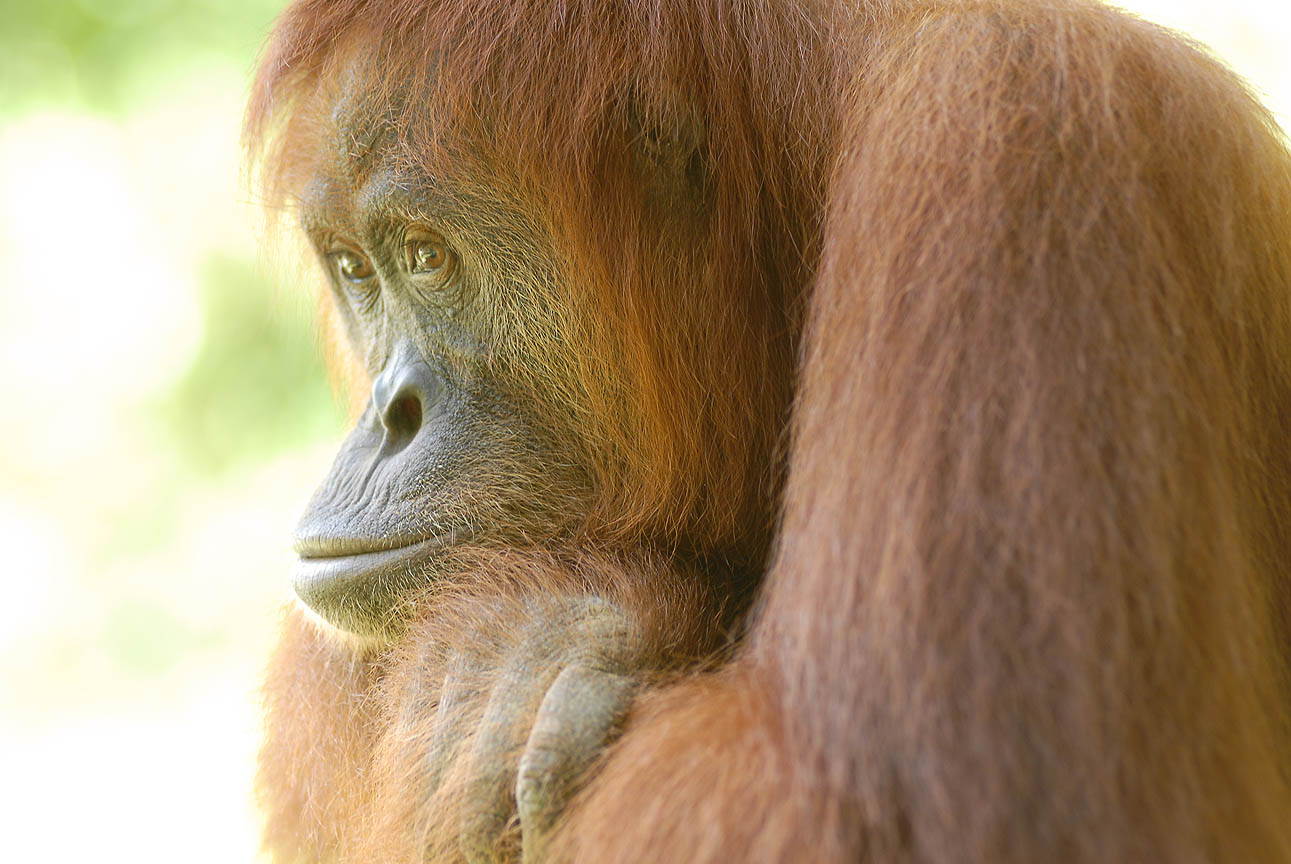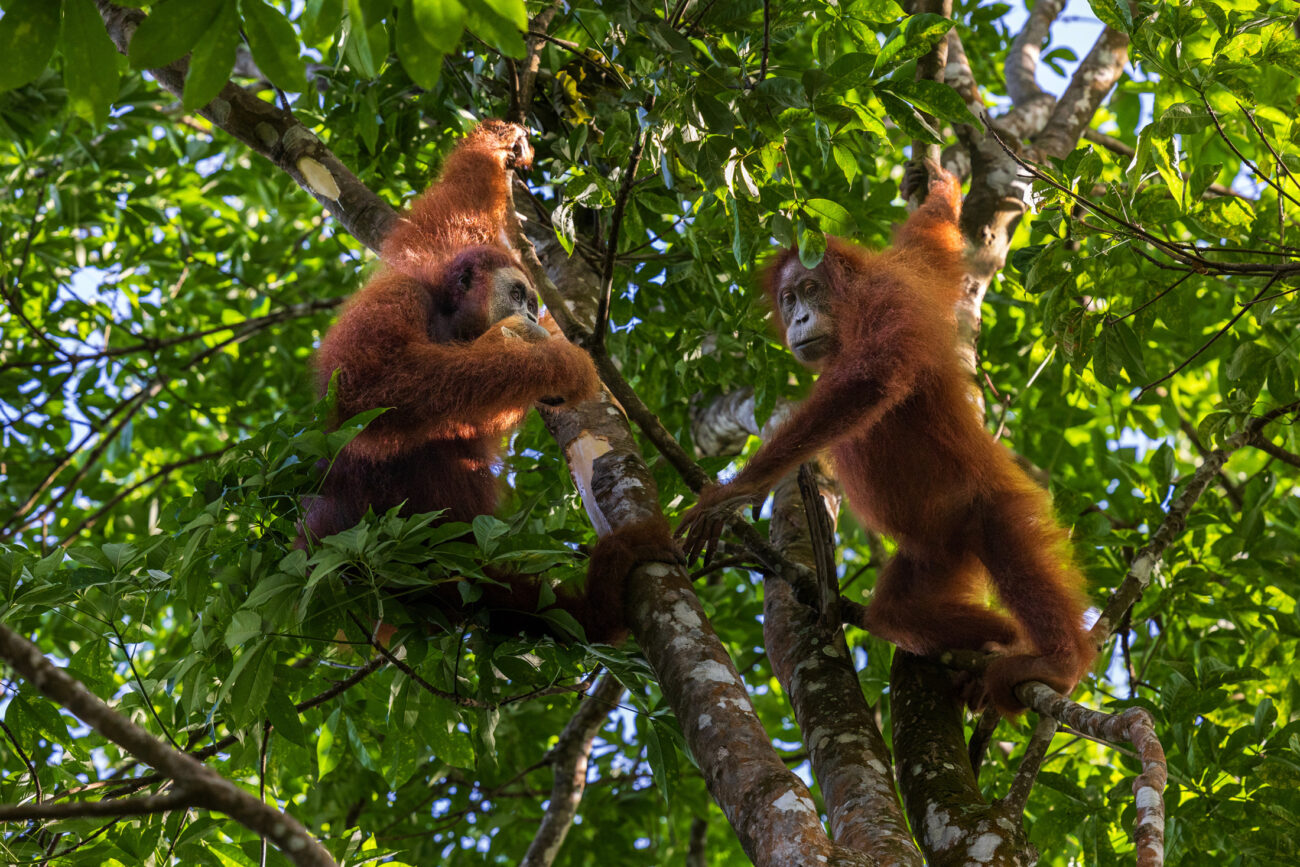
Wild orangutans spend eight years with their mothers: the longest childhood of any animal, except humans. Once independent, they lead mostly solitary lives. To survive in the rainforest, young orangutans must master complex skills like cracking hard-shelled fruit or crafting tools to extract honey. But how do they learn to navigate these challenges?
Researchers tracked how social learning (watching others) and individual learning (exploring on their own) shape orangutan diets. They found young orangutans engage in social learning about five times more than solo exploration. After watching their mothers forage, infants will spend up to 2.5 hours practicing — meaning social observation triggers their individual practice.
But learning styles vary. Some orangutans lean into watching, while others prefer exploring. Those who combined both learning styles developed the broadest diets in adulthood. High social learning in childhood boosted variation in their diets by up to 1.5 times. Despite these individual differences, every youngster engaged in social learning far more often than individual exploration.
Why does this matter? Social learning is essential for mastering survival skills. Watching their mothers forage inspires independent practice, showing how culture relies on a blend of social and individual learning. Understanding how young orangutans learn gives us crucial insights into their development and helps us better protect these apes in the wild.
 You can help protect Sumatra's Orangutans. Click to get updates