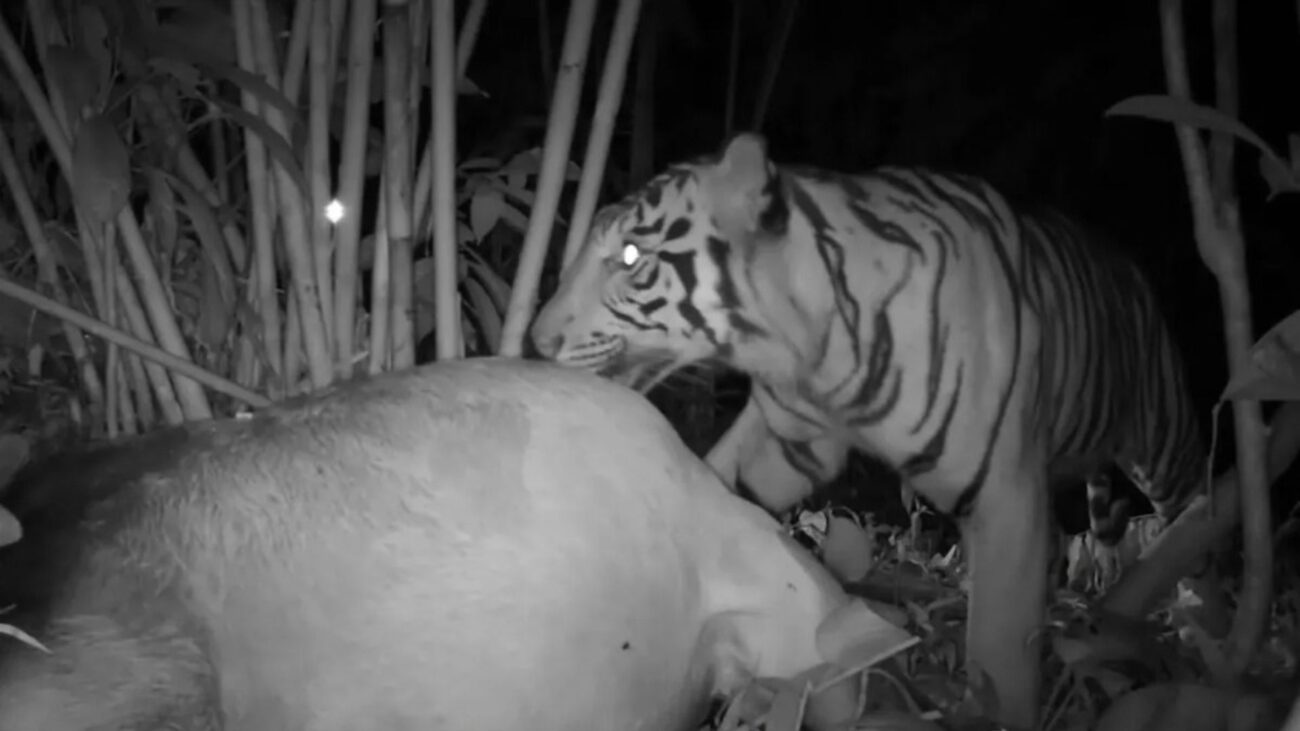
Credit: Pemkab Pakpak Bharat, BBKSDA
In recent months, two tiger attacks on cattle were reported in forest-edge communities in West Toba. While it is unknown if the same tiger was involved in both incidents, territorial pressure can cause tigers to leave protected forests and encroach upon farmlands.
Tigers need vast, connected rainforests to find prey and maintain genetic diversity. However, forest loss and habitat fragmentation shrink their range, bringing them into closer proximity with people. Whether looking to find new habitat or hunting for food, this leads to conflict.
The resulting income losses can be devastating for smallholder farmers. Losing a single cow can cost upward of £800 to over £1,000, impacting the wellbeing of their families. When people face economic hardship, survival takes priority, which can lead to retaliation attacks or harmful measures that make the conflict worse.
Working alongside TaHuKah, we aim to prevent casualties on both sides and find practical solutions that help communities and wildlife thrive together.
Following recent sightings,TaHuKah coordinated with the North Sumatra Natural Resources Conservation Agency (BBKSDA) and local government partners to carry out a rapid response:
The team also provided critical field data to government partners and supported the affected communities.
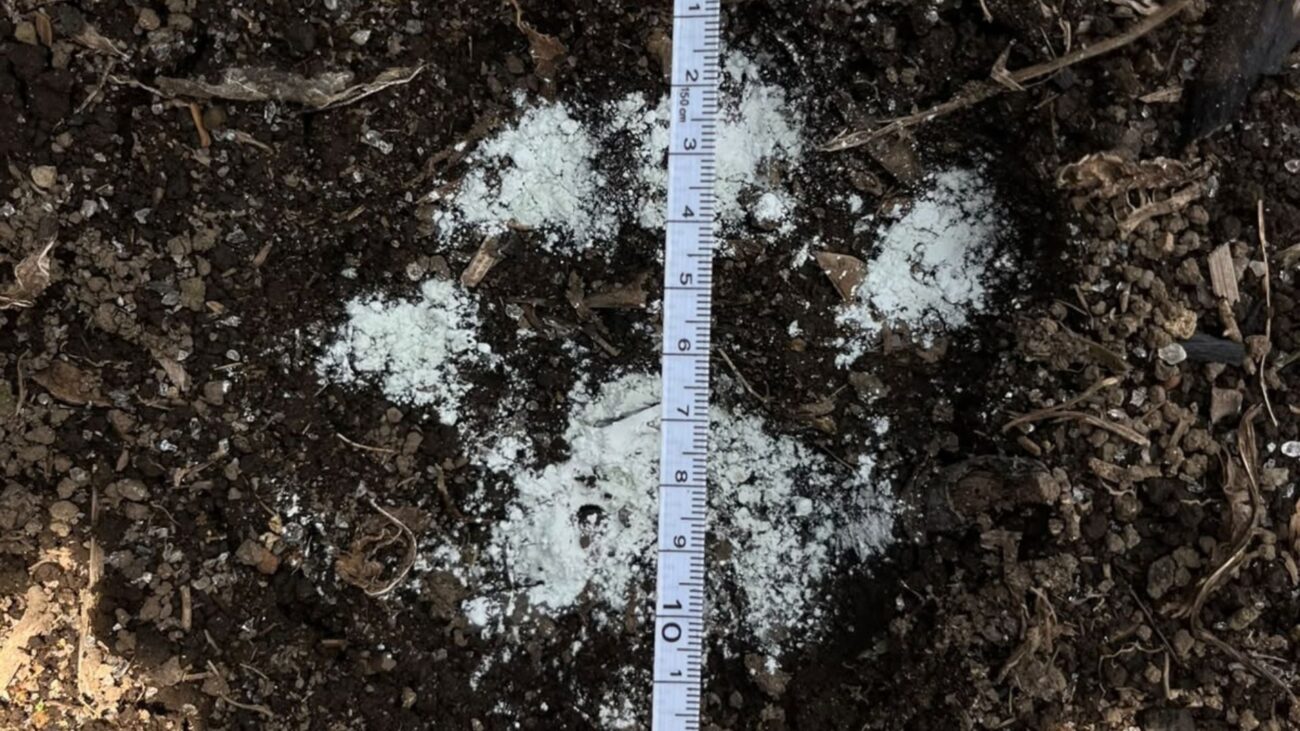
This is an ongoing situation that we continue to monitor closely. Beyond dealing with the immediate risk, we are supporting TaHuKah to explore financial compensation and livestock insurance schemes. We are also planning to train communities in building predator-resistant livestock pens across the landscape. These measures ensure that the protection of endangered species goes hand-in-hand with protecting local families.
The long-term human-tiger conflict response is managed alongside government partners, including the Pakpak Bharat Regency Government and the North Sumatra Natural Resources Conservation Agency (BBKSDA), together with local village governments and forest-edge communities.
The Sumatran tiger (Panthera tigris sondaica) is the only surviving tiger subspecies in Indonesia and is classified as critically endangered by IUCN. The other two native tiger subspecies, the Bali tiger and the Javan tiger, have been declared extinct.
Sumatra is the only place on Earth where tigers, orangutans, elephants and rhinos live alongside one another. Sumatran tigers occupy diverse habitats across the island, spanning lowland tropical rainforests to mountain ranges. As apex predators, their presence is crucial for maintaining ecosystem balance as they prevent overgrazing and keep forests healthy.
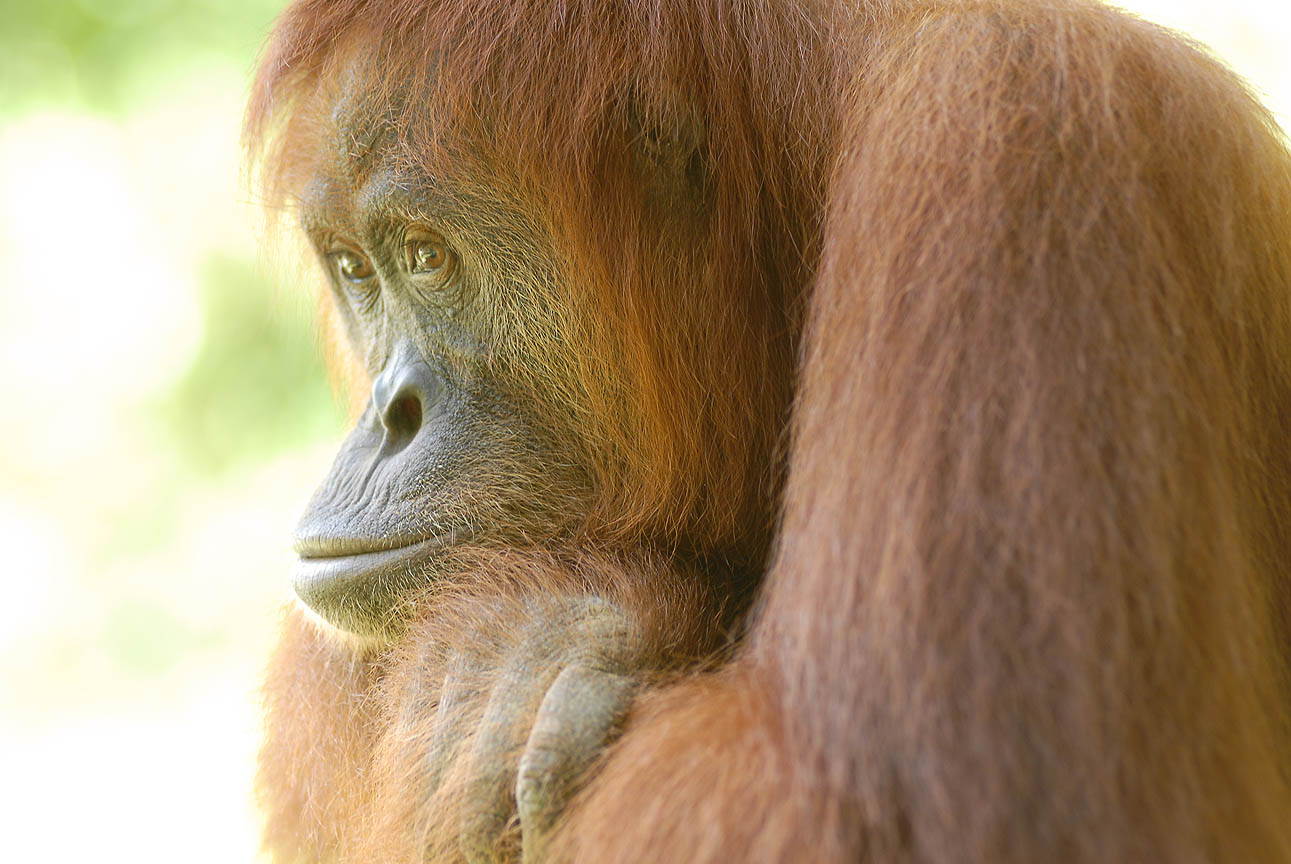
By protecting the habitat of wild orangutans, we can protect the entire rainforest ecosystem and the thousands of unique and rare animals, including the Sumatran tiger, that call these forests home.
 You can help protect Sumatra's Orangutans. Click to get updates