From the outside, conservation often looks heroic — with grand ambitions of saving species, protecting ecosystems, and fighting climate change. Up close, however, it is far more fragile and human. It is damp sleeping bags, quarrels over dish duty, and the longing for home where the signal doesn’t always reach.
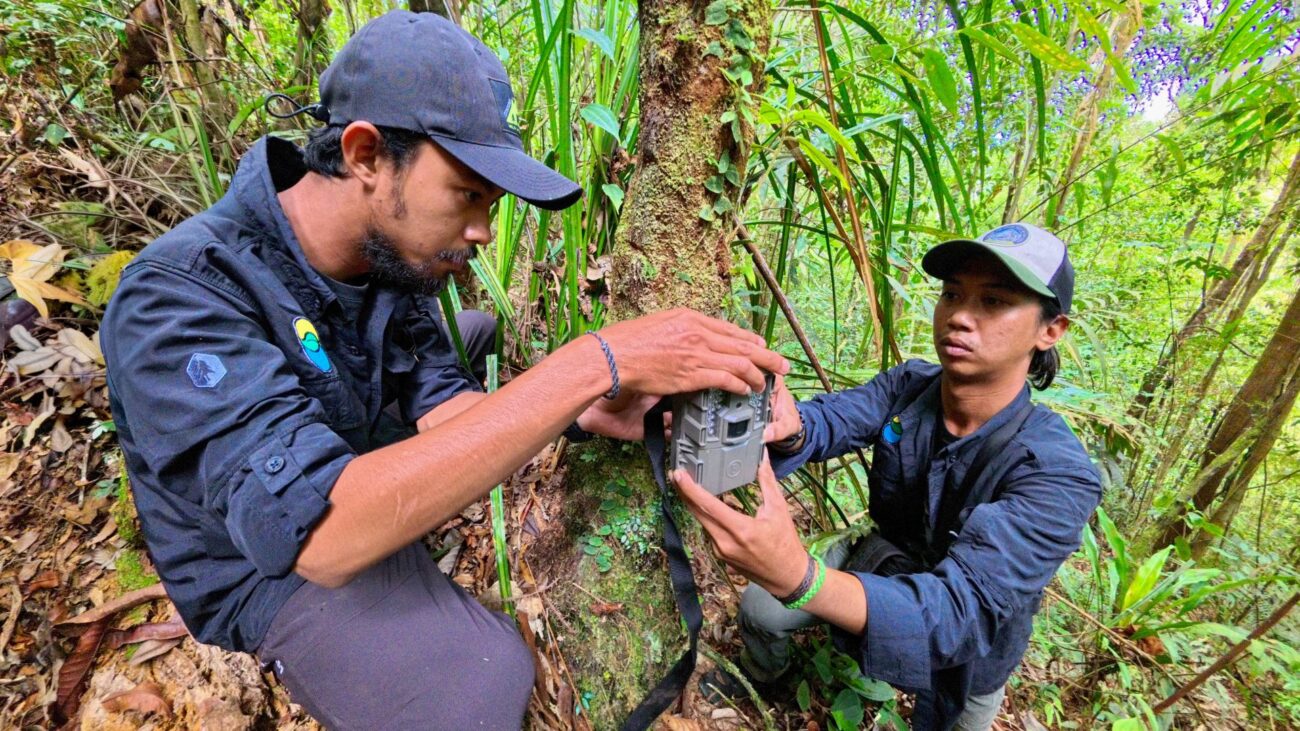
For the TaHuKah biodiversity team, most of their time is spent in the field: patrolling for hours under the canopy, checking camera traps, tracking faint footprints, and listening for primates calling across valleys. TaHuKah work in remote locations with extremely challenging terrain. This work is inherently dangerous and it takes a special team of people to make it a success.
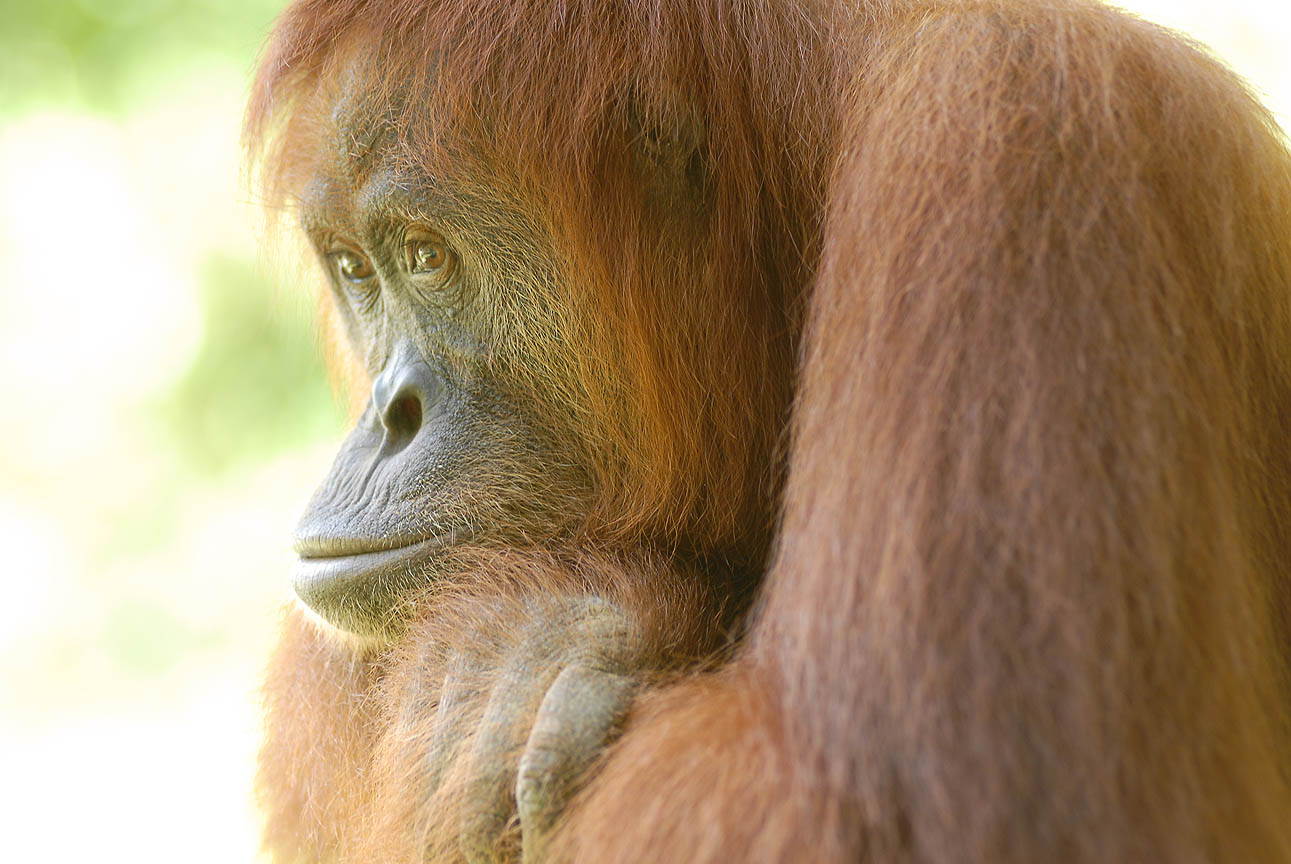
In the TaHuKah biodiveristy team, Dhandi and Dimas sacrifice closeness to family, familiarity, and comfort for a challenging life in the forest. They do this because they recognise that just like us, orangutans need a place to call home. And if we do not protect their forest home, we will cease to have one too.
We caught up with Dhandi and Dimas to learn more about the realities of life in the field.
Dhandi: I am a young man born and raised in Jakarta who enjoys outdoor activities. But I felt a lack of knowledge about the forest gained from simple hiking, and this eventually led me to study at the National University’s Faculty of Biology. There, I met instructors with a strong conservation spirt and I was often amazed by them; the way they taught how nature works and their approach when we were in the field.
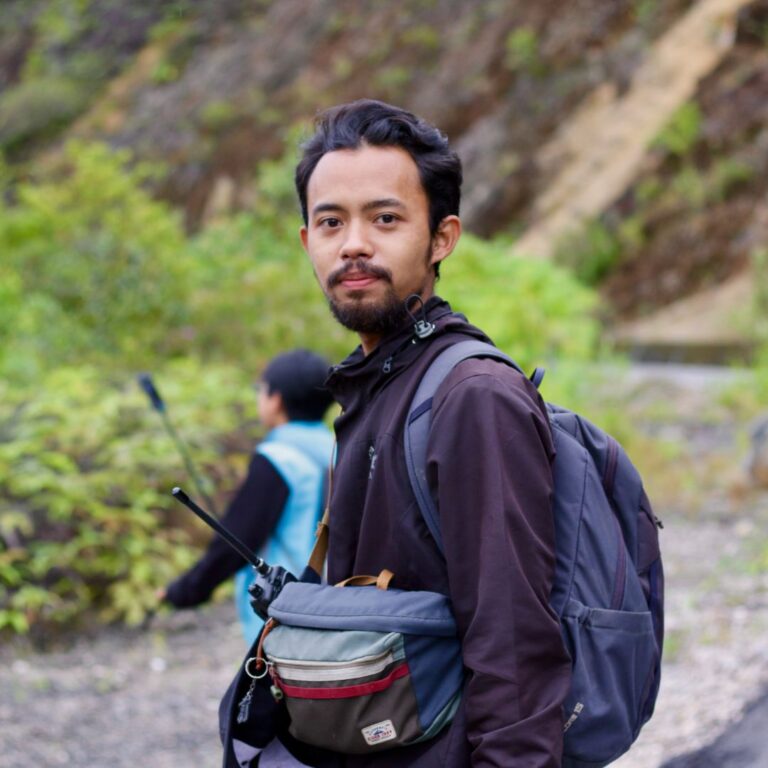
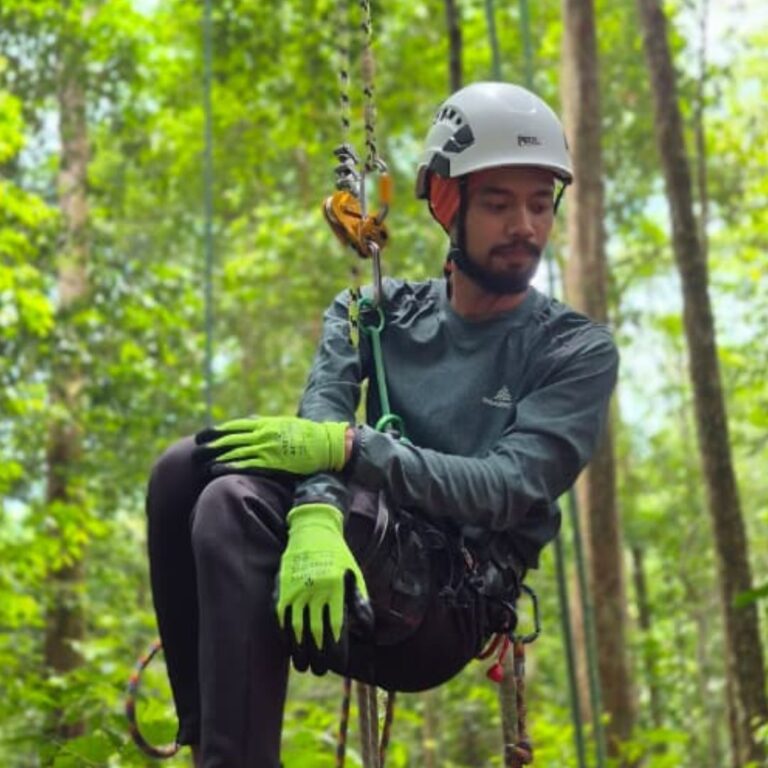
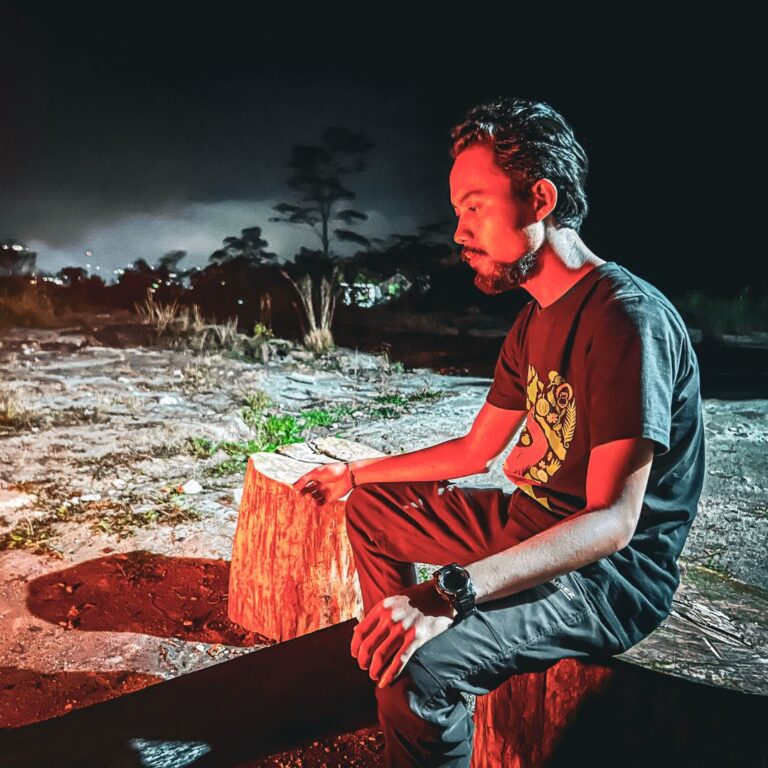
Dimas (pictured): As a Bachelor of Biology graduate from the National University in Jakarta, I understand several highly complex fields of biodiversity. Through various courses and organizational experiences outside of my studies, I learned how natural processes work and how one species depends on another. This experience sparked my interest to delve deeper and work in the field of conservation, so I could contribute to preserving biodiversity and understanding the important role of every species in the ecosystem.
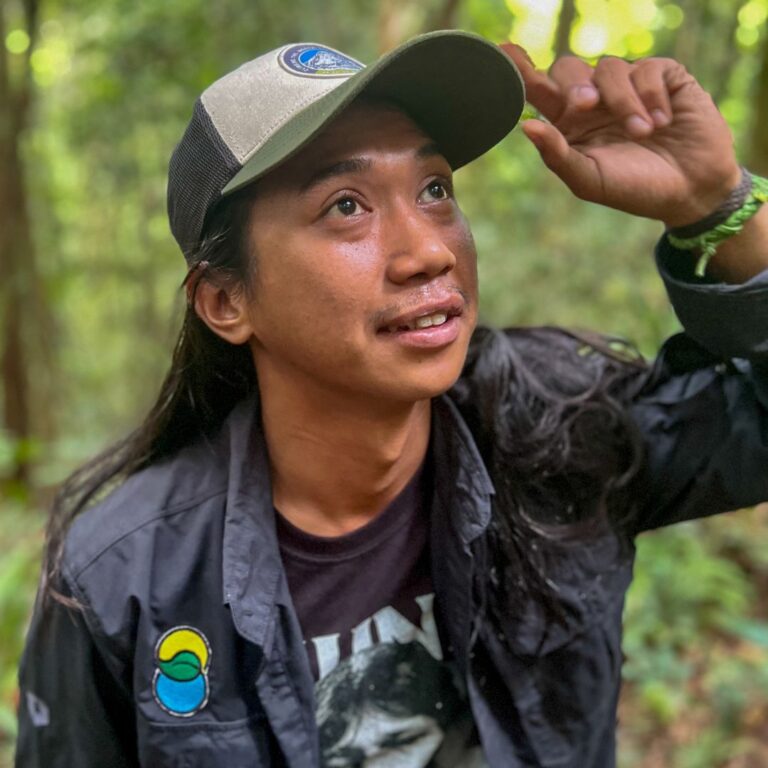
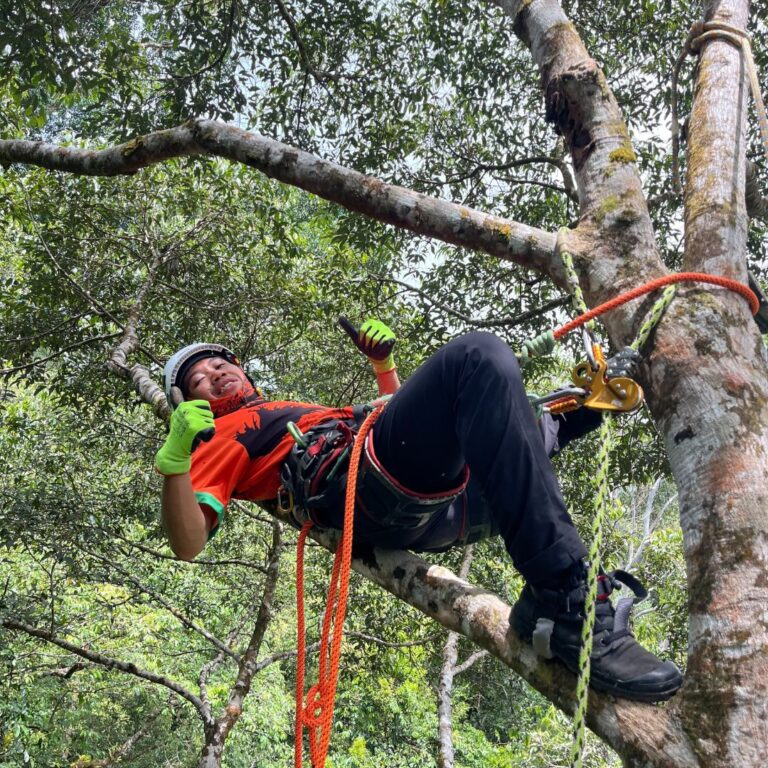
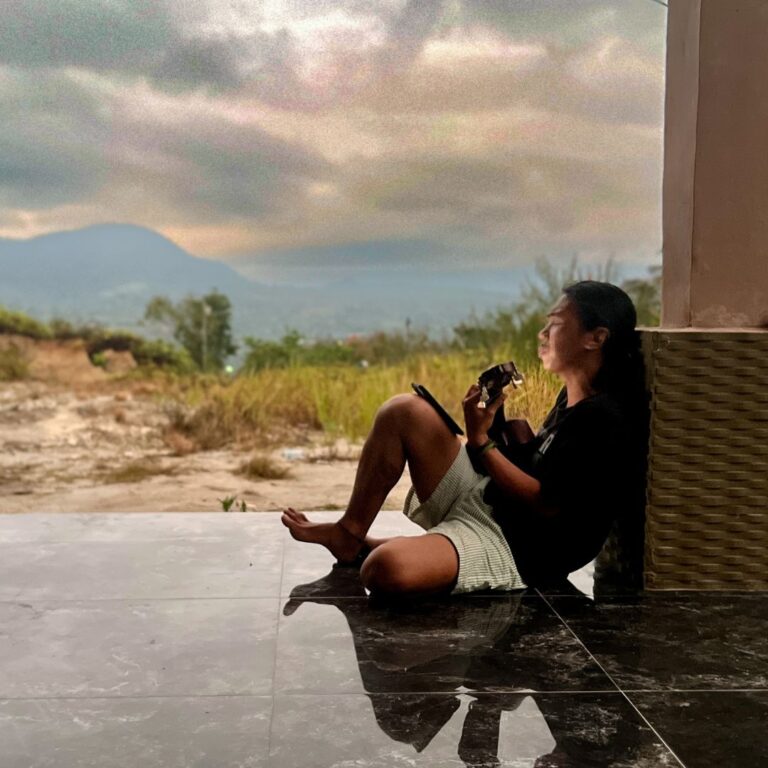
Dhandi (pictured): As a biodiversity staff member, we carry out work by monitoring wildlife, such as observing fruiting Ficus trees, setting up camera traps (both arboreal and terrestrial), and checking for nests or animal tracks located in the West Toba corridor.
Dimas: As a biodiversity staff member at TaHuKah, I am responsible for inventorying biodiversity in the Pakpak Bharat Landscape. My main focus is on conducting orangutan population monitoring through nest observations or direct encounters, to obtain accurate and useful data for the conservation of this species.
Dhandi: I enjoy every moment in the forest because this is my hobby which is channelled through TaHuKah. One personal highlight was when the Ficus tree in Banton Kiung was fruiting. I had a rare moment there! I was able to see four individual orangutans in close proximity, at and least four types of Hornbills perching on that tree. I also saw an orangutan and a rhinoceros hornbill on the same tree trunk sharing the Ficus fruit that is their favorite. I had to wait six months to get this moment.
Dimas (pictured): I always enjoy being in the field — living and staying with nature, witnessing the beauty which makes me feel calm, and mixing with the local community which adds laughter and jokes when we are at the camp at night. One of my most memorable moments was when I was in Sibongkaras Village. The journey to this village was very challenging because of the extreme road. The village felt very quiet because many residents’ houses were abandoned. However, the meeting with the local community, especially Pak Rosa, was very warm and memorable. He was very respectful of our Muslim faith by reminding us not to use plates or glasses that had been used to cook pork. This experience made me feel valued and well-received by the local community.
Dhandi (pictured): I am often asked by the community, “What is the purpose of your activities, what is the benefit for us?” That is the biggest challenge: making the community love and live in harmony with nature again.
Dimas: There are also many challenges to face when in the forest, such as the time I had to ride a motorcycle on an extremely challenging path, a road full of loose stones with ravines on the left and right, and this had to be traversed to reach the forest edge.
Dhandi: It’s not just about doing a ‘live-in’ with the community, but about becoming one of the community members ourselves. By becoming a part of the community, it feels easier to align conservation goals and improve the welfare of the community, especially those living alongside the forest.
Dimas (pictured): What I usually do to balance conservation with socio-economic aspirations is to involve the local community when we conduct biodiversity data collection. In addition, we approach the community by living as community members in several villages, acknowledging traditional practices.
Dhandi (pictured): Humans are the most perfect but also the most vulnerable creatures on this earth. Humans are free to do whatever they like, but they are the weakest in facing the impact of what they do. Times may change, but conservation must remain!
Dimas: From my point of view working in the field, living side-by-side with the forest teaches one important thing: that protecting nature is not just a local responsibility, but a shared responsibility of humanity.
 You can help protect Sumatra's Orangutans. Click to get updates