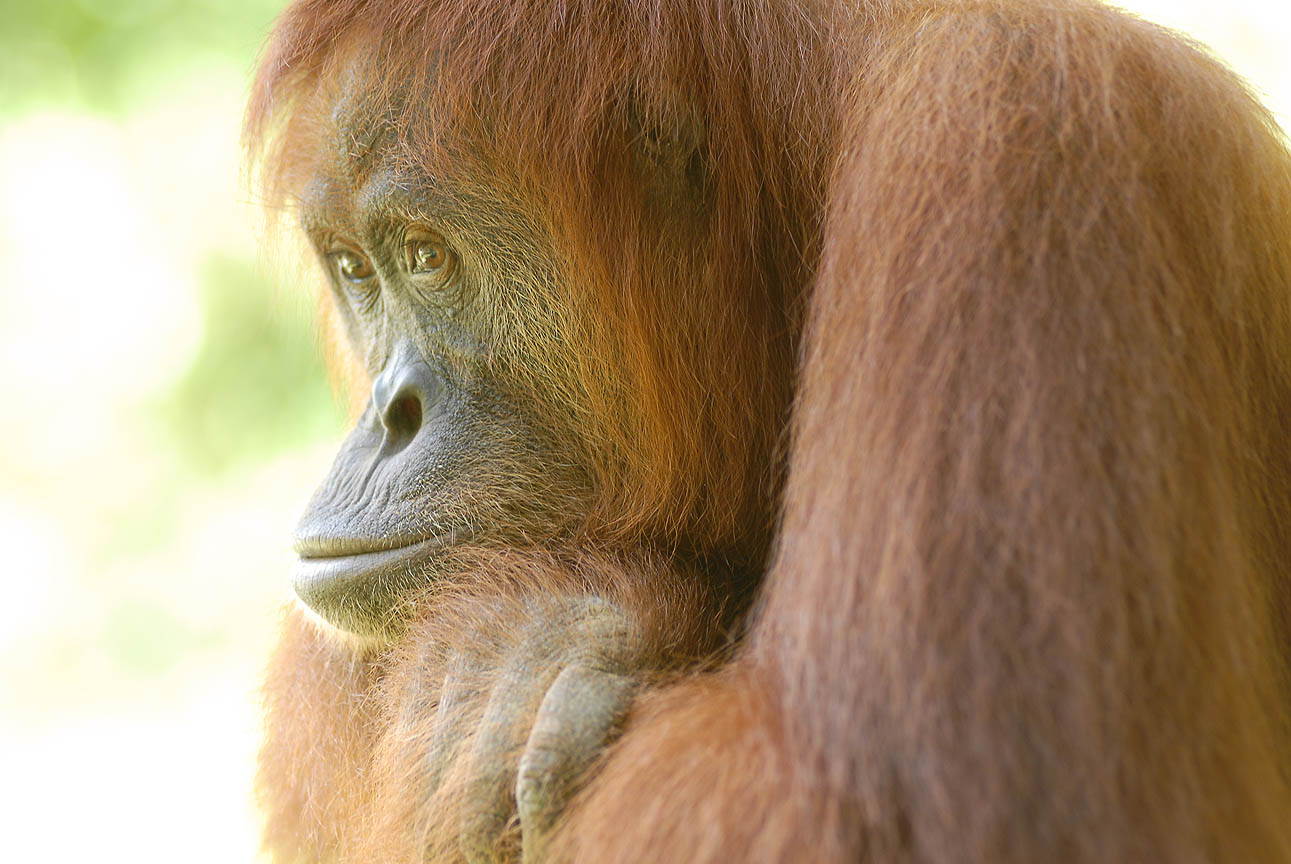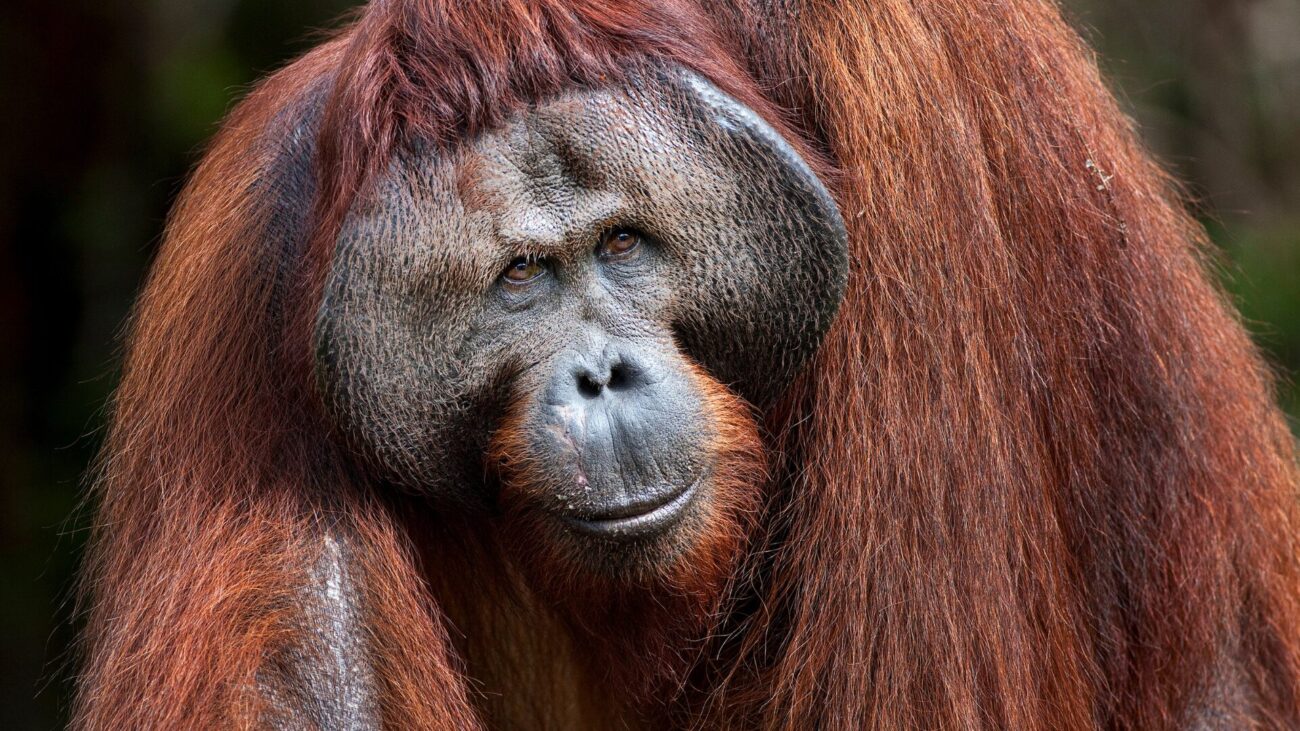
Photo credit: Zac Mills, the Wildlife Collective
Orangutan social groups are fluid. They may spend time completely alone or choose to gather in groups around fruiting trees. And (of course) they come together to mate.
In any given area, there will be one dominant male orangutan. However, it’s not possible for the male to monopolise all the female orangutans. So, female mate choice is crucially important. So, what do we know?
Scientists have used eye trackers to study mate preferences in Bornean orangutans. Female orangutans were shown photos of dominant males (those with flanges) and non-dominant males. A camera measured the amount of time their eyes fixed on each image, and showed that dominant males seemed to attract more attention. However, it’s unclear whether the females were looking because of attraction or vigilance.
Orangutans are semi-solitary. They rely on vocalisations to communicate across vast distances. The dominant males have enlarged throat sacs and their facial flanges help to amplify their vocalisations. They are the only individuals capable of producing the iconic long call, which communicate their direction of travel. This helps female orangutans to stay close by, and warns rival males to steer clear.
There is anecdotal evidence of female orangutans responding to male orangutans when they are ovulating. Researchers played a recording of the long call to orangutans who were known to be ovulating. The females responded with distinct vocalisations which the researchers hadn’t heard before. This could be evidence that they are attracted to the long call, and have much wider vocal repertoire than previously thought.
Another study of wild orangutans found that flanged males have higher reproductive success. However, females do still mate with unflanged males when they are not ovulating. This could be a paternity confusion strategy, reducing the risk of infanticide. More research is needed into female mate choice, which would help conservationists protect wild orangutan populations.
 You can help protect Sumatra's Orangutans. Click to get updates