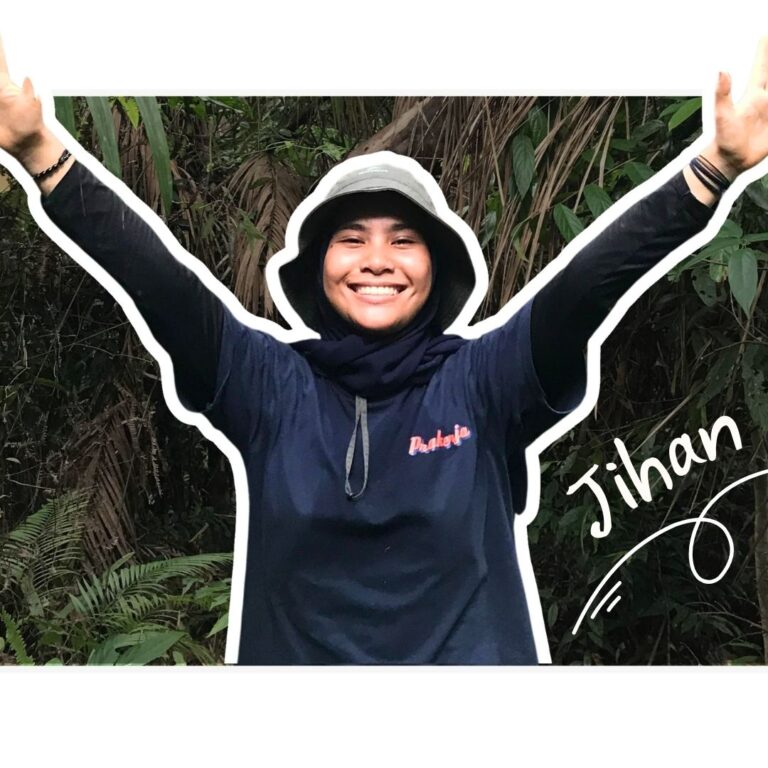
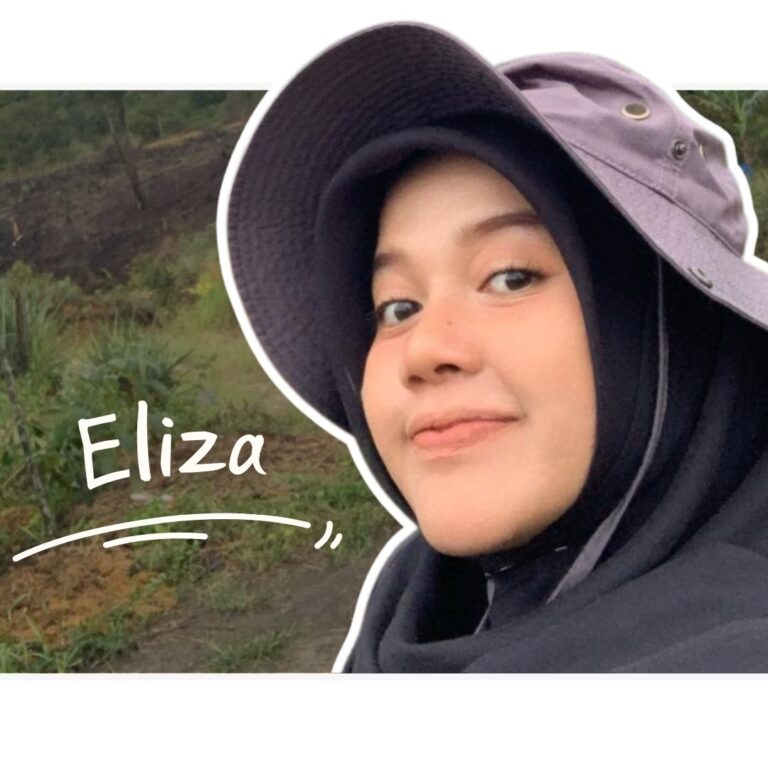
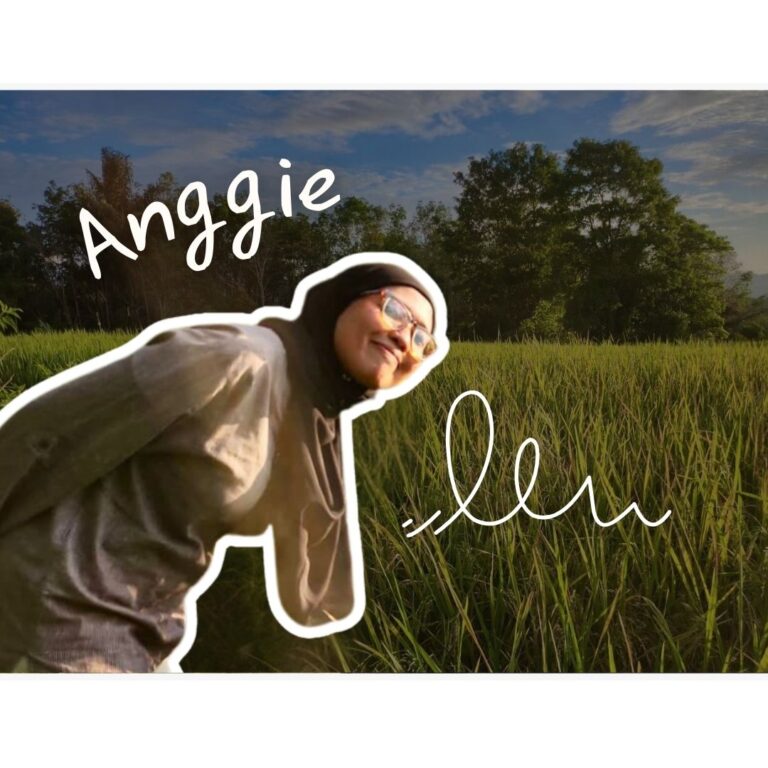
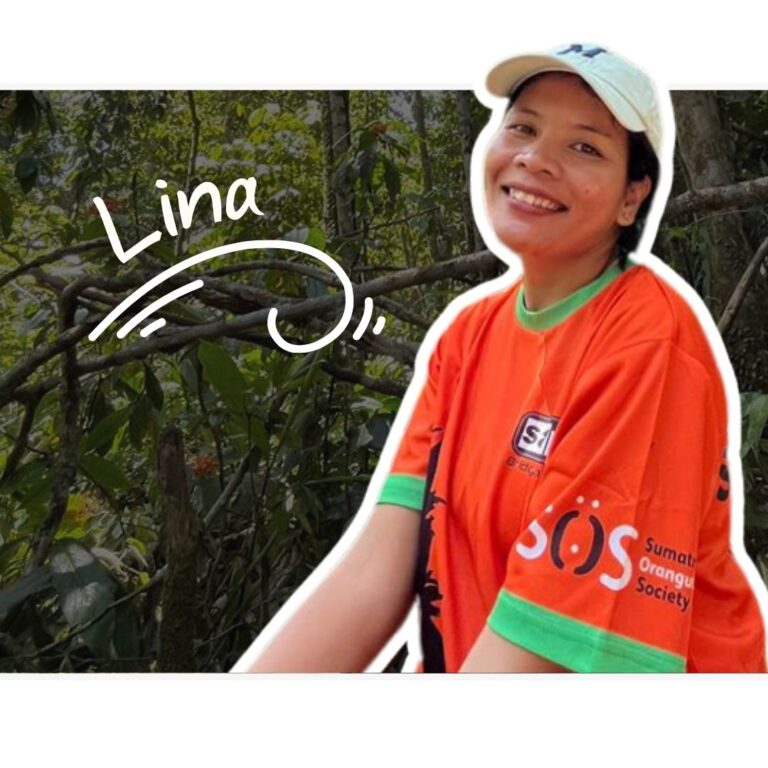
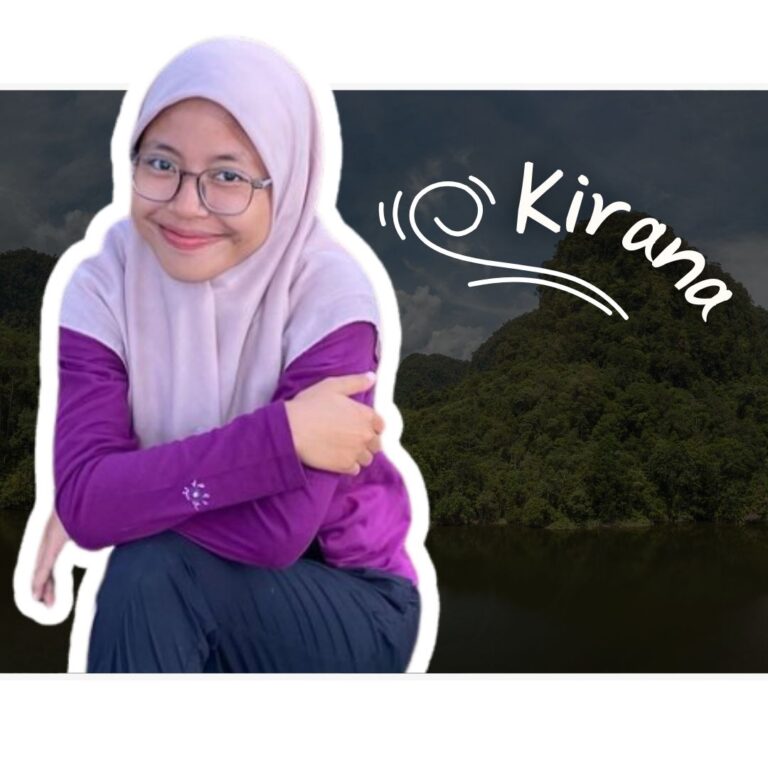
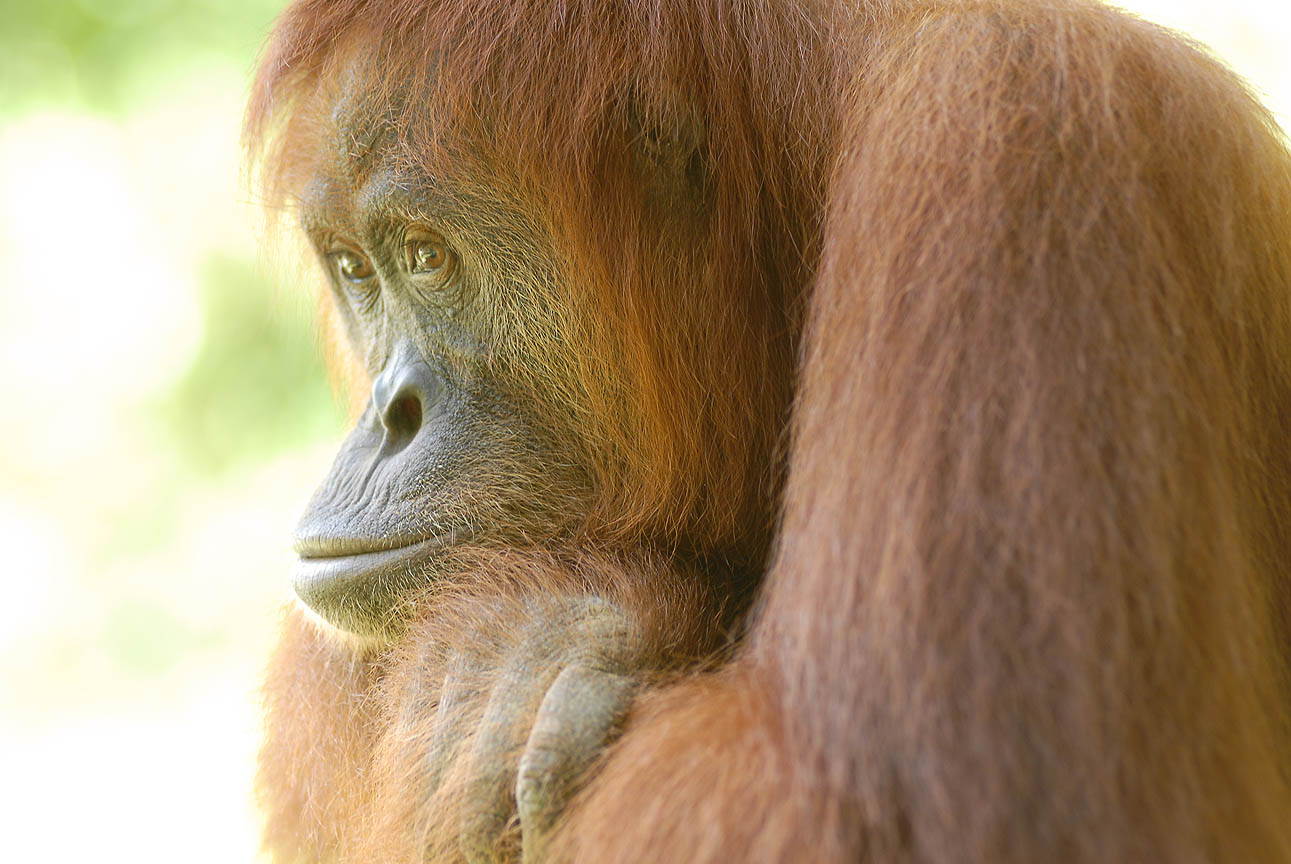
Conservation is for everyone. Whether it’s through finance, field facilitation, or landscape management, the incredible women from TaHuKah are forging a new path for Sumatra’s rainforests. From the hills of Batang Toru to the villages of West Toba, they are proving that conservation thrives on empathy, integrity, and courage.
What is your role at TaHuKah?
As the Batang Toru operations Staff, my primary role is to be the “engine behind the scenes,” ensuring that all conservation activities in the field run without a hitch. My daily tasks include coordinating logistics, and ensuring that every operations procedure is strictly followed.
What unique strengths or perspectives do you believe women bring to the world of conservation?
I believe women bring the strength of deep meticulousness and sharp intuition. In the operations world, even the smallest detail can determine the success of a program. This attention to detail helps me mitigate risks before they become problems, while my intuition helps me communicate more emphatic with both the team and the local community.
Conservation work requires physical and emotional resilience. Can you share a moment where your determination helped you overcome an obstacle?
Working in a forest landscape like Batang Toru often demands adaptation to harsh terrain and unpredictable situations. There have been moments where doubt emerged – both from others and from within – about whether a woman could handle operations in such a difficult environment. However, by staying firm and consistently fulfilling my responsibilities in the field, I proved that professionalism knows no gender. When the team saw that I remained calm and solution-oriented under pressure, respect grew naturally. Physical obstacles may exist, but it is determination that keeps us moving forward.
When young girls or women in local communities see you doing this work, what message do you hope is conveyed to them?
My message is simple: Never hesitate to take up space in the world of conservation. Nature does not discriminate against those who protect it, so do not let gender boundaries block your path. If you care about the environment, step forward and never look back. The presence of women is an added strength for our planet; we all have the same right and capability to be the guardians of our own forests.
What is your role at TaHuKah?
As a Village Facilitator at TaHuKah, my role goes beyond simply delivering information; I translate aspirations. I don’t just collect data; I build trust. I don’t just manage documents; I forge the relationships that allow our programs to be truly accepted and implemented with the community’s best interests at heart. As a facilitator, I’ve learned that technical tasks can be taught, but building connections requires heart. It is precisely at the intersection of logic and empathy that I find the deepest meaning of my role in the village.
What unique strengths or perspectives do you believe women bring to the world of conservation?
Women view conservation through the lens of life itself: understanding that strength does not come from being the loudest, but from the ability to endure without losing one’s gentleness. Women bring a realization that protecting nature is not only a one-day job or a single project but it is a way of existing in the world. It is a way of looking at things with respect, listening more than speaking, and understanding that everything is interconnected. Perhaps that is a woman’s deepest contribution to conservation: we are not just hands that work, but the soul that reminds us that the Earth is home, and a home can only be guarded by a heart that is truly present.
Conservation work requires physical and emotional resilience. Can you share a moment where your determination helped you overcome an obstacle?
There is one moment I will never forget. The weather was harsh, the roads were nearly impassable, and several residents were skeptical about the purpose of our data collection. Despite this, I returned time and again in order to explain, to listen to their grievances, and to help them understand the process. Over time, that persistence changed everything. Doubt turned into trust; resistance turned into support. Eventually, the villagers themselves helped speed up the data collection and welcomed us like family. From that experience, I learned that respect is not demanded; it is built piece by piece through perseverance and consistent goodwill.
When young girls or women in local communities see you doing this work, what message do you hope is conveyed to them?
I want them to see that a woman can stand anywhere: in a boardroom, in the fields, in the forest, on a muddy road, or in the middle of a complex debate. I want them to know that courage doesn’t have to be loud. Sometimes, courage emerges from stillness, meticulousness, and the simple refusal to give up.
What is your role at TaHuKah?
I am responsible for ensuring that the organization’s administrative and financial systems run accurately, systematically, and accountable. My work focuses on maintaining the integrity of daily financial data starting from recording expenses and verifying supporting documents to ensuring that all transactions are fully documented and compliant with internal policies.
On the administrative side, I ensure that HR records and internal files are consistently updated and handled with strict confidentiality. I also support management in fast-paced operations environments by managing multiple administrative and finance-related tasks simultaneously, particularly under tight deadlines.
Overall, my role serves as a bridge between administrative order, financial compliance, and smooth organizational operations by building strong support systems that enable other teams to carry out their programs and responsibilities with greater focus and confidence.
What unique strengths or perspectives do you believe women bring to the world of conservation?
In the conservation field, which is often male-dominated and where physical strength is highly valued, I believe women are equally capable of contributing and excelling. The stigma that associates women with weakness can be challenged, especially in conservation, where impact is not determined solely by physical ability. Working on equal terms without distinguishing gender is essential. Women can actively contribute to environmental protection and bring fresh perspectives to the field, supported by empathy, attention to detail, and the ability to consider long-term impacts in conservation work.
In my role at TaHuKah, attention to detail is crucial for maintaining financial accountability, while empathy helps me understand the needs of field teams and communities. Women often bring strengths such as empathy, precision, collaborative skills, and long-term thinking into conservation efforts. Protecting forest is not only about safeguarding species or ecosystems; it also involves working closely with communities, building trust, and ensuring sustainability over time.
Conservation work requires physical and emotional resilience. Can you share a moment where your determination helped you overcome an obstacle?
In my work, the challenges are not always physical, but often emotional and professional. There are moments when I must firmly uphold financial policies, even when facing pressure or comments suggesting that I “do not understand field conditions” or the exhaustion of teams working directly in the forest.
In situations like these, emotional intelligence becomes essential—managing our emotional responses, stress, and frustration in a constructive way. Honestly, these experiences also contribute to personal growth and maturity. They remind me that not everything is within our control, but how we respond to challenges always is.
I strongly believe that maintaining accountability is a responsibility not only to the organization, but also to donors and to the conservation mission itself. By remaining consistent and professional, I have seen how mutual respect and understanding gradually develop. Over time, there is greater recognition that the finance function is not an obstacle to fieldwork, but rather a safeguard that ensures the sustainability and credibility of the program.
When young girls or women in local communities see you doing this work, what message do you hope is conveyed to them?
I hope they see that women have both the space and the capacity to contribute meaningfully to conservation that not only in field roles, but also in decision-making and organizational management. Conservation is not solely about physical strength; it is also about integrity, intelligence, and responsibility. I want them to know that they can be part of meaningful change, in whatever role they choose and from whatever background they come from.
What is your role at TaHuKah?
I serve as the Landscape Manager at the Pakpak Ecological Landscape. I support TaHuKah by managing all activities within the landscape, ensuring that the team understands their goals in forest and orangutan conservation, and making sure their work aligns with the foundation’s principles.
I act as a bridge between the Director and the field team. I also coordinate with various stakeholders at both the site and provincial levels to ensure TaHuKaH’s role as a government partner in supporting sustainable development remains effective. Overall, my role is to ensure the Pakpak Ecological Landscape thrives for both wildlife and people by overcoming challenges together with my team.
What unique strengths or perspectives do you believe women bring to the world of conservation?
In the world of conservation, women bring a unique brand of resilience and inclusion. As a woman, a local daughter of the land, and a leader, I lead with a balance of strength and sensitivity. While some see empathy as a bias, I see it as my greatest asset by allowing me to build deeper, more meaningful connections with the community. I am here to shatter the glass ceiling and dismantle the stereotype that field-intensive conservation is a ‘man’s world.’ I carry the banner of inclusion: conservation is a collective duty, and in the race to save our planet, no one is left behind.
Conservation work requires physical and emotional resilience. Can you share a moment where your determination helped you overcome an obstacle?
It is deeply rewarding to receive recognition from the community and stakeholders for my physical and mental fortitude. Balancing my responsibilities as a leader and a wife requires grit, but the appreciation I receive reaffirms my calling. My journey is backed by mentors – my Executive and Operations Directors, who empower me to lead with a ‘strong feminist’ edge. They taught me that being a female leader isn’t about hiding our nature; it’s about embracing it.
When young girls or women in local communities see you doing this work, what message do you hope is conveyed to them?
The message would be; stay strong and endure, but never lose the ‘maternal’ instinct to nurture the team. I strive to be a leader who protects, listens, and remains acutely sensitive to the needs of the landscape, the team, and the people we serve.
What is your role at TaHuKah?
My role at TaHuKah is as a Village Facilitator. I spend my time assisting the community with social forestry activities and helping with the administration related to social forestry.
What unique strengths or perspectives do you believe women bring to the world of conservation?
I feel that the feminine strength we know, expressed in gentle words and driven by the courage of women themselves, helps me in carrying out my role in the world of conservation. Women have a good perspective in assessing and observing things. I believe this uniqueness makes women sensitive and gives them a good sense of initiative.
Conservation work requires physical and emotional resilience. Can you share a moment where your determination helped you overcome an obstacle?
Physical resilience is very important in conservation work, and I have to balance it with emotional control. My daily work involves communicating with the community, which requires me to be open to questions and statements made by the community and to provide careful responses. I strive to learn to respect other people’s views, learn to choose my words carefully, learn to quickly read situations, and I also try to take the opportunity to discuss with adults who have more experience in the world of conservation. One thing I believe as a woman is that wherever we go, prayer and courage drive me to believe that all obstacles are meaningless if we can turn them into lessons for growth.
When young girls or women in local communities see you doing this work, what message do you hope is conveyed to them?
As women, if we have a deep interest in nature and its current challenges, then don’t be afraid to step out of your comfort zone to gain the best experience in your life, to independently protect the forests as our source of clean air and livelihood for our communities. Many women have chosen to speak up about their concern for our forests, each with their own unique ecology. Women who choose to take a closer look at individual perspectives on forests, and even I myself feel the love of the village community I accompany for the forests close to them. As much as possible, women have a strong role in encouraging and inviting various parties to take action to protect our forest ecosystems.
 You can help protect Sumatra's Orangutans. Click to get updates