Credit: Andrew Walmsley
In their recent article – ‘Should we leave them to die?’ The battle over how to save orangutans from the curse of palm oil – the Guardian explores the complex and urgent debate of orangutan translocation.
While the piece focuses heavily on human encroachment in Indonesian Borneo, the challenges it highlights are deeply felt in Sumatra, too — in the landscapes where our frontline partner, TaHuKah, operates with technical support from the Sumatran Orangutan Society.
Through the personal stories of forest-edge communities, the Guardian article captures the heart of human-orangutan conflict.
Across Indonesia, forests have been converted into farmland to support local livelihoods. But when wild orangutans return to these areas in search of food, they raid crops which can devastate a farmer’s income in a single session.
This overlap between humans and wild orangutans creates tension. While orangutans rarely attack humans unless cornered, desperate and fearful farmers are pushed into impossible situations, sometimes resorting to violence to protect their family livelihoods.
This creates a critical question for conservationists: how do we protect orangutans caught in these conflict zones?
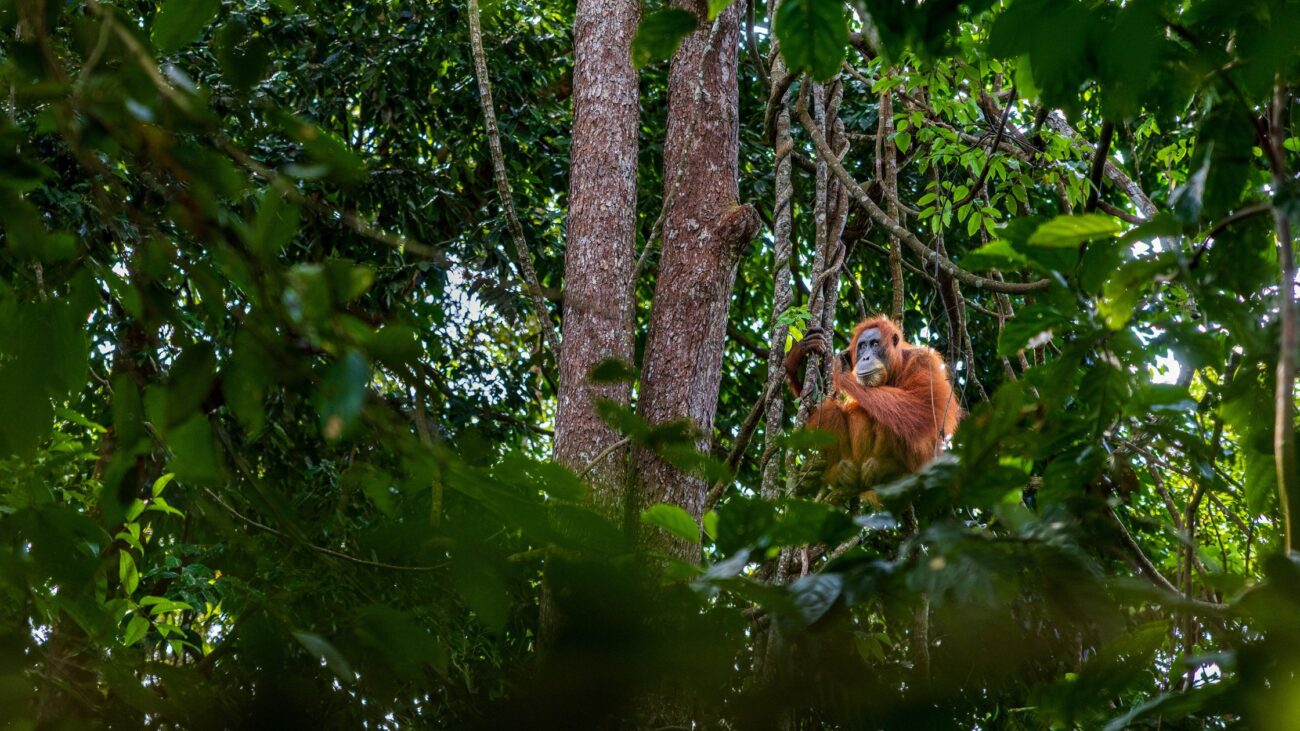
Photo credit: Zac Mills, the Wildlife Collective
For many years, translocation has been a tool for many conservation NGOs and conservationists. The process seems straightforward on the surface: tranquilise an orangutan stranded in a conflict zone and move them to a safer forest.
Translocation has long been viewed as a necessary, last-resort to protect individual orangutans from an immediate threat. However, more recent studies into translocation suggest that uprooting these orangutans may actually do more harm than good.
Orangutans are intelligent, semi-solitary animals. Over many years of learning, and a close association with their mothers, orangutans develop complex mental maps of their home forests. Moving them into unfamiliar forests can be traumatic and damaging for the orangutan.
Without knowledge of the forest and the fruiting trees, translocated orangutans can starve because they cannot locate food. They may also be attacked as intruders by the resident orangutans already occupying the territory. There is little data on whether translocated orangutans survive long-term.
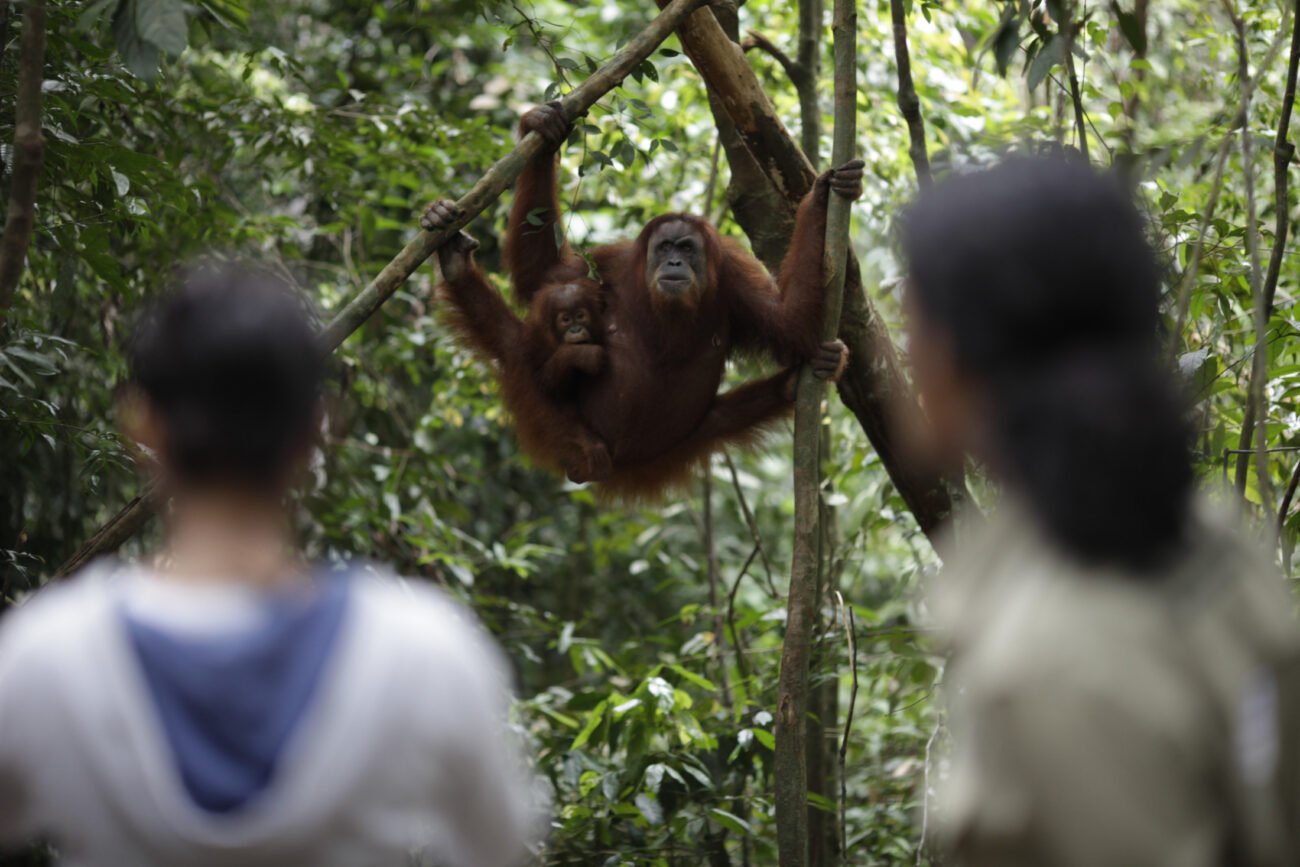
SOS has previously supported and funded orangutan translocation. These decisions were never taken lightly. Rescue operations were strictly a last resort when an animal faced extreme, immediate risk. We remain confident that without these past interventions, those specific orangutans would have starved, been shot, or vanished into the illegal pet trade.
But taking an evidence-based approach is a cornerstone of the SOS ethos. We must be driven by science and measurable impact, which means having the courage to pause and adapt when new data emerges.
Guided by this research, we have intentionally shifted our focus away from translocation with the launch of the SOS Conservation Greenprint. Instead, SOS and our frontline partner TaHuKah are investing in local communities and preventative measures. Our partners train local farmers in wildlife-friendly crop protection, supporting crop diversification, and developing forest-friendly livelihoods.
If we want to secure a future for Sumatra’s forests and the wild orangutans that call them home, we must develop solutions that help people and nature peacefully coexist. Studies prove that conflict can be mitigated through non-violent, collaborative methods that safeguard both human livelihoods and orangutan survival.
To protect orangutans in the long-term, we and our frontline partners are:
By partnering with the communities who live alongside orangutans, we can address the problem at the root, and ensure that both people and wildlife have the space to thrive.
 You can help protect Sumatra's Orangutans. Click to get updates