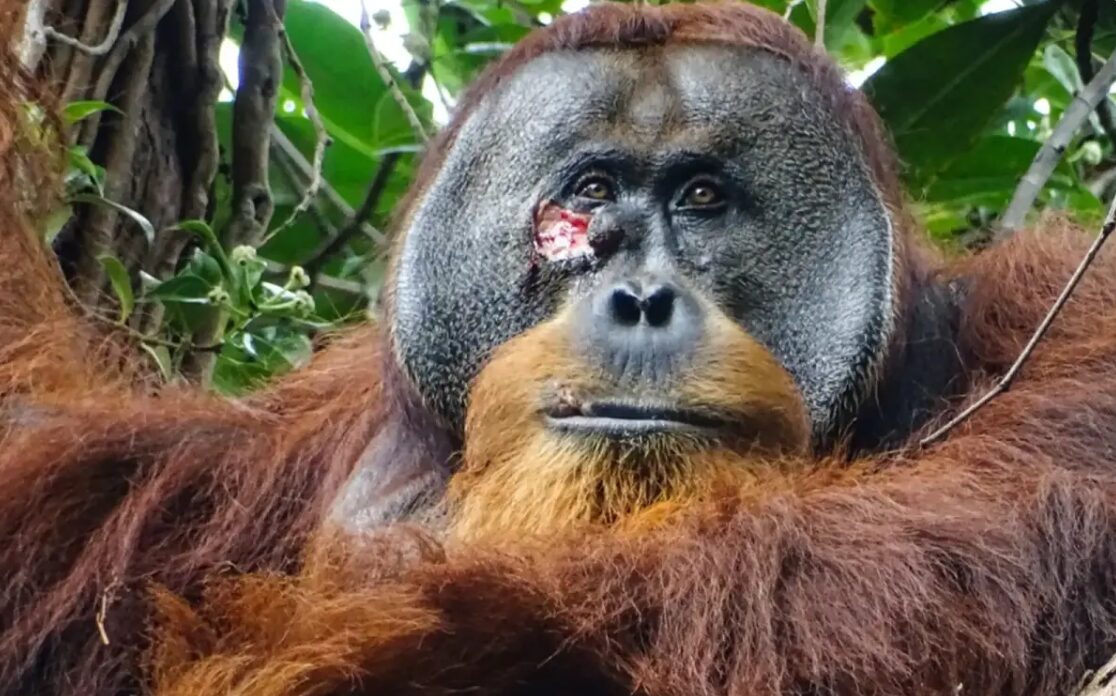
Rakus, SUAQ Project. Laumer et al, (2024) Sci Rep 14,
While we know that many wild animals self-medicate. But studying this behaviour is difficult as it relies on rare sightings of sick animals actively using medicinal plants. Past research typically highlights isolated, single-plant remedies — like Rakus, the Sumatran orangutan who made the headlines for treating his facial wound with a plant poultice.
New research suggests that orangutans’ use of medicinal plants is much more complex. Researchers analysed 20 years of feeding behaviour among Bornean orangutans and found that these apes deliberately combine plants with unique healing properties. Their choices are far from random; they eat specific combinations far more often than would happen by chance.
The researchers also consulted local field guides on traditional healing practices, narrowing the dataset to 19 medicinal plants. One of the main plants eaten by the orangutans was a yellow-root liana – the very same species that Rakus used on his skin. This plant is known for its anti-malarial properties. The orangutans combined it with other anti-inflammatory and anti-microbial species.
These findings reveal just how much we still have to learn from wild orangutans. Understanding their selection process could help scientists identify plants with complementary or synergistic properties. The study also underscores the invaluable expertise of indigenous peoples, reinforcing that communities must be at the heart of conservation.
 You can help protect Sumatra's Orangutans. Click to get updates