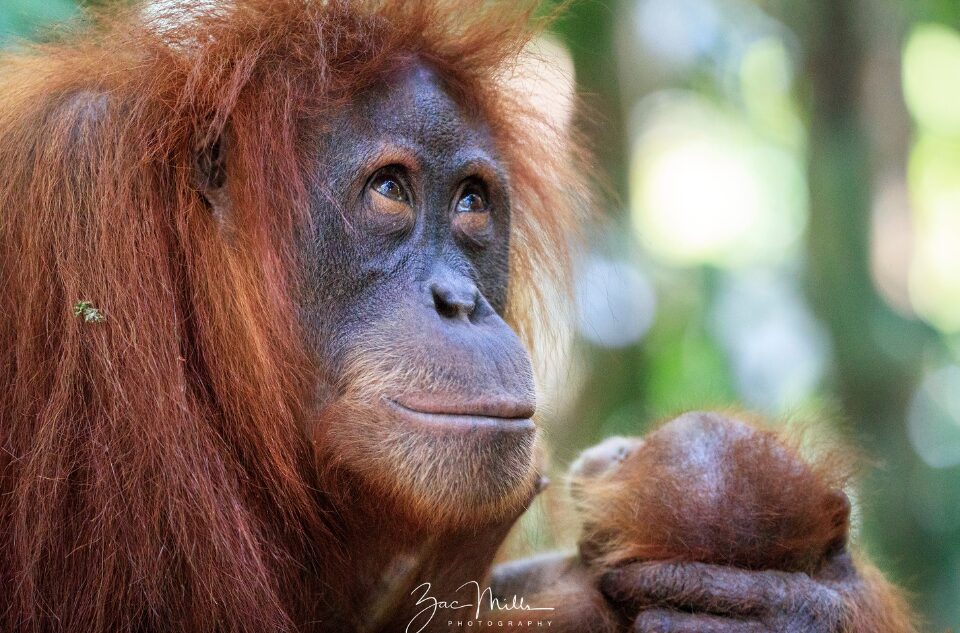
Photo credit: Zac Mills, the Wildlife Collective
For almost a century, scientists have believed that humans have a unique struggle when it comes to childbirth – due to our narrow pelvis and large babies. In the 1940s, researchers used human-based standards to measure the pelvises of monkeys and apes. This resulted in scientists underestimating how hard childbirth is for nonhuman primates.
Now, researchers have used 3D modelling to analyse the shape and size of the birth canal across primates. They discovered that on average, the birth canal is 11% to 18% smaller than previously thought. In many small primates such as squirrel monkeys, tamarins and bushbabies, the baby’s head is almost twice as large as the mother’s birth canal.
Many monkey babies are born face-first, which results in a narrower angle of the skull in the birth canal. In baboons and squirrel monkeys, the pelvic ligaments relax so much during labour that their hip bones temporarily dislocate, widening the birth canal by 30% to 100%. Squirrel monkey babies have also been seen pulling themselves out of the birth canal once their shoulders are free.
While humans do have the tightest birth fit among the great apes, this study is a reminder that viewing the animal kingdom through a human-centric lens leads to flawed conclusions. When we evaluate species on their own terms, we can uncover incredible adaptations and survival strategies, and recognise our shared challenges.
 You can help protect Sumatra's Orangutans. Click to get updates