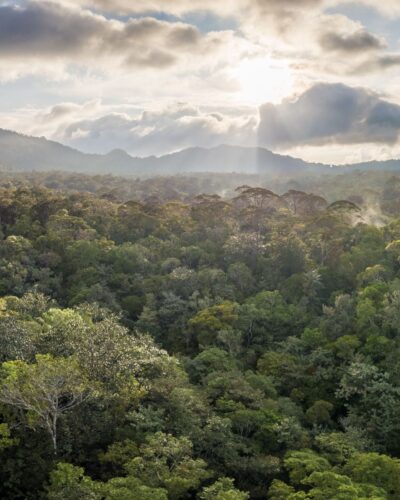
Photo credit: Andrew Walmsley
Using a novel geo-ethnographic approach that combined satellite analysis, causal inference and interviews with local communities, researchers examined both where forest loss occurred and the social factors driving it.
Scientists found that multiple pressures are reshaping the landscape, with small-scale agriculture and logging accounting for around 70% of direct forest loss since 2012. These findings add new evidence to ongoing debates about the drivers of forest loss in Batang Toru and suggest that while extractive industries (mining, hydropower, and geothermal energy) have altered parts of the landscape, small-scale agriculture and logging have contributed a larger share of direct forest loss than previously recognised.
This underscores the need for conservation approaches that address both industrial and community-scale pressures. The authors call for an integrated approach that strengthens community land rights, rewards forest stewardship, improves monitoring of illegal logging, and addresses the multiple pressures driving forest loss across the landscape.
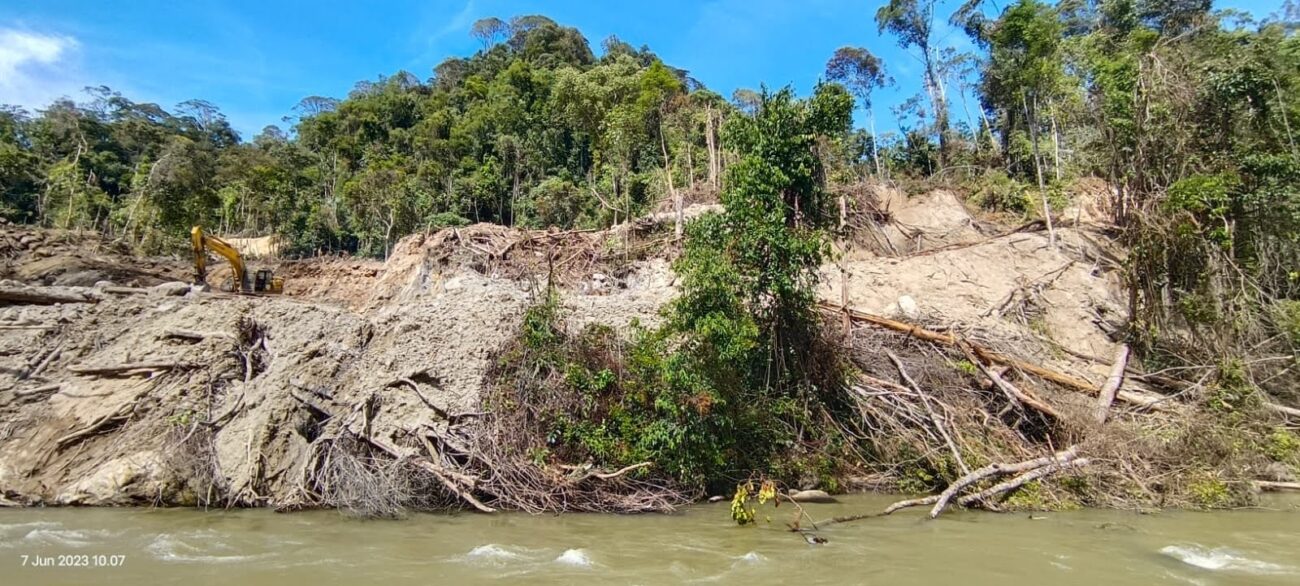
Logging activities in the eastern block of Batang Toru in June 2023.
The Batang Toru ecosystem in North Sumatra is the last remaining habitat of the Tapanuli orangutan: the world’s rarest ape. With fewer than 800 individuals remaining, the species is considered critically endangered by the International Union for Conservation of Nature (IUCN) and restricted to a fragmented forest landscape covering less than 150,000 hectares.
The Batang Toru ecosystem is also home to Sumatran tigers, agile gibbons, helmeted hornbills and the Sunda pangolin – making the protection of these forests a global conservation priority.
The new paper, published in Biological Conservation, has found that the speed of forest loss in Batang Toru has doubled since 2012, around the time when extractive projects began. From 2000–2023, Batang Toru lost 7,659 hectares of forest, which is around 5% of the total forest cover.
However, these figures tell only half the story. The international team of researchers set out to discover how much of this forest loss was due to extractive industries (mining, hydropower, and geothermal energy) and how much came from other activities, such as small-scale agriculture and logging.
The researchers blended geospatial mapping, causal inference, and ethnographic interviews with forest-edge communities, and found that small-scale agriculture and logging was responsible for 70% of deforestation during this period.
“Our findings show that while major extractive projects have contributed significantly to forest loss in Batang Toru, it is the continued expansion of small-scale agriculture and logging that has accounted for most ongoing forest loss and fragmentation in recent years.”
“When the extractive industries began in 2012, we saw a sharp, sudden increase in forest loss. However, after that initial spike, the deforestation slowed. Unlike the extractive industries, small-scale farming and logging have remained a constant, steady threat and make up 70% of the total forest loss in Batang Toru.”
“However, this should not be interpreted as evidence that extractive industries are no longer a concern. Rather, it shows that Tapanuli orangutans face multiple threats, and that conservation strategies must tackle both large-scale development impacts and the persistent, cumulative effects of small-scale forest clearing.”
“These are simply two different threats facing Tapanuli orangutans today, and both need to be urgently addressed to prevent extinction.”
Read the article on MongabayThe geospatial data used in the study was backed by ethnographic research, conducted by Indonesian NGO TaHuKah, through interviews and observations with local people living in the area. This geo-ethnographic approach is a unique research methodology, helping scientists better understand the complex dynamics between people and the environment.
Erwin Alamsyah Siregar, Executive Director of TaHuKah, explains;
“Our study highlights the need for conservation strategies that address the root causes of forest loss. Safeguarding the remaining habitat of the Tapanuli orangutan must go hand-in-hand with supporting local livelihoods and community wellbeing.”
“While satellite imagery shows us where and when forest loss occurs, it cannot always explain why land is cleared, or who holds the legal rights to it. By integrating geospatial data with the ethnographic insights and lived experiences of local communities, we gain a richer understanding of the landscape.”
“Now, we must invest in solutions that allow both people and nature to thrive, such as securing legal land tenure for local communities to give them a long-term stake in forest protection, supported by financial incentives and community-led monitoring to deter illegal logging.”
The study’s findings arrive at a time when Batang Toru is facing additional pressures from climate-related extreme weather. The authors of the paper acknowledge the impacts of Cyclone Senyar, which swept across parts of Southeast Asia in late 2025. The cyclone caused heavy rainfall and landslides, impacting communities, forests and wildlife.
Another new paper suggests that the resulting forest loss in the Western Block of Batang Toru exceeded the total forest loss recorded across the entire ecosystem between 2000 and 2023, potentially killing around 7% of the entire Tapanuli orangutan species.
Extreme weather events pose an increased threat to wildlife, especially in areas already weakened by years of forest loss and fragmentation. Therefore, it is even more urgent to strengthen the resilience of the Batang Toru landscape through forest restoration, protecting local communities and biodiversity from future climate disasters.
The findings suggest that conservation efforts focused solely on large-scale industrial developments are unlikely to halt habitat loss. Protecting the remaining forests of Batang Toru will also require addressing the economic and governance pressures driving small-scale clearing across the landscape.
The authors conclude that preventing the extinction of the Tapanuli orangutan will require conservation approaches that work with local communities, strengthen land rights, reward forest stewardship, and improve monitoring of illegal forest clearing. Without action on these underlying drivers, continued habitat fragmentation could place the species at even greater risk.
 You can help protect Sumatra's Orangutans. Click to get updates