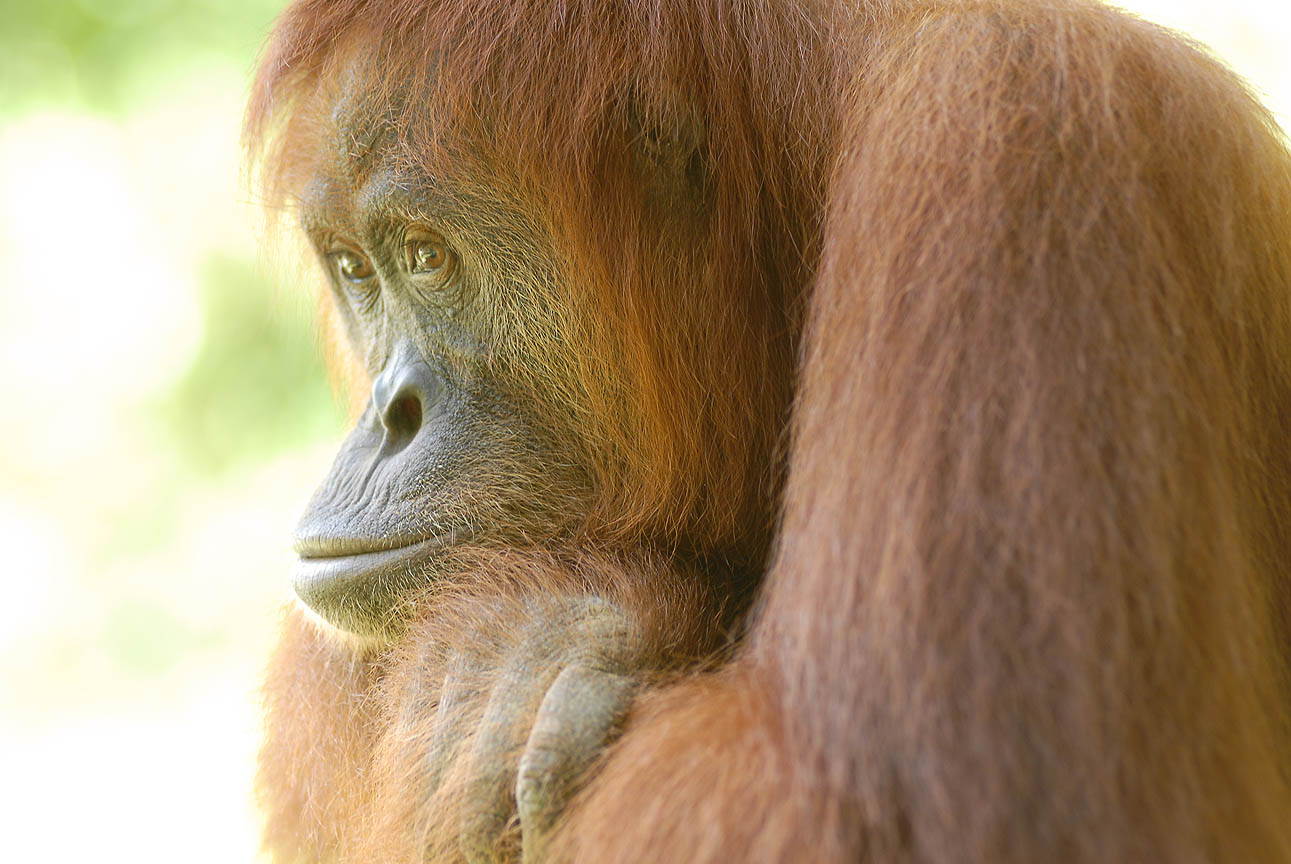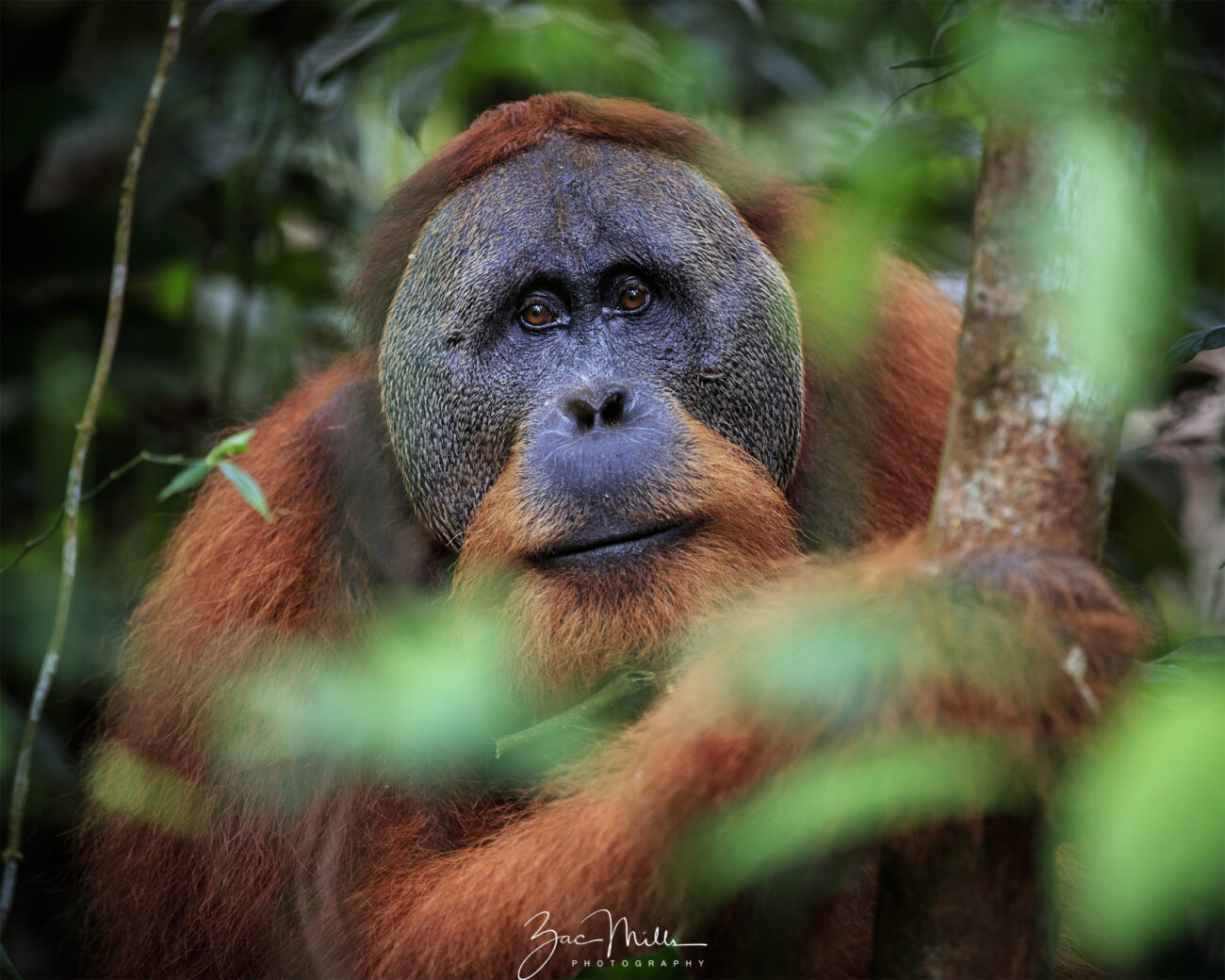
Photo credit: Zac Mills, the Wildlife Collective
Many theories about human evolution rely on primate behaviour for evidence. They often focus on male aggression while ignoring female primates or treating them as passive figures. Scientists now know that female monkeys and apes have diverse and active roles in reproduction. Yet, outdated myths about orangutans are still being published and passed off as facts.
Orangutans have male bimaturism — meaning adult males can look very different. Flanged males have large cheek pads and throat sacs, enabling them to produce booming long calls. Unflanged males don’t develop cheek pads or throat sacs for many years, and some never will. In the past, unflanged males were wrongly referred to as “subadults” who use “sneak” tactics to force copulations on females.
But this idea has been debunked. Since 2002, primate scientists have stopped using the terms “subadult” and “sneak” to describe unflanged males, as they are fully grown adults who female orangutans can willingly choose to mate with. Additionally, unflanged males are not the only ones reported to force copulations.
Yet, despite strong evidence, writers outside of primate science still use these outdated terms. They do this because it fits neatly into their narrative: that males are “naturally” violent, that human and non-human females are attracted to dominant, high-status males, or that low-status males are hardwired for sexual aggression. This is deeply flawed and dangerous.
Orangutan reproduction is flexible and can’t be reduced to two simple categories. By using outdated science, these writers frame male violence as a unavoidable product of evolution – as something that we can’t change. Scientists must embrace the diversity of animal life, keep an open mind, and not use apes to justify claims about human nature.
 You can help protect Sumatra's Orangutans. Click to get updates