Here, we answer your most asked questions about the bridge’s design, the safety of the crossing, and why this moment is so important for wild orangutans in West Toba. We want to keep the conversation going! What else do you want to know? Get in touch or sign up to our emails, to learn more.
This project is a collaboration with TaHuKah, North Sumatra Conservation Agency, North Sumatra Provincial Environment and Forestry Service, and the Pakpak Bharat District Government.
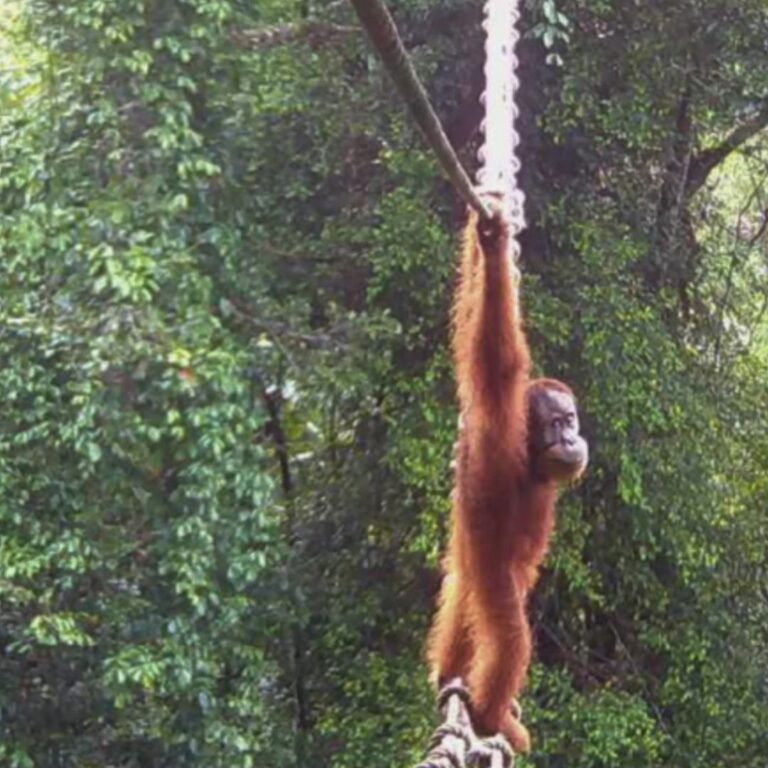
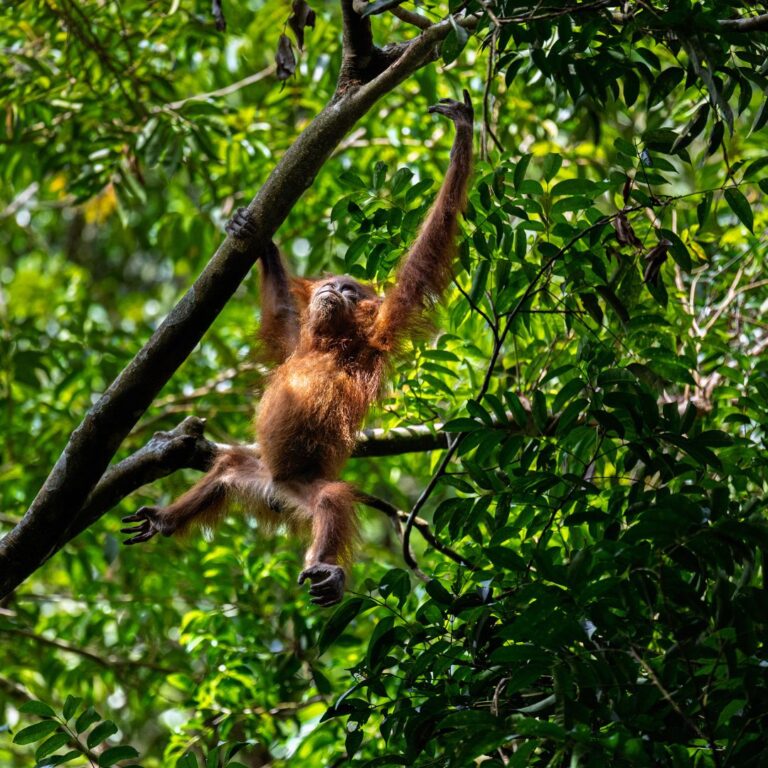
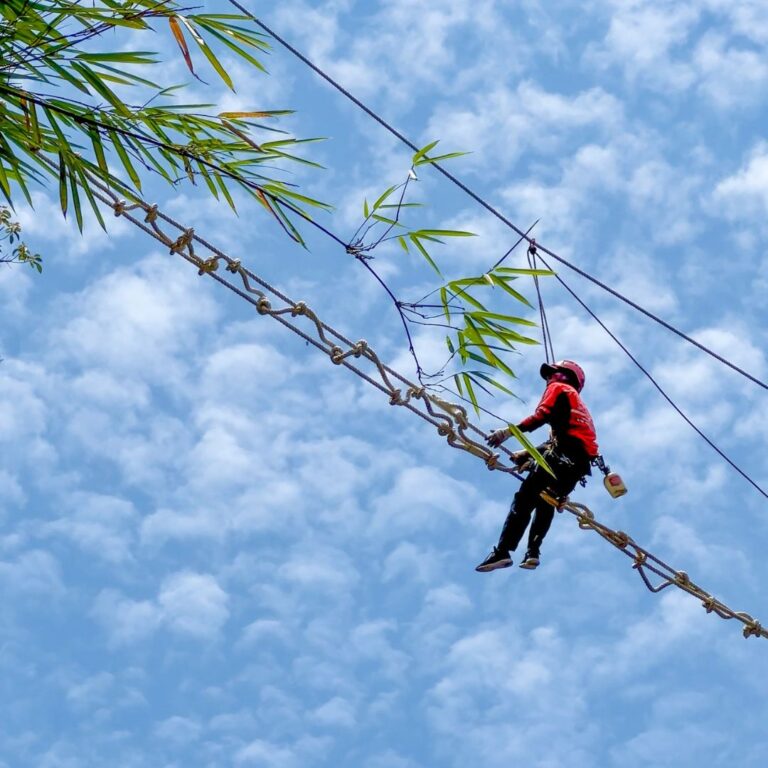
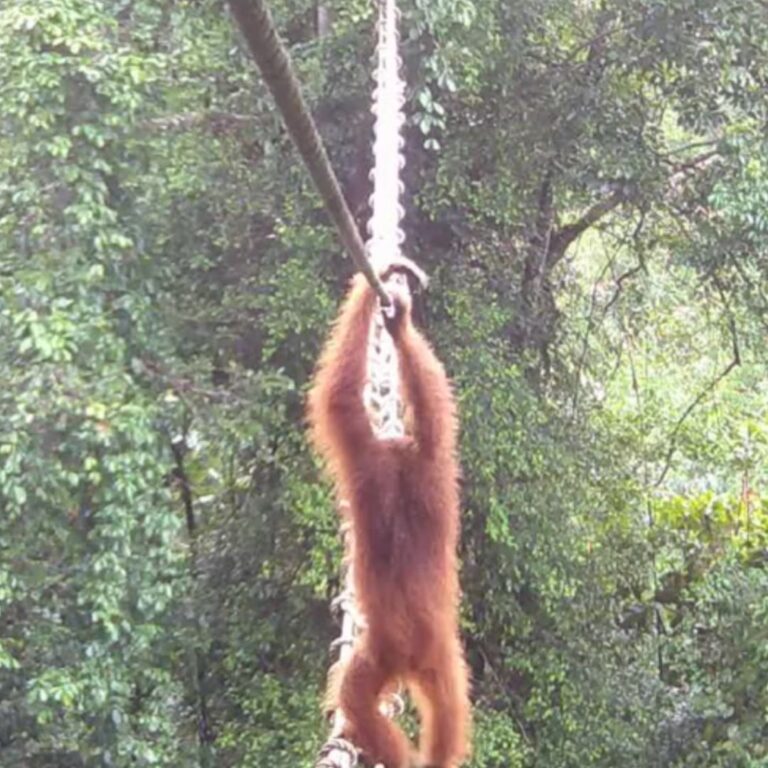
These canopy bridges are designed to support the weight of the world’s largest tree-dwelling animal. Each bridge underwent rigorous stress tests to ensure structural integrity under the weight of multiple adult orangutans. So, the bridge is definitely sturdy enough for this young male. It’s also not a single rope. It is a double rope which mimics the natural structure of branches and vines, making it much more intuitive for an orangutan to use.
While wider paths may look safer to humans, remember that these canopy bridges are designed for orangutans and other arboreal species. These animals are designed for a life in the trees.
If you see orangutans moving through trees, they use both hands and feet which ensures stability. The double rope copies more or less two branches – one for feet and one for hands. A wider bridge would not be as effective for orangutans.
Additionally, for a road of this width (which is not as wide as a highway) it’s best to have multiple crossing points for wildlife. The canopy bridges were strategically placed where orangutans are nesting and where the canopy cover is best – meaning that the orangutans can easily find and reach the bridges.
Because they are so simple and affordable, canopy bridges offer a scalable solution for conservation efforts worldwide. In contrast, a forested overpass is very costly and takes years to build. So, the very nature of the bridges means that conservation groups like SOS and TaHuKah can deploy them quickly, exactly where they are needed most.
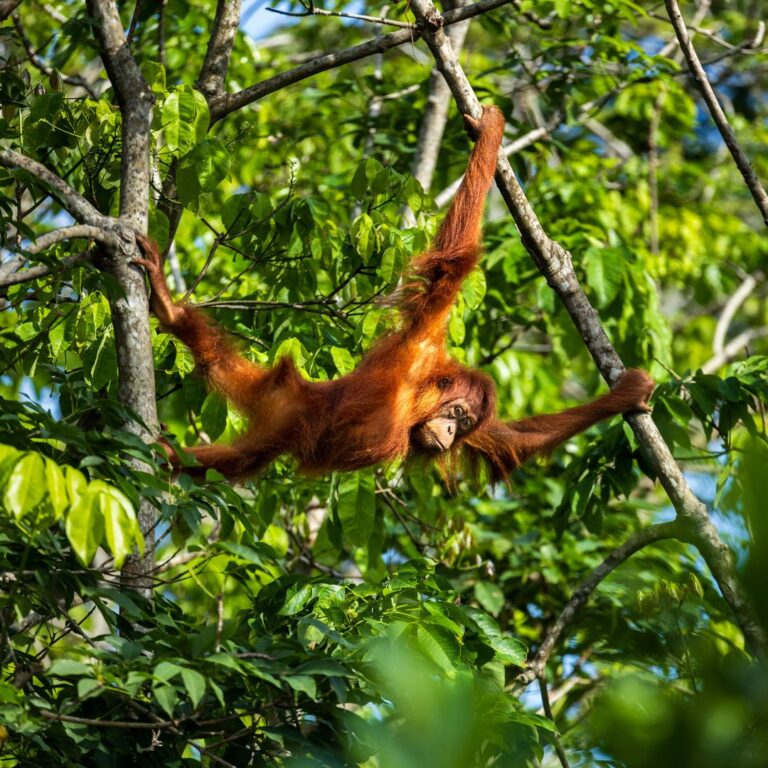
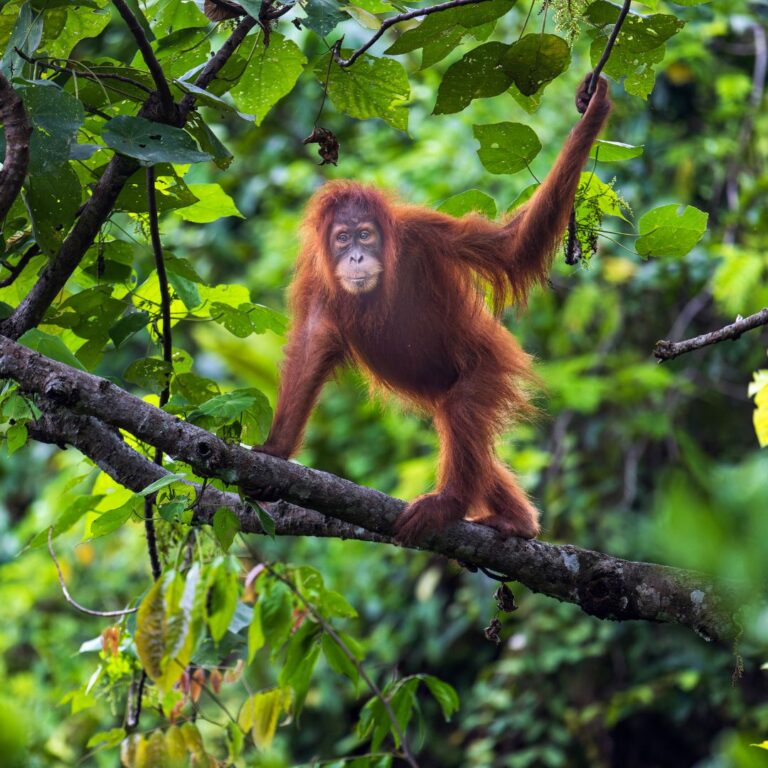
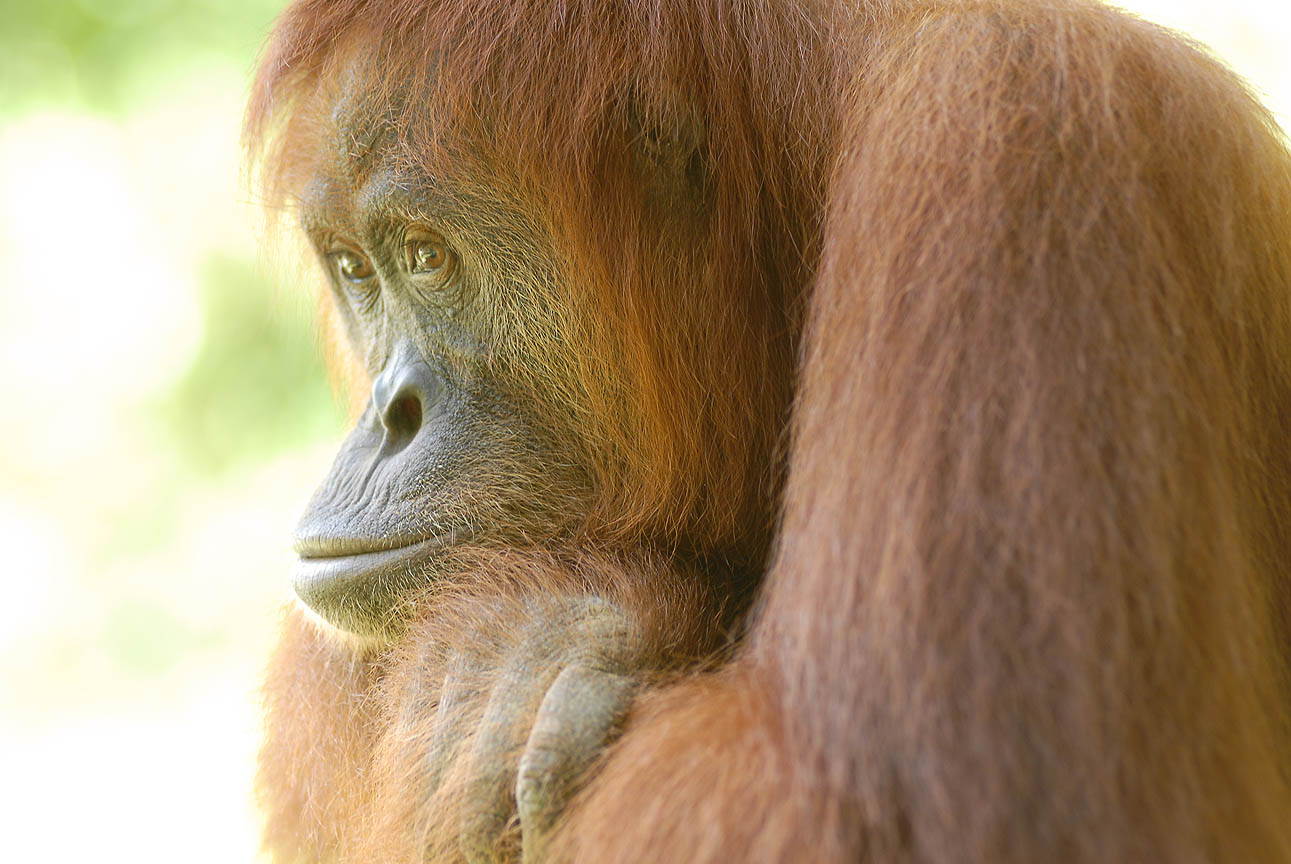
Orangutans are perfectly adapted to a life in the trees. Every aspect of their physiology is designed for grasping branches and living high up in the canopy. Their long armspan allows them to bridge gaps between trees and they are so strong that they can sway trees back and forth until they can grab the next one.
Orangutans have opposable big toes that act like thumbs. This means they have a four-handed grip on branches, allowing them to hold on very securely.
So, in answer: the orangutans won’t fall, just as they don’t fall in the forest. The ropes are strong and have been placed by highly professional and skilled people.
While we can expect others to follow, our primary objective may have already been met.
Our canopy bridges were designed to restore gene flow to an isolated population. Because a single male orangutan can produce 15 offspring in his lifetime, just one crossing per generation (35–40 years) is theoretically enough to maintain the genetic health of the smaller population.
So, while we would be thrilled to see more orangutans cross, for now – one male is enough to deem this project a success.
Female orangutans will most likely not use the bridge, as they tend to stay close to the home ranges where they were born. This is called philopatry: they prefer to establish their home ranges near or overlapping with their mothers. Our goal was to have a male orangutan cross the bridge as this improves genetic diversity – as explained in the previous question – which means the bridges have been a success!
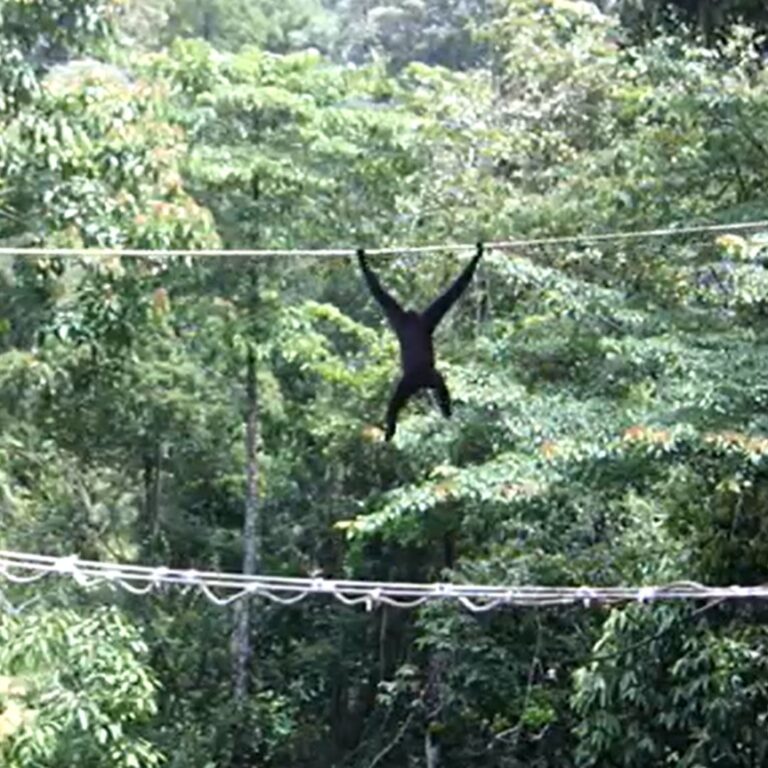
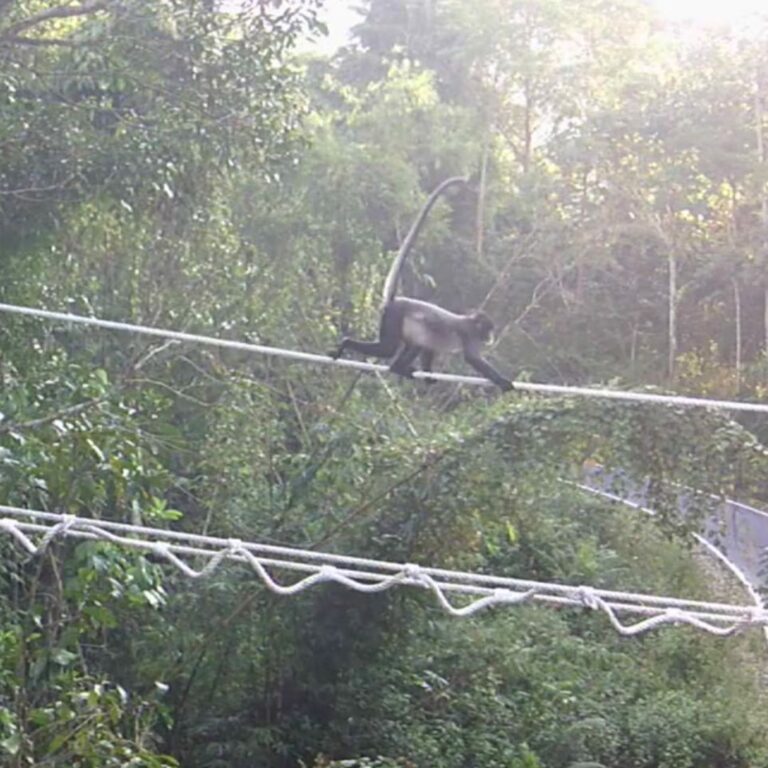
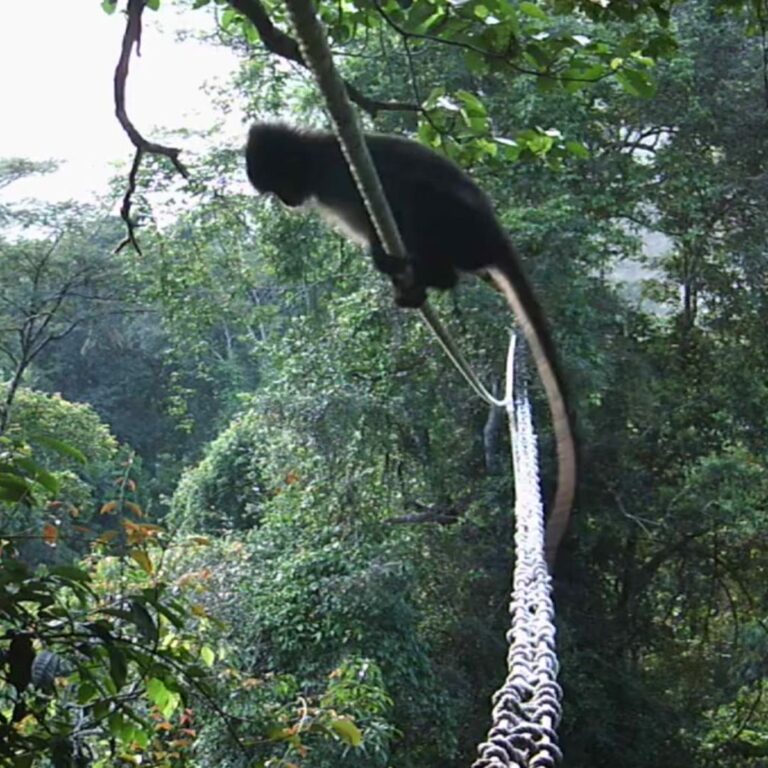
Beyond orangutans, these bridges serve as vital corridors for many species, preventing roadkill and ensuring gene flow. We have already seen squirrels, macaques, langurs and gibbons using the bridges, so they really do benefit the entire ecosystem.
It took two years for the first orangutan to cross as they are a very cautious and intelligent species. They rarely take risks with unfamiliar structures until they are certain of their safety.
This behaviour was predicted by TaHuKah’s ecologists at the onset of the project. We expected that macaques would be the first to cross, as they are the most curious of the forest primates. Then in due course, larger primates like gibbons and orangutans would cross – which is exactly what happened.
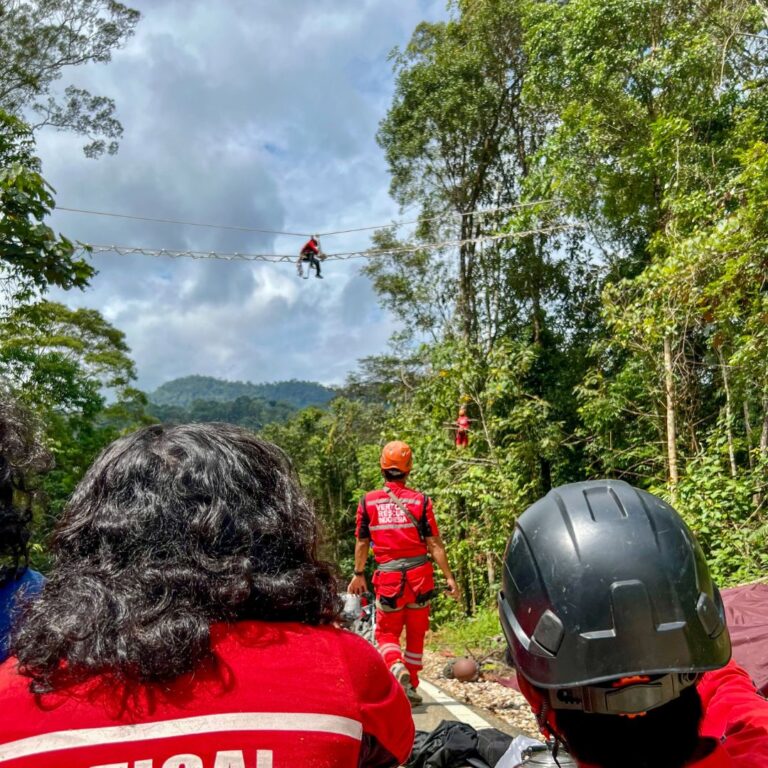
The risk of poaching at these sites is exceptionally low due to the bridges’ design and location. Situated high in the canopy, these structures are inaccessible to anyone without specialised climbing equipment and professional training.
Our frontline partners, TaHuKah, maintain a constant presence by monitoring both the bridges and the surrounding landscape. While we occasionally manage instances of human-orangutan conflict related to crop-raiding, there have been no recorded incidents of poaching within West Toba. Furthermore, the bridges are equipped with camera traps and are subject to regular inspections by staff and community patrols, which serves as a deterrent against illegal activity.
Logistically, the bridges are an inefficient target for illegal activity. Since orangutans do not cross them daily (we waited two years for this moment), it would be far more likely that a poacher would seek out a fruiting tree in the deep forest.
Canopy bridges provide a lifeline for tree-dwelling species, preventing functional extinction by reconnecting fragmented forests. They were primarily built to provide connectivity for arboreal primates.
In short, there simply aren’t enough orangutans crossing the bridge for this to be an issue.
Orangutans are semi-solitary, and so they rarely cross paths in the forest as is.
While male orangutans will travel long distances to find new territories and mates, females prefer to establish their home ranges very close to, or directly overlapping with, their mothers. So, a female would have much less incentive to venture across the bridges.
As for male orangutans, they generally steer clear of each other. The dominant (flanged) males use their long call to announce their direction of travel, so that rivals can actively avoid them. This makes a traffic jam on the bridge very unlikely.
That being said, the bridges are structurally sound and strong enough to hold the weight of multiple adult orangutans. And, we have seen many macaques and langurs using the bridges at the same time, without any issue.
Yes! In fact, before the orangutan crosses, camera traps recorded giant black squirrels, plantain squirrels, macaques, langurs and gibbons all using the bridges. The canopy bridges are a multi-species solution.
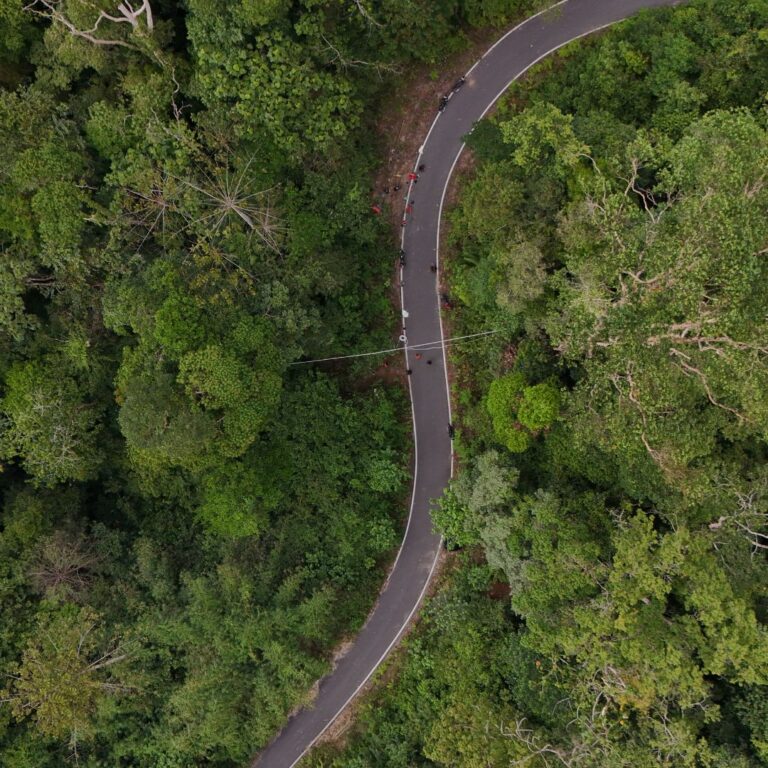
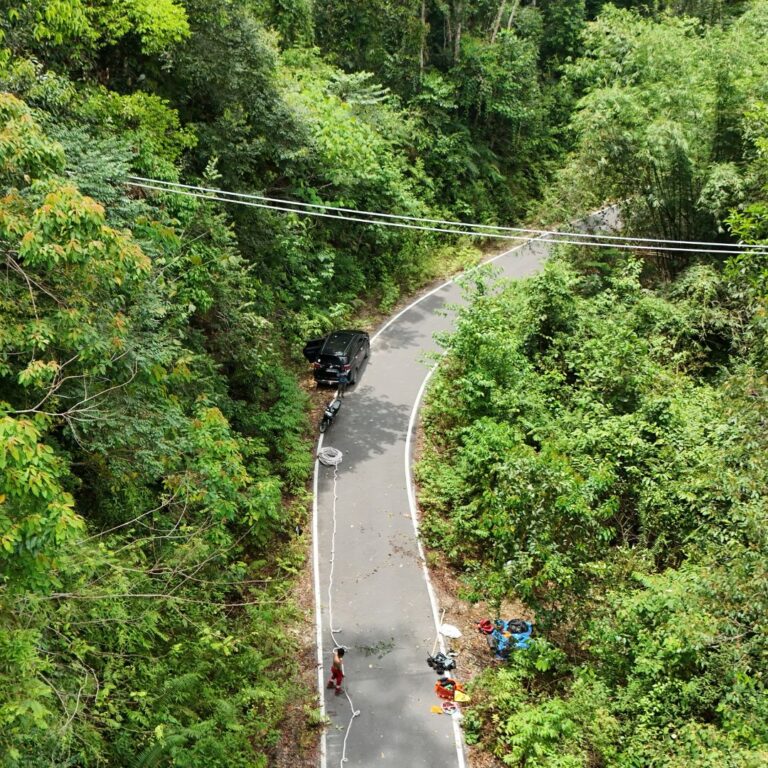
It isn’t a wildlife reserve. The road is actually a public access route called the Lagan-Pagindar road. It sits between two protected areas: the Siranggas Wildlife Reserve and the Sikulaping Protection Forest.
Because the road was widened in 2023, it became impossible for arboreal animals like orangutans to cross naturally. The canopy bridges allow us to maintain this essential human infrastructure without isolating the critically endangered wildlife living on either side.
The Lagan–Pagindar road provides local families with access to healthcare and education, and other essential services. Closing the road is not an option; conservation should never come at a cost to local people. Instead, we must find solutions where both people and nature can thrive.
The canopy bridges do just that: allowing modernisation and better support for rural communities, without severing the pathways that orangutans and other arboreal primates need for survival.
 You can help protect Sumatra's Orangutans. Click to get updates