Photo credit: Zac Mills, the Wildlife Collective#Science
Researchers spent two years studying how wild Sumatran orangutans survive in areas where forests have been replaced by farms. They studied a group of isolated orangutans living in an agroforestry system with no access to natural forests. They found that the orangutans modified their behaviour in surprising ways.
First, females raided crops more than males. This is unusual for primates; both male chimpanzees and male vervet monkeys tend to take more crop-raiding risks than females. This could be because the farmers weren’t aggressive, making the risk lower for mothers and their offspring. It could also be because there wasn’t much competition between males in the area.
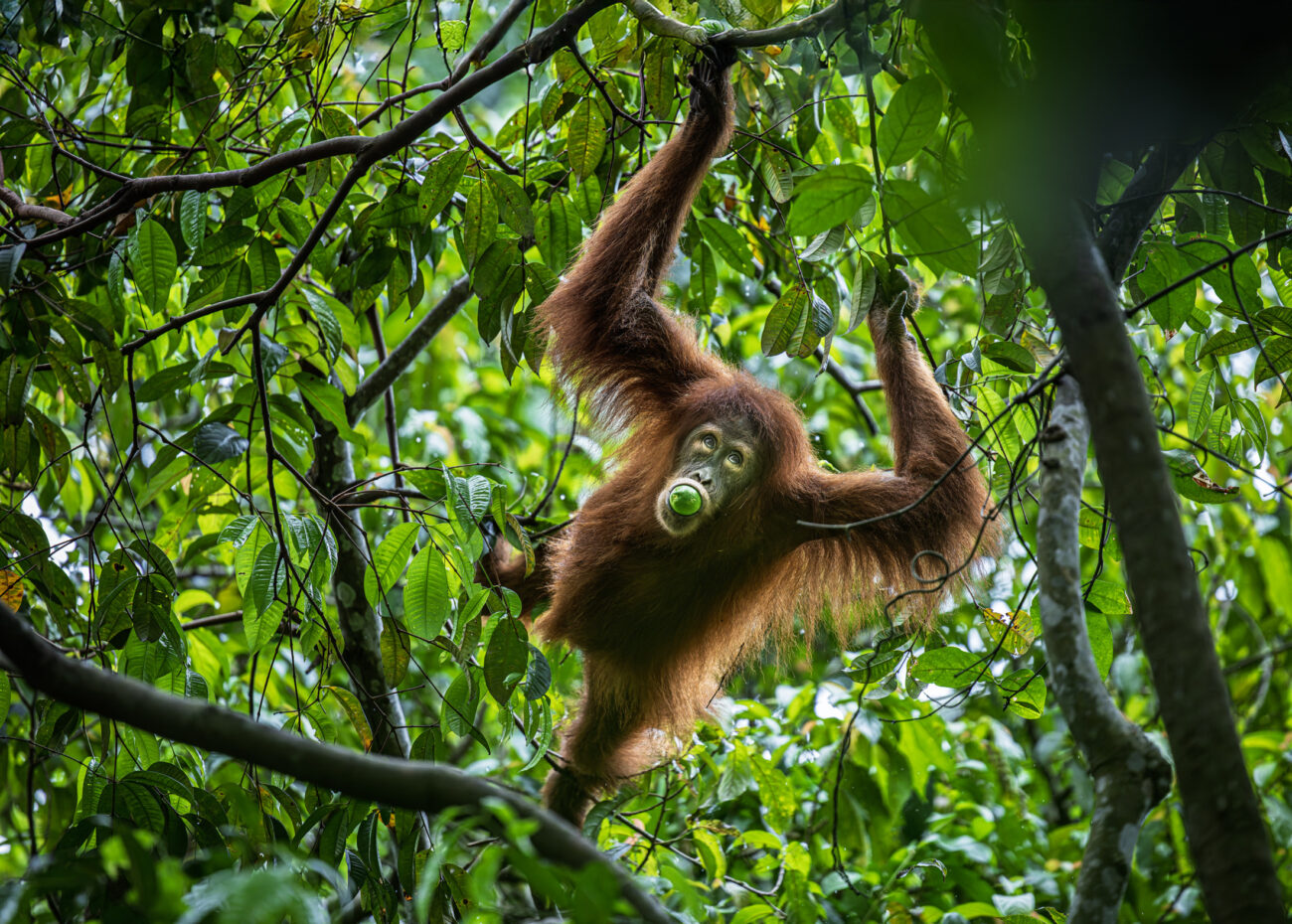
Second, the researchers found that orangutans mostly raided farms in the late afternoon and evening. This means they specifically waited until the farmers had finished work and gone home. In other words, they have learnt their work schedule and adapted their behaviour accordingly. They also discovered that jackfruit is a firm favourite!
Third, around 21% of their diet came from farmed crops, and they ate more bark as a fallback food. This is a big difference compared to orangutans living in primary forests. This specific population also spent more of their time resting (54%) than feeding (24%). This contrasts to orangutans living in primary forest who spend over half of their time feeding.
As forests are converted into farmland, it is important to understand orangutan behaviour change. If we can predict their behaviour, we can prevent conflict. For example, by maintaining natural food sources in agroforestry systems, and protecting valuable crops based on feeding patterns, we can find solutions that support both humans and wildlife.
 You can help protect Sumatra's Orangutans. Click to get updates