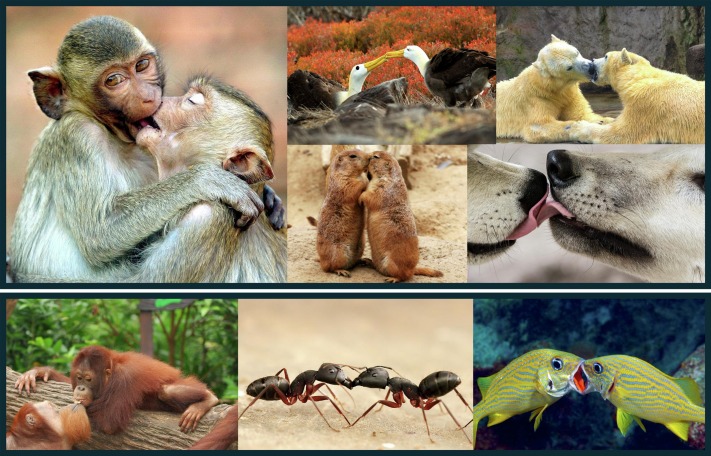
Credit: Brindle, Talbot, West (2025). A comparative approach to the evolution of kissing, Evolution and Human Behavior.
The evolutionary origins of kissing have long been debated. Is it a “compatibility test” to find a healthy mate? Or perhaps the final step in a grooming ritual? New research has shed light on this mystery. Scientists have traced the behaviour back 16 to 21 million years ago, discovering that the “first kiss” is much older than we ever imagined.
In a surprising twist, it turns out Neanderthals were likely kissing, too. Because modern humans and Neanderthals share a specific oral bacteria, scientists believe the two groups were getting up close and personal. Or, as the researchers put it: we “must have been swapping saliva for hundreds of thousands of years.” How romantic!
Researchers were also surprised to find “kisses” shared across the animal kingdom. From bugs to birds, to polar bears. To make fair comparisons across species, the team established a precise (and decidedly unromantic) definition of kissing: “non-aggressive, directed oral-oral contact” involving lip or mouthpart movement, but crucially, no food transfer.
So, why does this matter? Researchers argue that we shouldn’t dismiss kissing as just a silly romantic quirk. It is a fundamental behaviour we share with our non-human relatives and a vital clue to our evolutionary past. While this study successfully pinpointed kissing evolved, the ultimate mystery still remains. Why?
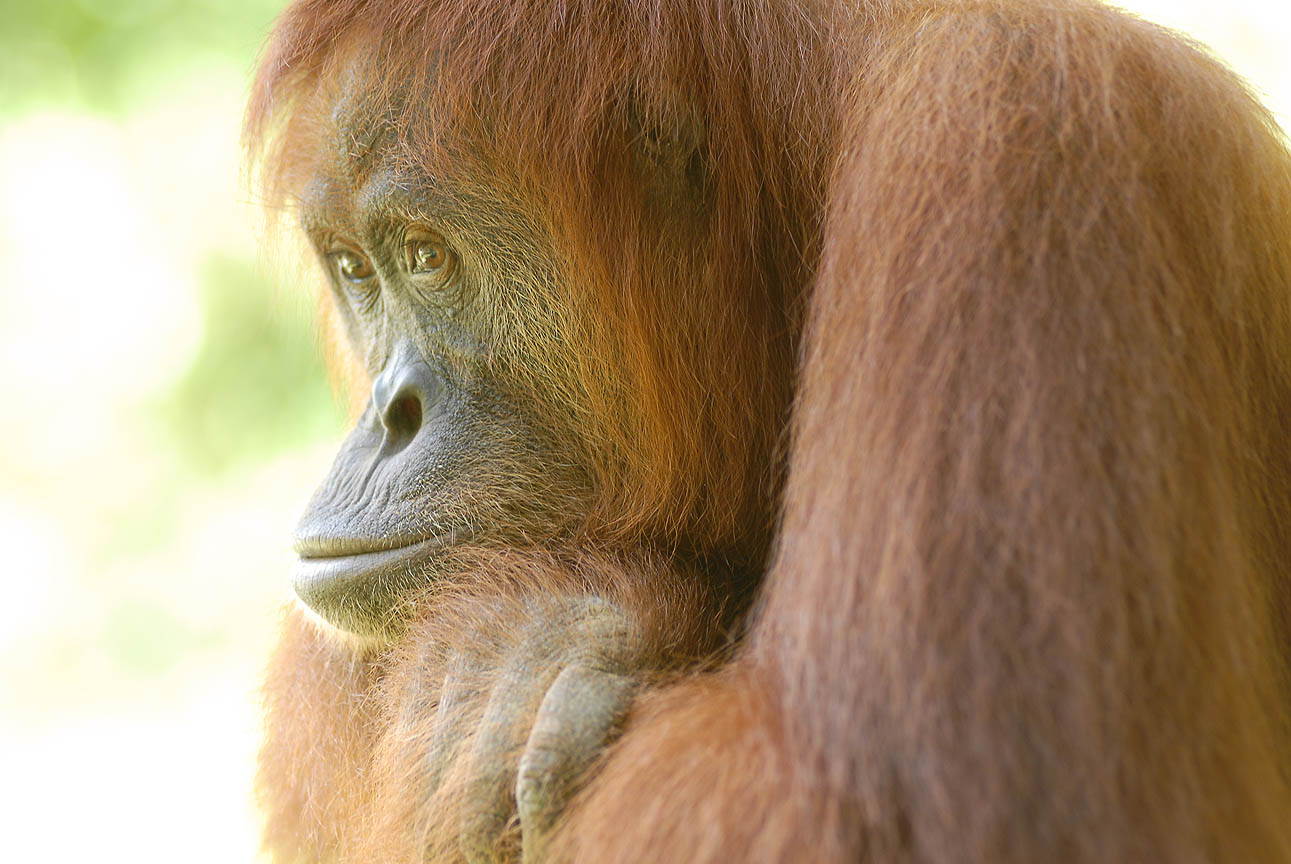
 You can help protect Sumatra's Orangutans. Click to get updates