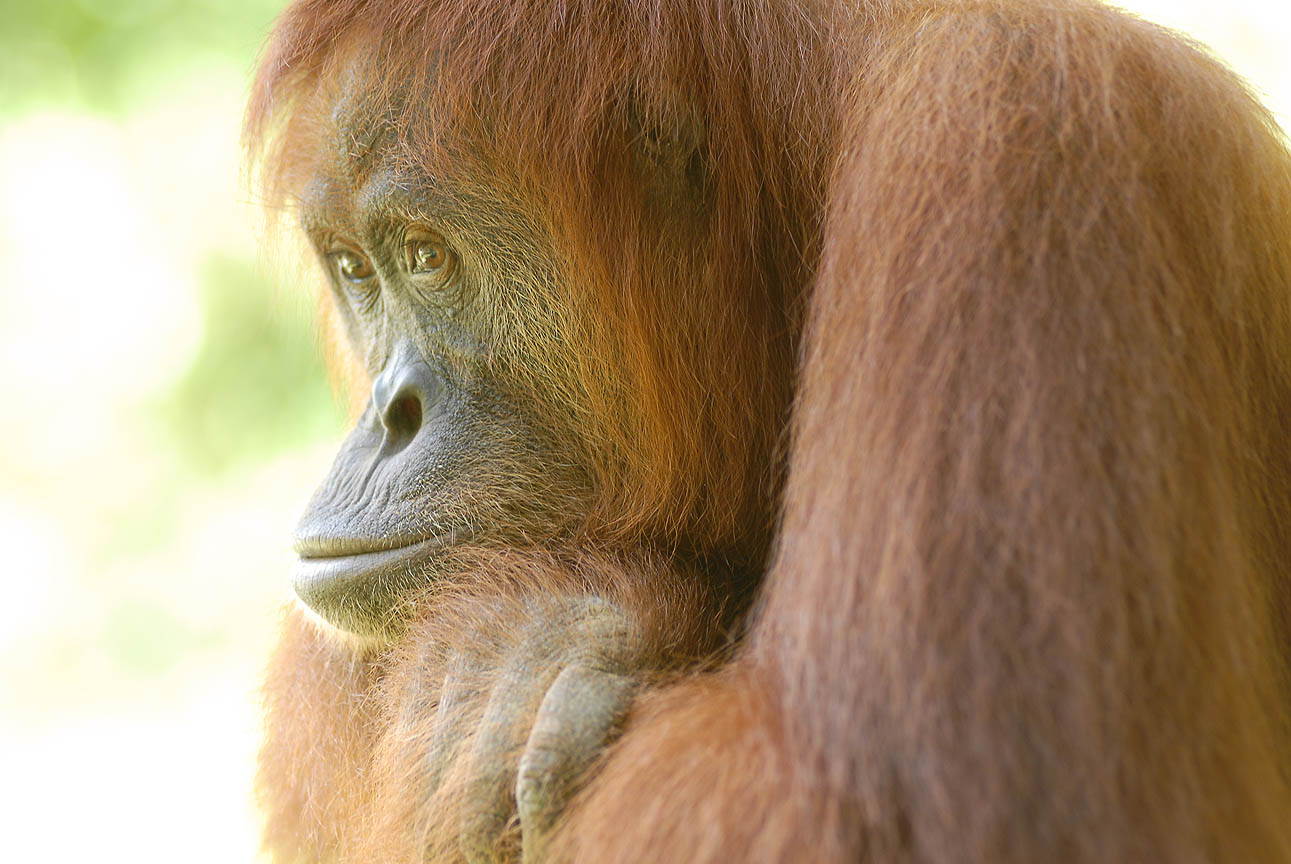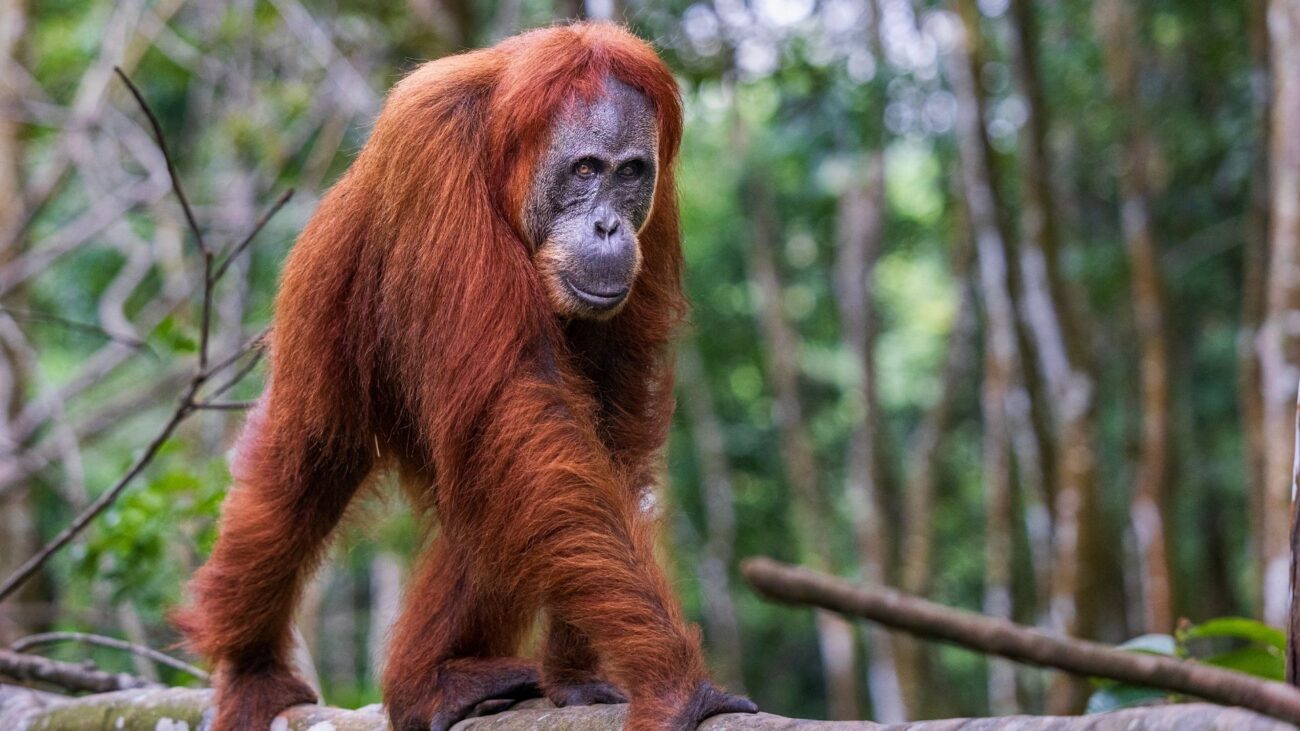
One question we get asked all the time is: Why are orangutans orange? Wouldn’t a reddish-orange coat make a tree-dwelling ape stand out to predators?
The answer could lie with tigers.
Sumatra is the only place on the planet where orangutans, tigers, sun bears, and elephants all coexist in the wild.
Tigers are dichromatic—their eyes only have two types of colour receptors (blue and green). Because they lack the receptor for red, they literally cannot see the colour orange.
To a tiger looking up into the green canopy, an orangutan looks practically invisible.
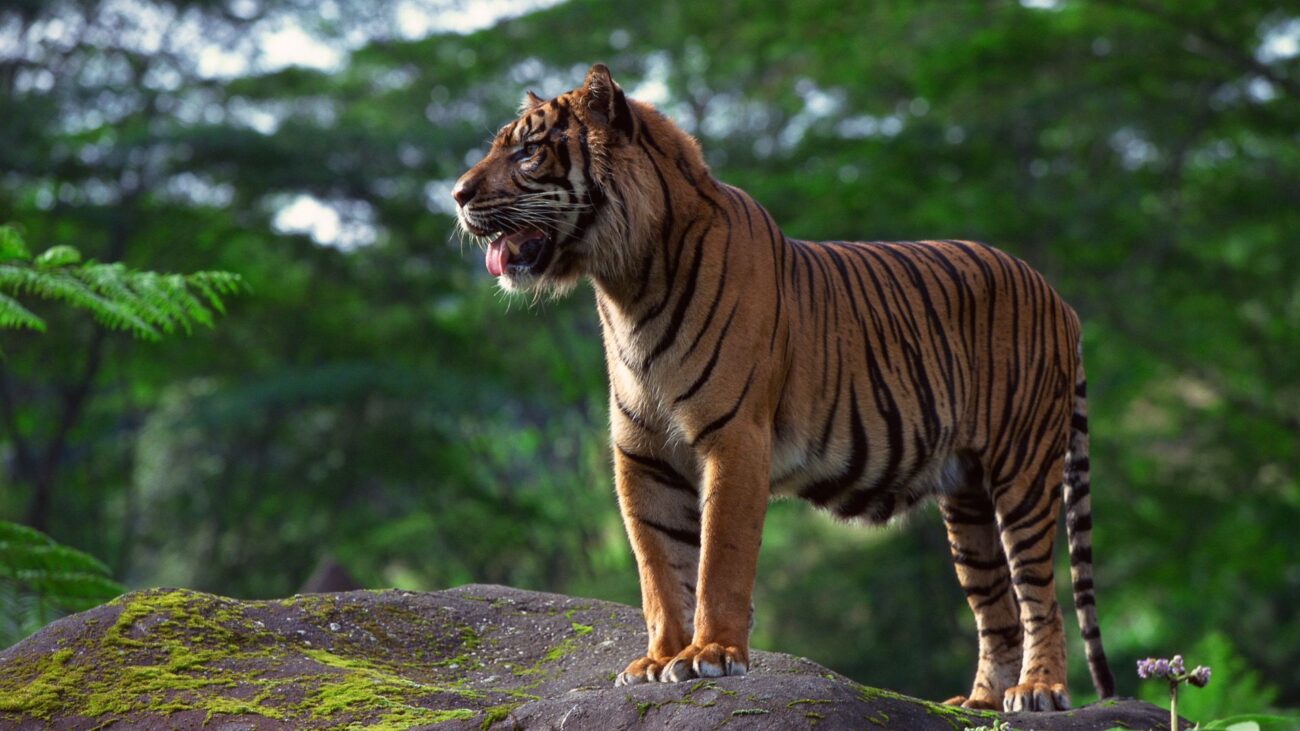
Photo credit: Jupiter Images via Canva Pro
So why did the tiger end up orange in the first place?
It turns out tigers are playing the exact same trick on their own dinner. Most prey animals, like deer and wild boar, are also dichromatic.
This means that, to a deer, a tiger doesn’t look orange; it looks like a muted green or earthy brown shade. This perfect camouflage allows tigers to blend seamlessly into the forest foliage and ambush their prey.
Monkeys and apes are trichromatic. We have three colour receptors, which evolved to help early primates spot ripe, colourful fruit against green foliage.
That extra colour vision means orangutans can easily spot one another across the canopy—all while remaining essentially invisible to the apex predator waiting below. It’s the ultimate optical illusion!
This evolutionary connection between Sumatra’s tigers and orangutans is just one example of what makes this island so extraordinary. But both species are facing threats from habitat loss and fragmentation.
To protect these iconic species and the entire rainforest ecosystem, conservation must go hand-in-hand with the wellbeing and prosperity of local communities. We work alongside local people and our conservation partners to build long-term, sustainable solutions that allow both people and nature to thrive
 You can help protect Sumatra's Orangutans. Click to get updates