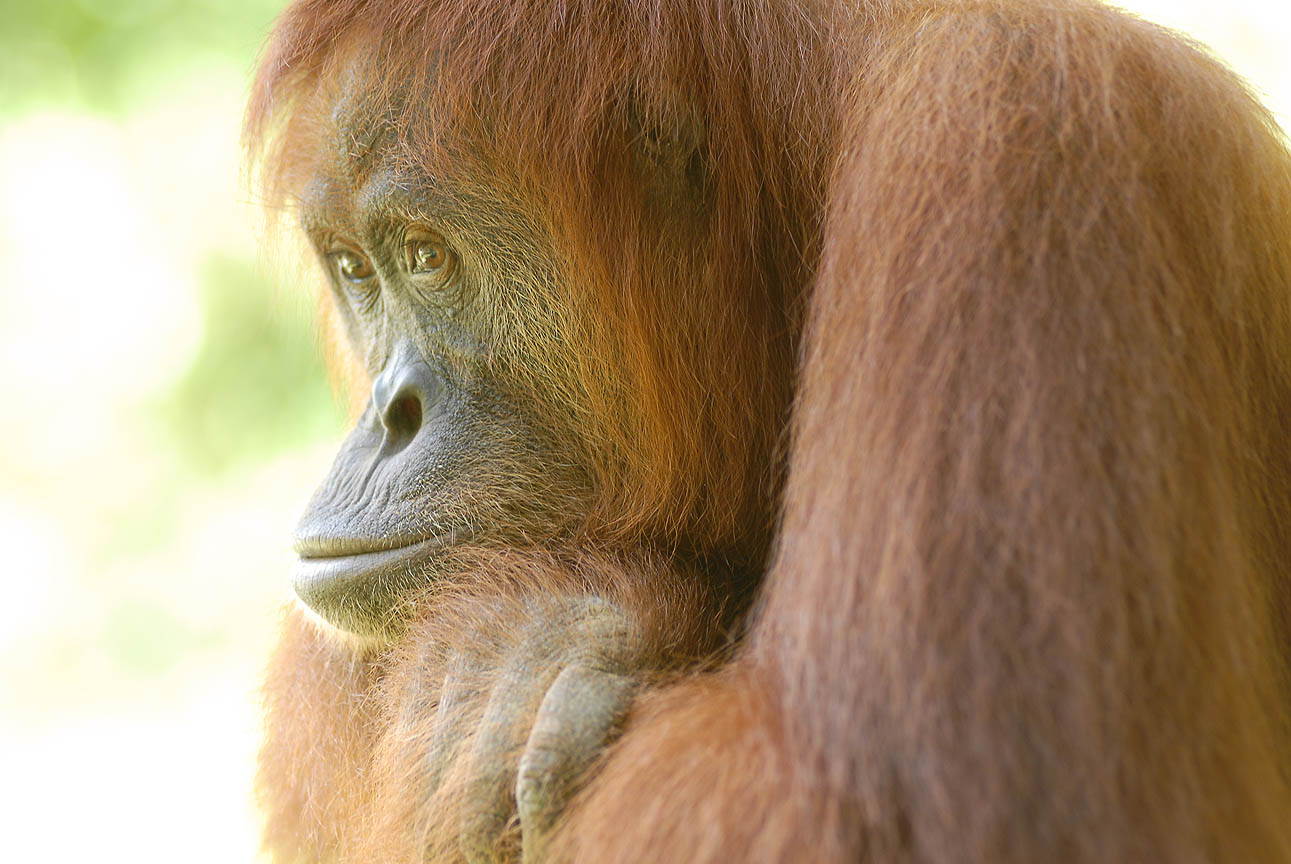
Photo credit: Zac Mills, the Wildlife Collective
The question of how humans and other apes lost their tails is an evolutionary mystery. Tails are very useful. They aid with balance, climbing, and communication. So, why did apes lose them? You might have assumed that as humans became bipedal, we simply lost our tails over time. But here’s the problem: we lost our tails first, long before we walked on two legs.
In a surprising discovery, researchers have found that tail loss is caused by a tiny, “jumping” DNA segment called an Alu element. The Alu element inserted itself into the gene that controls tail development in animals. This effectively caused the tail to vanish “in one fell swoop”. In other words, instead of our tails gradually decreasing into nothing, we lost our tails almost overnight.
But this sudden genetic change was not without risk. The same mutation that eliminates the tail also increases the chance of spinal cord defects. So, for this mutation to persist, there must have been a huge evolutionary pressure to lose our tails. It must have been so advantageous that the benefits outweighed the cost. Tails became unnecessary for a creature evolving into an upright, two-legged posture.
Until about five years ago, the Alu element was assumed to be useless “junk” genetic material. Now, we know that it changed the course of our evolutionary history. It’s mind-boggling to think about how many other complex (yet random) mutations could have shaped humankind – both defining us as apes, and setting us apart from our wild cousins.
 You can help protect Sumatra's Orangutans. Click to get updates