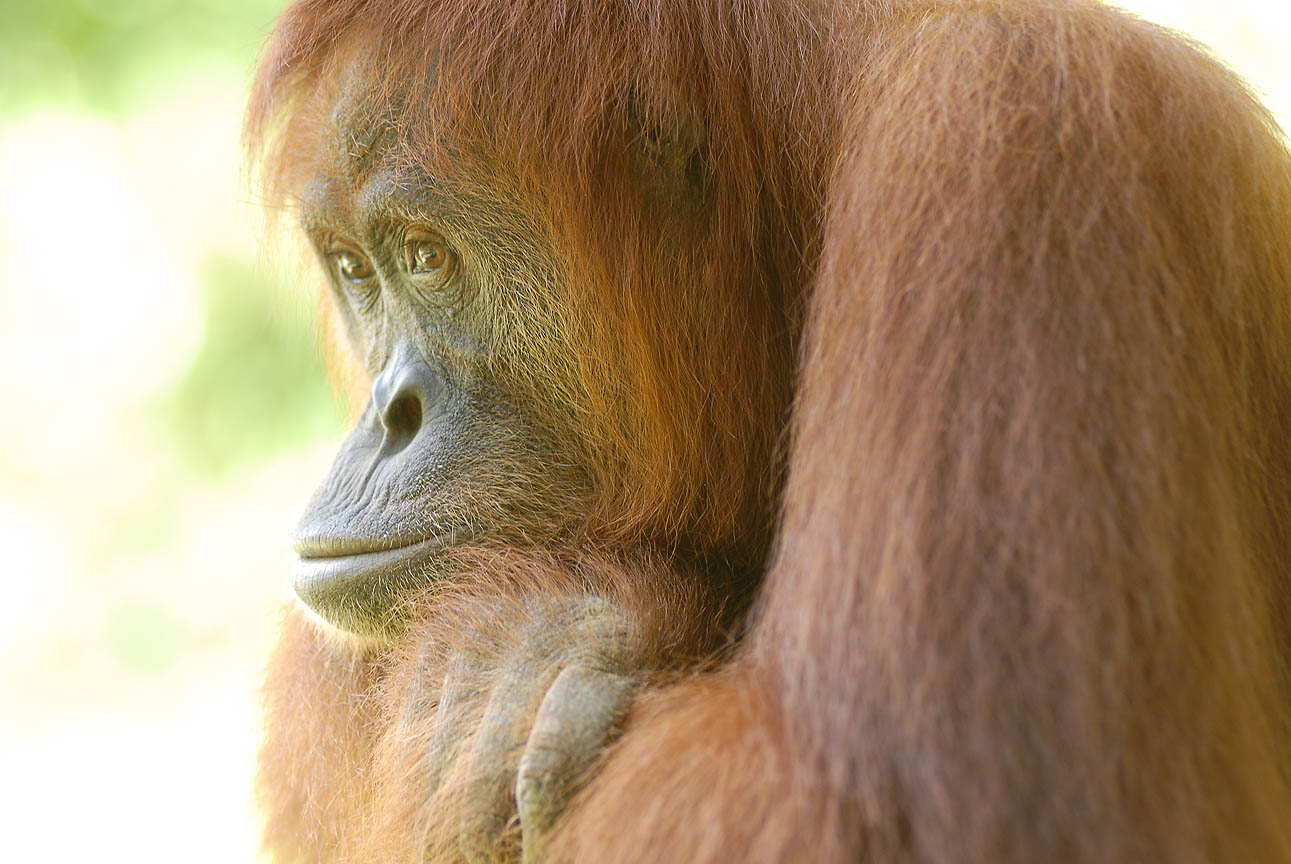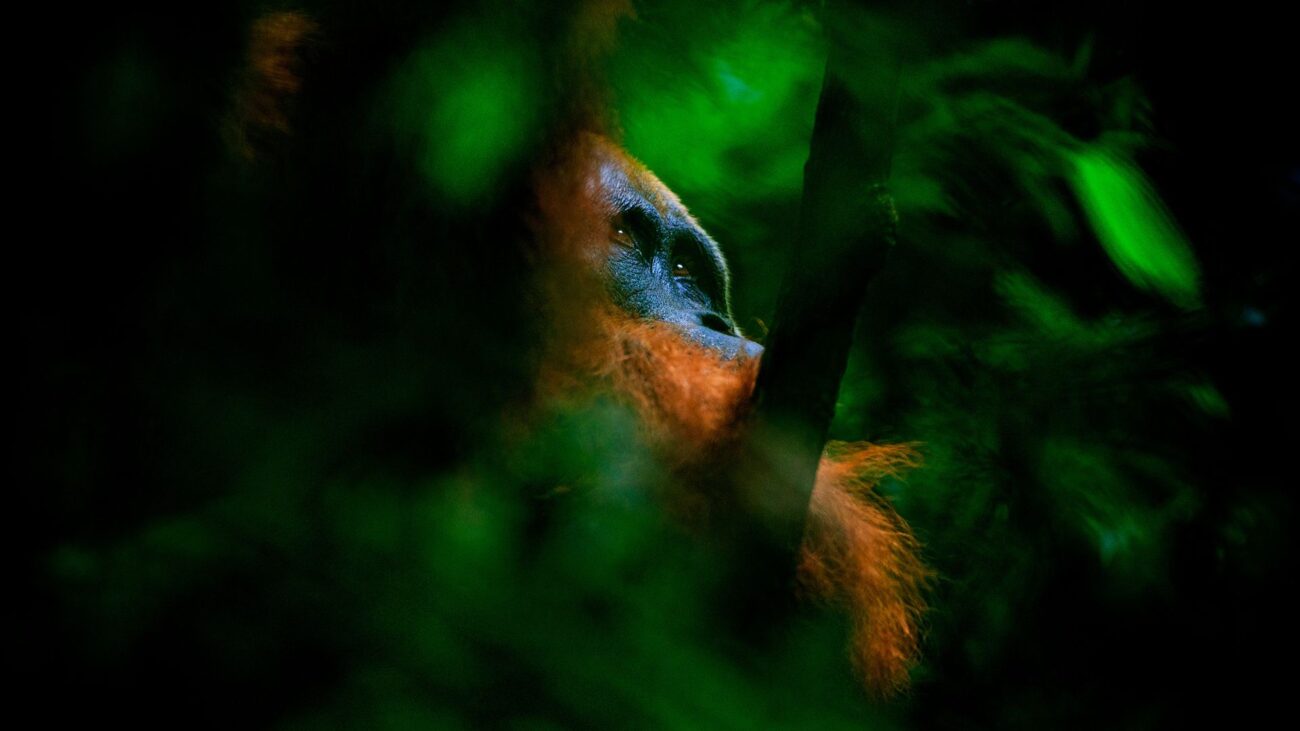
Across Southeast Asia, orangutans have been woven into local myths, legends, and daily lives for centuries. From shapeshifting tricksters to wise guardians of ancient knowledge, local folklore reveals a complex, deeply rooted relationship between communities and the forest.
Far from being spooky stories, these legends offer a unique lens into how people perceive the natural world – showing why anthropology matters to modern conservation.
For conservation to succeed in the long-term, it cannot be built around a single view of what the forest means or what should happen to this land. Successful conservation starts by listening to the people who live alongside rainforests – and that’s where anthropology comes in.
Anthropology gives our partners the tools to listen first. By spending time in villages and listening to elders, farmers, and homemakers, field teams can begin to understand why forest loss happens and look beneath the surface to address root causes.
Although perceptions change across communities and ethnic groups, it is clear that orangutans carry huge cultural significance which can directly influence whether a community accepts, resists, or drives conservation initiatives.
“The orangutan is so clever that it pretends it cannot speak – just to avoid having to work” – Old saying
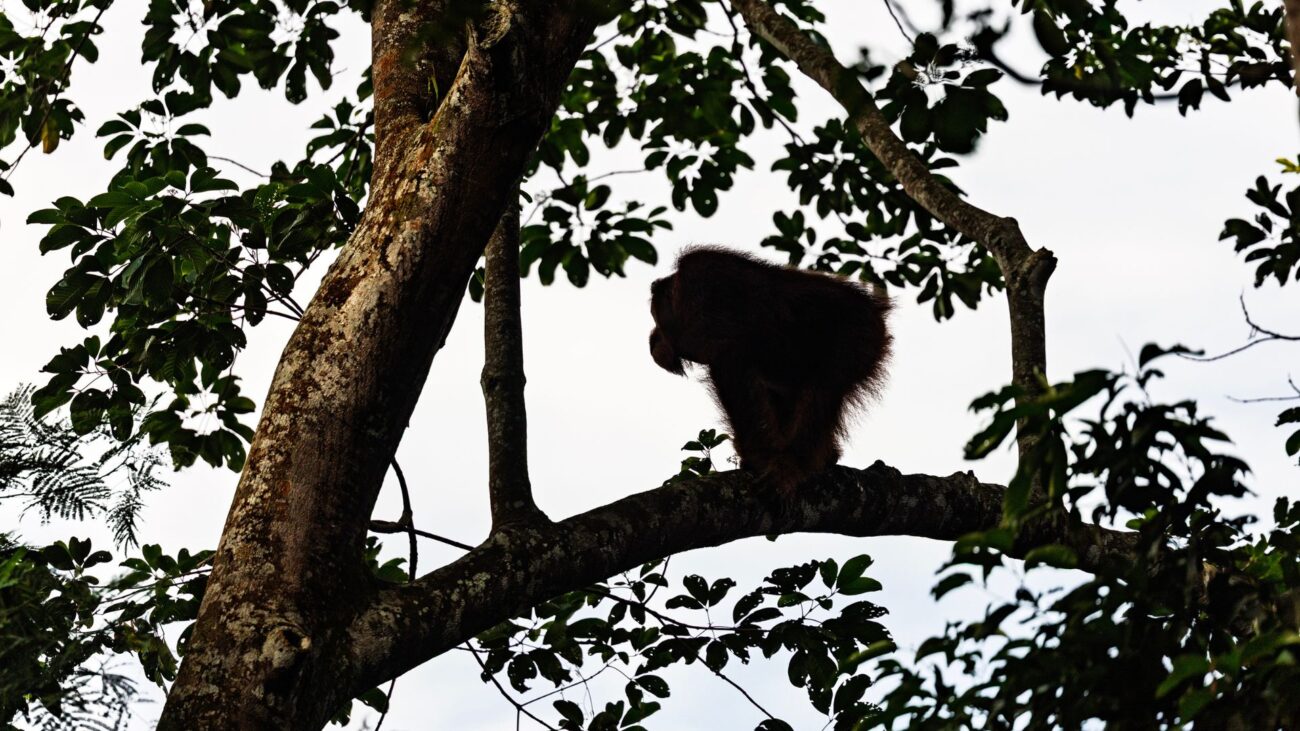
Credit: Zac Mills, the Wildlife Collective
Ancient stories among the Iban people of Borneo tell how Indigenous people learned medicinal practices from orangutans.[1] Long ago, an Iban hunter saw a female orangutan giving birth deep in the rainforest. Nearby, a male orangutan was crushing the roots of some plants and as the hunter passed underneath their nest, some of the roots fell onto him.[2]
The hunter observed how the mother recovered quickly from birth, and so he took the roots back to his longhouse and planted them. Soon, ginger grew. When the hunter’s own wife gave birth, he applied the ginger to her skin, just as the orangutan had. He discovered the medicinal properties of ginger, and this knowledge is still used to this day.
In many tales, orangutans are portrayed as powerful beings who kidnap women and take them to the forest, never to be seen again This belief was so deeply rooted that the Kenyah and Kayan peoples of Borneo take care not to offend orangutans. [2] In other cultures, pregnant women were forbidden to look at them at all – for fear of harming the baby or causing birth defects.[3]
Often, communities that hold spiritual, traditional, or ancestral ties to wildlife are far more tolerant of animals, even when those animals damage crops or livelihoods. For instance, some Batak farming communities in Sumatra view orangutans as hungry neighbours rather than pests, leading them to tolerate crop loss and refrain from harming them.[4]
“When encountering an orangutan on a durian tree, we do not harm them but usually say, ‘Take your share, but don’t take too much. Leave some for me’. It has been proven that they will take their share, and there is still plenty left for the farmers.” – a 52-year-old village head, North Tapanuli [4]
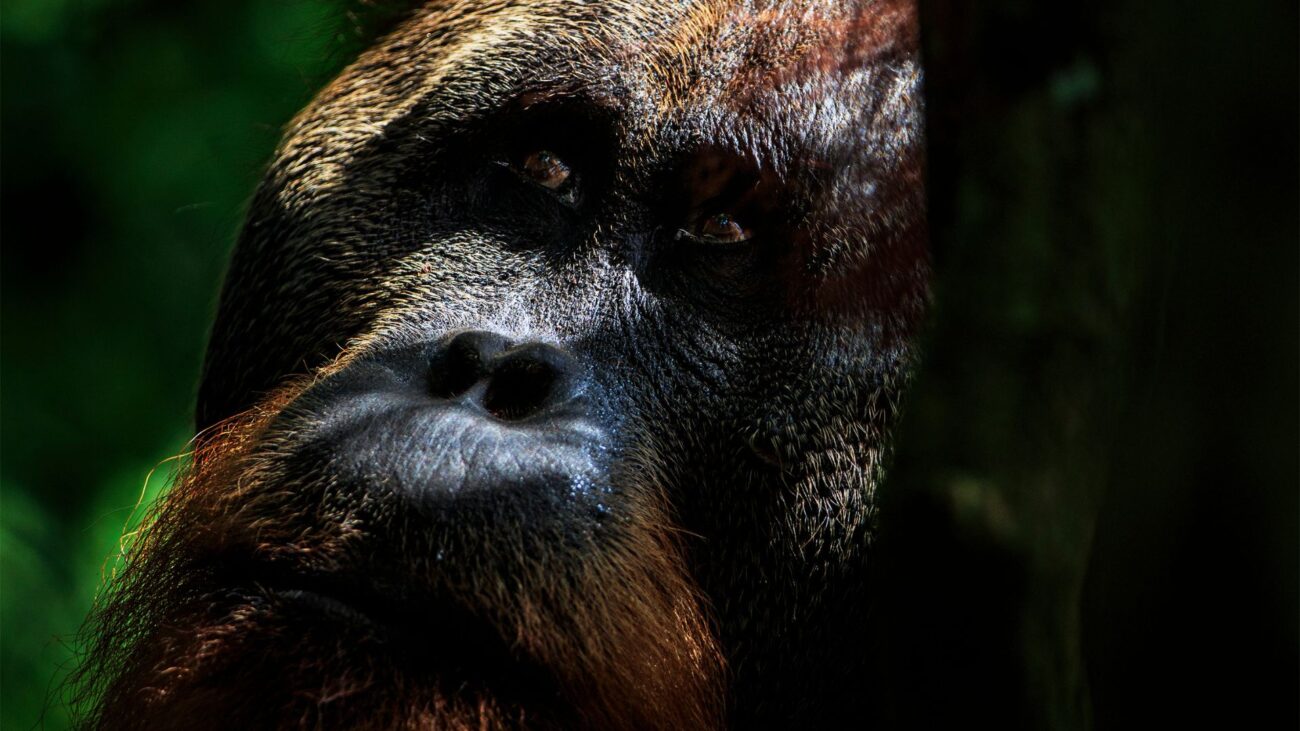
Credit: Zac Mills, the Wildlife Collective
According to some legends, the orangutan is a human who pretended it couldn’t speak and climbed into the trees to avoid being put to work.[3] Another belief that was widely shared among the Dayak people of Borneo was that some orangutans can become human during the day and return to being orangutans after dark.[1]
Among some communities in South Tapanuli, Sumatra, orangutans are considered haunted and deemed to bring bad luck if harmed.[5] Meanwhile further north, in the Langkat Regency, local people use cautionary tales about orangutans to discourage children from wandering into the forest alone, and are fearful of orangutans due to their immense size and strength.[6]
“Most of the time, when there’s an orangutan, we use that to scare the kids, like ‘Don’t go into the forest, if there’s an orangutan there, it will pick you up and then drop you.’ So, the kids become scared, and they don’t want to go to the forest by themselves.”– a 34-year-old Batak Karo woman [6]
Many – but not all – Dayak groups believe that orangutans are reincarnations of respected community members, such as their ancestors or customary leaders. As a result, disturbing or killing orangutans is strictly prohibited.[1] Among some Batak communities in North Sumatra, orangutans are seen as animals with spirits and so hurting them is deemed an immoral act. [4]
Among the Iban people in Sarawak, Borneo, local traditions tell that orangutans can be friends to humans, with stories describing how an orangutan can guide lost travellers back home or show them which forest plants are safe to eat to escape starvation.[7]
In some Dayak hamlets of West Kalimantan, stories tell of orangutans rescuing people from predators like crocodiles or clouded leopards. These beliefs foster an aura of respect, prompting villagers to allow orangutans into their gardens when wild food is scarce.[1]
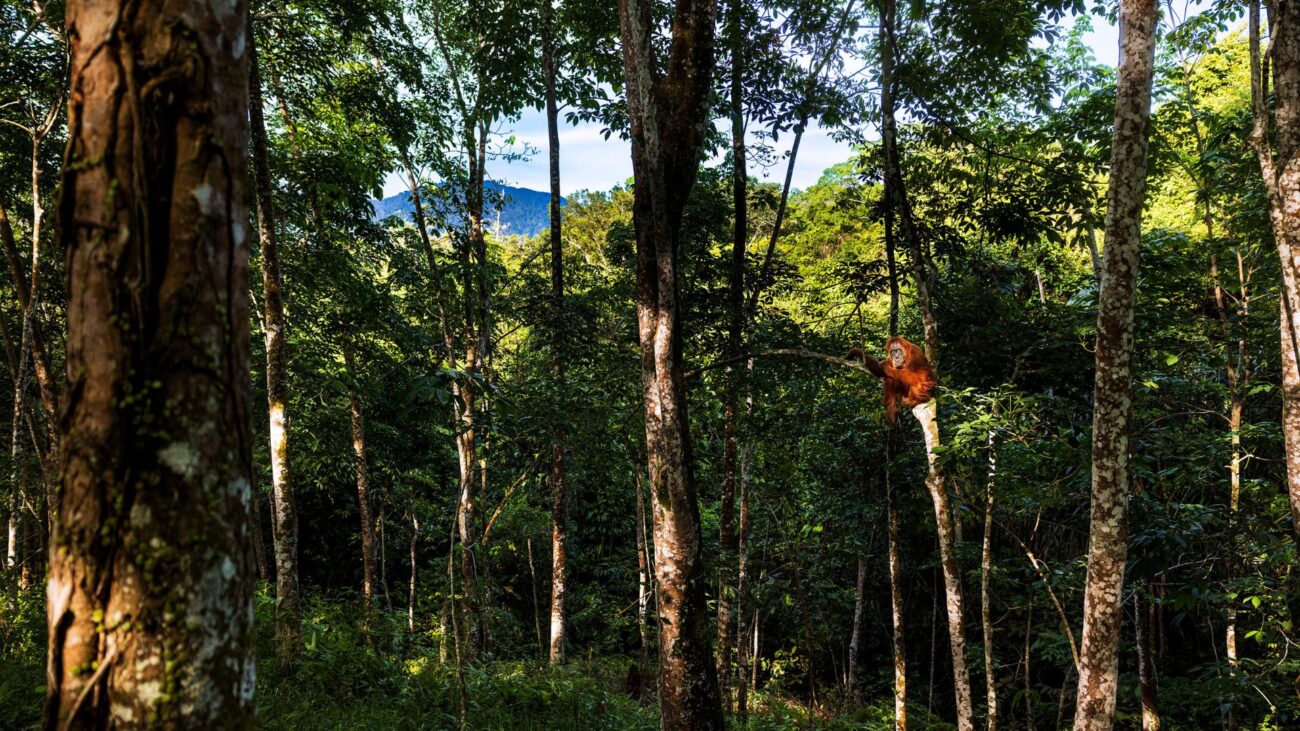
Credit: Zac Mills, the Wildlife Collective
Rainforests are not uninhabited wildernesses; they are living landscapes shaped by generations of human culture. These folktales are more than just stories – they reflect indigenous people’s relationship with orangutans and the deeply held views which have been passed down through generations.
In fact, recent research shows that local names given to Tapanuli orangutans carry distinct cultural connotations that shape community perceptions. While terms like orang utan (person of the forest) carry positive associations, other local names such as juhut bontar (bloody meat) reinforce the perception of orangutans as bushmeat. [8]
These views affect how receptive local people may be towards conservation or how tolerant they are of orangutans on their land. By understanding traditional beliefs and perspectives, alongside the hopes, ambitions, and challenges facing local communities, we can design conservation strategies which respect local heritage.
When conservation respects local culture and leadership, protecting the forest becomes a shared purpose rather than an outside request.
To protect wild orangutans, we must first support the people who call these forests home. By supporting SOS, you can help our frontline partners build trust and genuine, lasting relationships with forest-edge communities.
Our community-centred approach works alongside practical conservation solutions – such as providing fair compensation for crop losses and developing sustainable alternatives to felling trees. Together, we can safeguard Sumatra’s rainforests, its myths and legends, and the wild orangutans that call these complex landscapes home.
Donate today to become part of the solution.
Sources
[1] Yuliani, E.L., Adnan, H., Achdiawan, R., Bakara, D., Heri, V., Sammy, J., Salim, M.A. and Sunderland, T. (2018) ‘The roles of traditional knowledge systems in orang-utan Pongo spp. and forest conservation: a case study of Danau Sentarum, West Kalimantan, Indonesia’, Oryx, 52(1), pp. 156–165. Available at: https://doi.org/10.1017/S0030605316000636.
[2] Earthstoriez (n.d.) INDONESIA: The people of the jungle – Myths and folklore of the Orang-Utan. Available at: https://earthstoriez.com/myths-and-folklore-of-the-orang-utan-indonesia
[3] Brend, S. and Redmond, I. (2007) ‘Our changing view of the great apes’, in Dounias, E., Motte-Florac, E. and Dunham, M. (eds) Le symbolisme des animaux : l’animal, clef de voûte de la relation entre l’homme et la nature ? Paris: IRD Éditions.
[4] Harahap, H.A., Yonariza, Maynard, S., Ridwan, E. and Yuerlita (2024) ‘Our Hungry Neighbor: Self-Reported Data from Farmers’ Perspective on Tapanuli Orangutans in the Batang Toru Forest, Indonesia’, Tropical Conservation Science, 17. Available at: https://doi.org/10.1177/19400829241226932.
[5] Harahap, H.A., Yonariza and Ridwan, E. (2022) ‘Assessing the local farmer’s perspective on Tapanuli Orangutan in Agroforest Landscape of Batang Toru Ecosystem, Indonesia’, IOP Conference Series: Earth and Environmental Science, 1115, p. 012021. Available at: https://doi.org/10.1088/1755-1315/1115/1/012021.
[6] Sitompul, R., Berliani, K. and Lhota, S. (2024) ‘An ambiguous perception of Sumatran orangutans (Pongo abelii) by local community in Tangkahan, Leuser Ecosystem, Indonesia’, Jurnal Belantara, 7(1), pp. 41–53. Available at: https://doi.org/10.29303/jbl.v7i1.1009.
[7] Eveleigh, M. (2025) ‘My grandfather became an orangutan’: The people who believe family members turn into great apes, Discover Wildlife. Available at: https://www.discoverwildlife.com/animal-facts/mammals/people-who-believe-orangutans-are-family
[8] Sitompul, R., Berliani, K., Lhota, S., Kozok, U. and Siregar, J.P. (2025) ‘Indigenous names matter, too: Tapanuli orangutan names reflect local community perceptions’, Primates, 66(5), pp. 423–429. Available at: https://doi.org/10.1007/s10329-025-01199-z
 You can help protect Sumatra's Orangutans. Click to get updates