Credt: Zac Mills, the Wildlife Collective
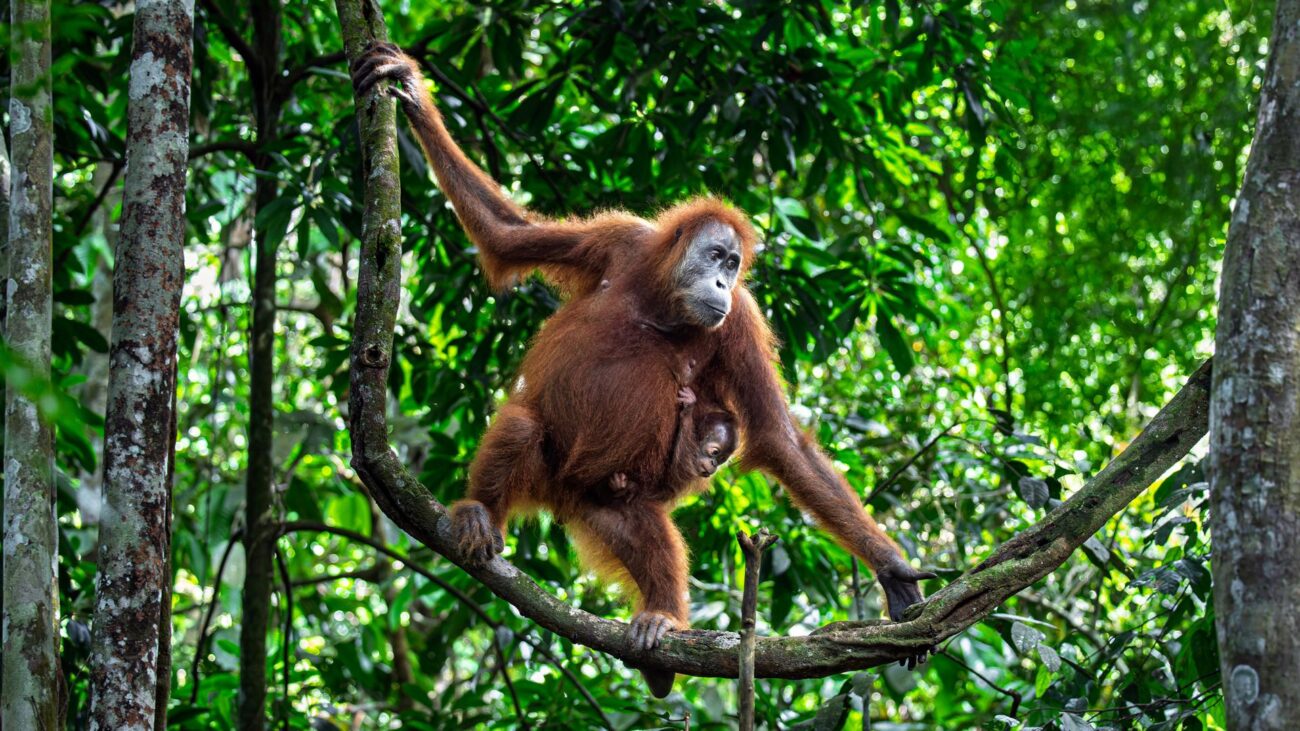
Orangutans are a quiet species, as making noise risks alerting predators or attracting unwanted males. But in the dense canopy, visual signals and hand gestures can be hard to see. So, how do they communicate? Researchers found that mother orangutans use a loud scratch as a signal for their babies, telling them that it’s time to go.
Before moving off, a mother orangutan performs an exaggerated scratch, which can be heard up to 15 metres away. Young orangutans know exactly how to respond, paying close attention to their mothers and then following her. This is important for older infants who no longer cling to their mother, but still need her help to cross wide gaps between the trees.
Before moving off, a mother orangutan performs an exaggerated scratch, which can be heard up to 15 metres away. Young orangutans know exactly how to respond, paying close attention to their mothers and then following her. This is important for older infants who no longer cling to their mother, but still need her help to cross wide gaps between the trees.
Interestingly, these loud scratches were only used between mothers and their young — offering a safe, low-urgency way to stay together without broadcasting their location. It is a fascinating discovery! Orangutans have turned a common grooming behaviour into a meaningful, non-verbal signal to keep their babies safe.
 You can help protect Sumatra's Orangutans. Click to get updates