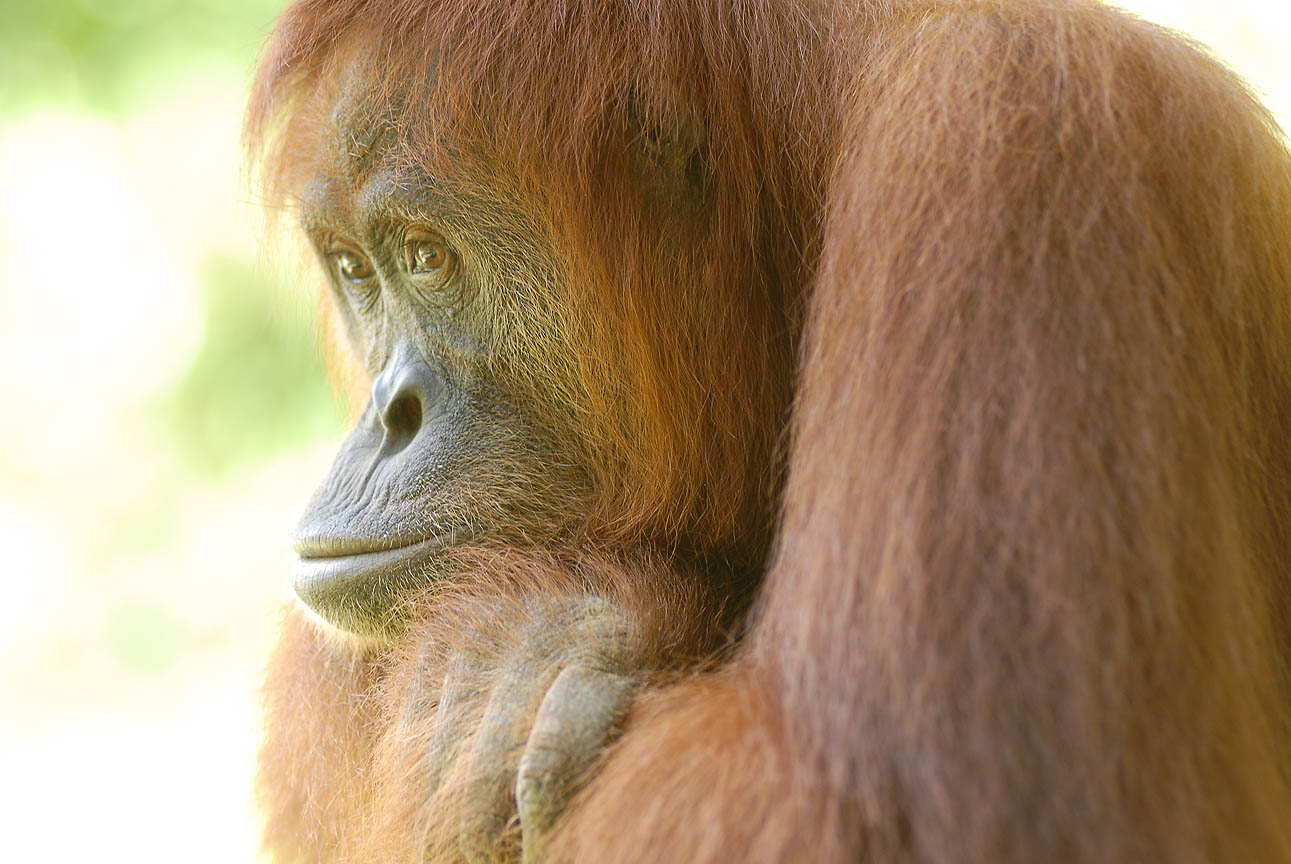
Photo credit: Andrew Walmsley
Great apes display impressive logic, complex communication, and distinct cultures. Yet non-human apes are not granted the same legal protections as humans. Historically, legal systems have regarded animals as “property” rather than living beings with rights. This means orangutans, chimpanzees, gorillas, and bonobos are still legally treated as objects.
Great apes feel pain, form memories, and experience rich emotional lives, which philosophers argue gives them inherent value. While the UK and EU acknowledge the sentience of apes, granting some protections against cruelty and experimentation, they remain legally classified as property. Granting “personhood” would take legal protection further.
But legal scholars question where to draw the line. If great apes are granted personhood based on intelligence or self-awareness, should elephants, dolphins, pigs, or parrots also be granted personhood? As a result, many high courts rule that granting non-human personhood requires new legislation from elected lawmakers rather than judicial rulings.
There are successful breakthroughs, like Sandra the orangutan, who spent two decades in a concrete zoo enclosure. Lawyers filed a habeas corpus petition against unlawful imprisonment. Argentine courts agreed, declaring Sandra a “non-human person” wrongfully detained as property, and she was moved to a sanctuary.
Researchers argue that laws must evolve alongside modern science. Sandra the orangutan showed that judges can interpret current laws in new ways to protect apes. Should legal personhood now be expanded across all great apes to align our legal systems with scientific evidence?
 You can help protect Sumatra's Orangutans. Click to get updates