Photo credit: Zac Mills, the Wildlife Collective
Humans naturally mimic each other’s facial expressions, particularly when it’s a genuine smile. This helps us connect emotionally and better predict the behaviour of others. But this behaviour is not unique to humans. Orangutan and chimpanzee smiles are a complex language of social signals, revealing a lot about their relationships and intentions.
Researchers wanted to find out if our ape cousins automatically mirror each other’s facial expressions, as humans do. They found that both orangutans and chimpanzees are more likely to make a “laugh face” if they see their partner make one. And it happens fast! Most of the time, the copycat face happened within 1.1 seconds, suggesting it’s an automatic response.
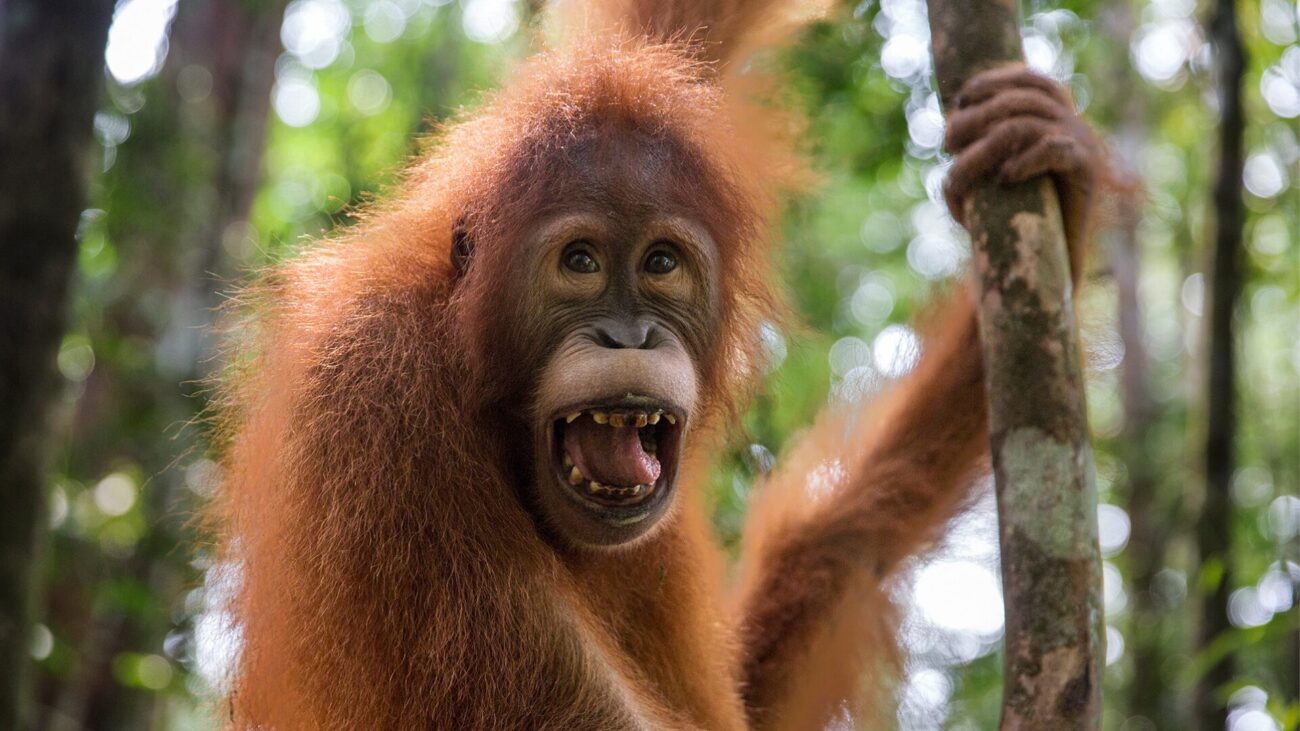
Apes communicate during play using an open-mouth face. Researchers identified two versions: a relaxed face with upper teeth covered, and a more intense face with upper teeth exposed. Interestingly, both orangutans and chimpanzees mimicked the relaxed face more often. This reassures their playmate that they are still “playing” and prevents aggression.
In orangutans, frequent facial mirroring resulted in longer play sessions. As most social interactions occur between mother and baby, reassurance is key. On the other hand, chimpanzees live in large, hierarchical groups. They didn’t show this correlation, suggesting they have developed other signals to communicate non-hostility and keep the play going.
 You can help protect Sumatra's Orangutans. Click to get updates