“Who is the Rimba? What makes her wake? What is it that’s causing her heart to break?”
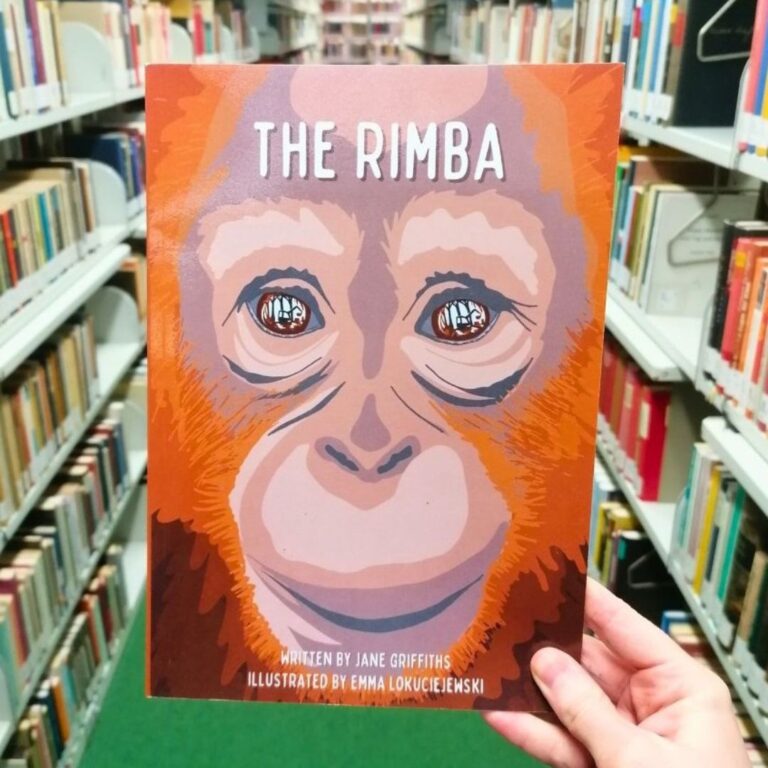
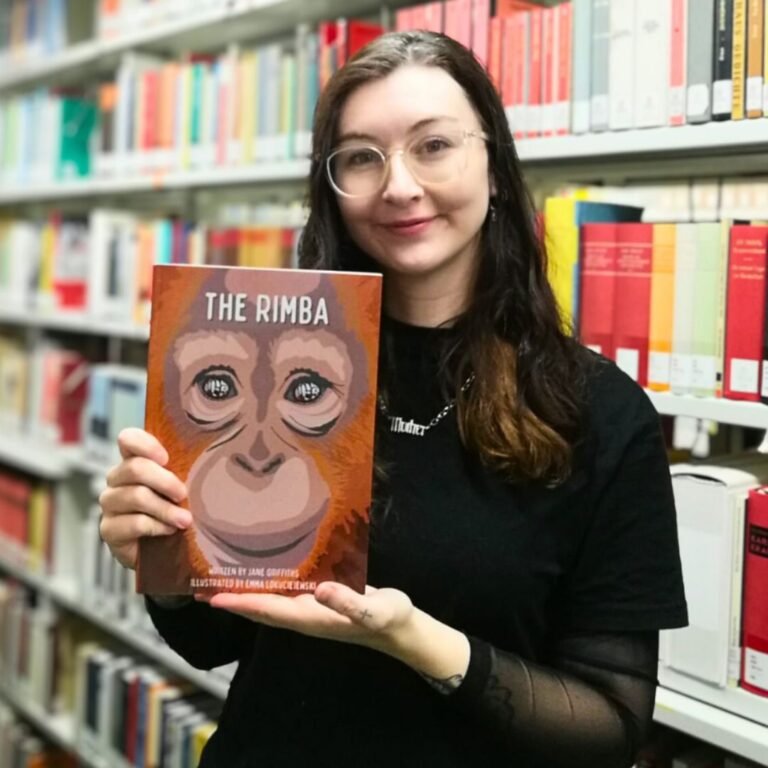
The Rimba is a new illustrated book which explores the heartbreaking realities of forest loss with a vision for a more sustainable future. From balancing hope with heartbreak for young readers, to bringing the vibrant inner world of orangutans to life, here we explore why The Rimba matters so much.
Every penny of the proceeds from the book goes to orangutan charities, including SOS. Whether you are looking for the perfect gift or a meaningful addition to your own bookshelf, The Rimba proves that even the smallest hands can help protect our planet.
🔗 Shop in the UK: https://www.amazon.co.uk/dp/B0FY6DSR5B
🔗 Shop in the US: https://www.amazon.com/dp/B0FY6DSR5B
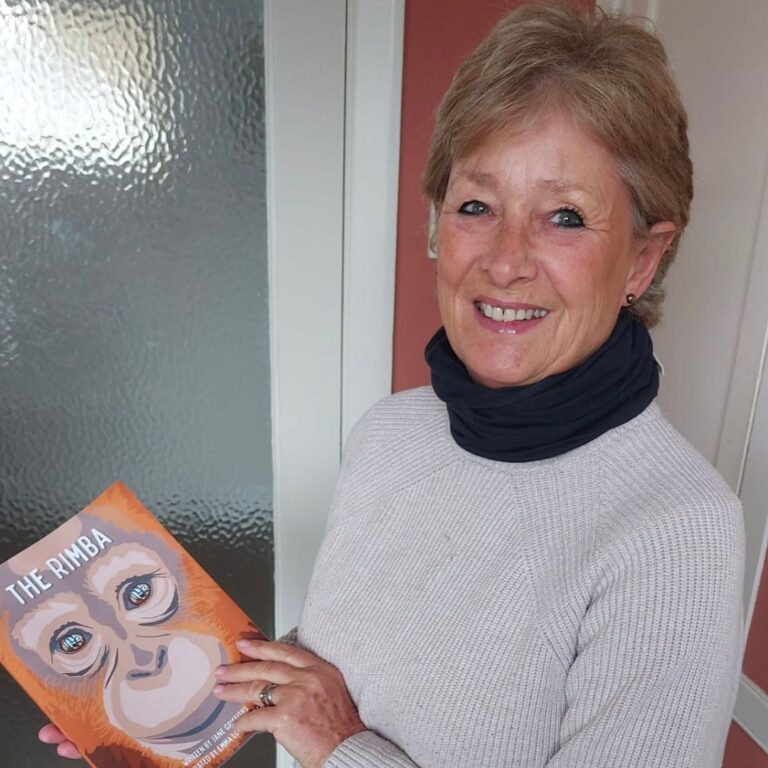
Jane: I am a retired Head of English, and have lived in Cornwall for over 40 years. I first became aware of the destructive force of palm oil in 2018, after watching the Rang Tan Greenpeace campaign. I was horrified and was determined to do something to mitigate the damage caused by changing my shopping choices.
I quickly learned, however, that to avoid palm oil altogether was not the best solution; choosing sustainable palm oil was a much better option. It led to me doing a lot more than just changing my buying habits. After a lot of research, I gave talks at my local schools, met with managers at Newquay Zoo, and set about helping Newquay to become a sustainable palm oil town. It became something that I felt passionate about.
At some point between 2018 and 2019 I was listening to a radio programme about deforestation and The Lorax was referenced. I had never read the book, but bought a copy and realised how much it echoed what was happening in SE Asia rainforests. It dealt with the overriding message of the dangers of greed and destruction. It got me thinking and I used it as a starting point for The Rimba.
Emma: I became fascinated by orangutans when I was a child, and as soon as I realised I could make a career out of this passion, I tailored my education towards it. I visited Borneo for a university fieldtrip and whilst there I visited Samboja Lestari rescue and rehabilitation centre to see more about orangutan conservation in situ. Through networking with various organisations, I then studied the post-release behaviour of reintroduced orangutans for my Master’s.
Later, I worked as scientific support for an orangutan conservation NGO, and currently, I am conducting my PhD studying wild orangutans on Sumatra. Through working with different organisations, I have gained valuable knowledge about the threats orangutans face, and through fieldwork, I have seen it firsthand. I have been in the jungle studying wild orangutans whilst the sound of chainsaws echoes in the background.
When Jane contacted me regarding the idea of The Rimba, I knew it would be the perfect opportunity to combine my passion for art and science into something meaningful.
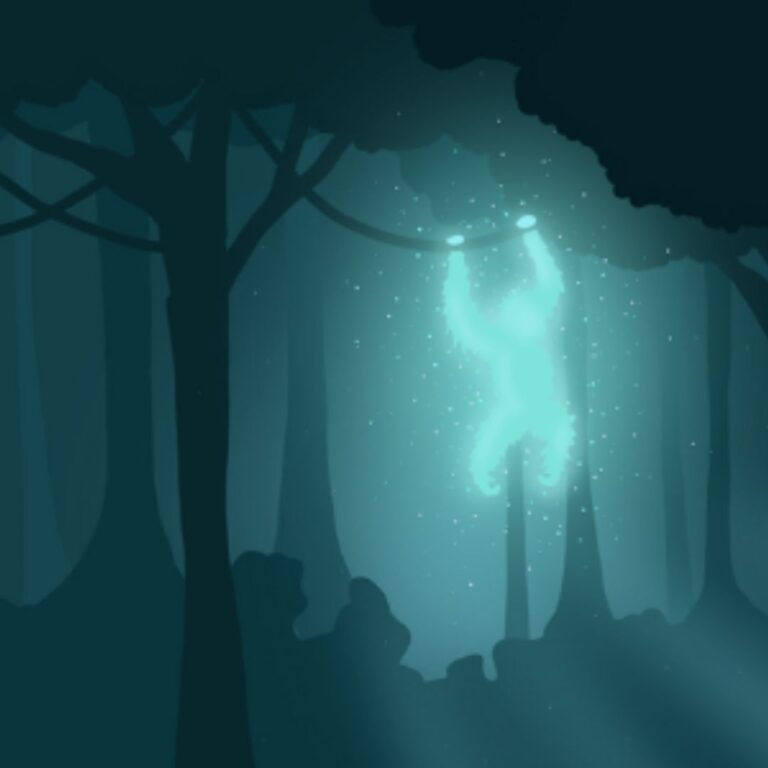
Jane: Rimba is Indonesian for jungle, forest and wilderness. It has connotations of natural beauty and rich biodiversity. So the book is really about that, BUT, it is also the name of the central mystical and spiritual orangutan ‘mother’ who is a rainforest guardian. I deliberately wanted a female central character. She represents Mother Nature and is a strong, but gentle creature who is central to bringing about change.
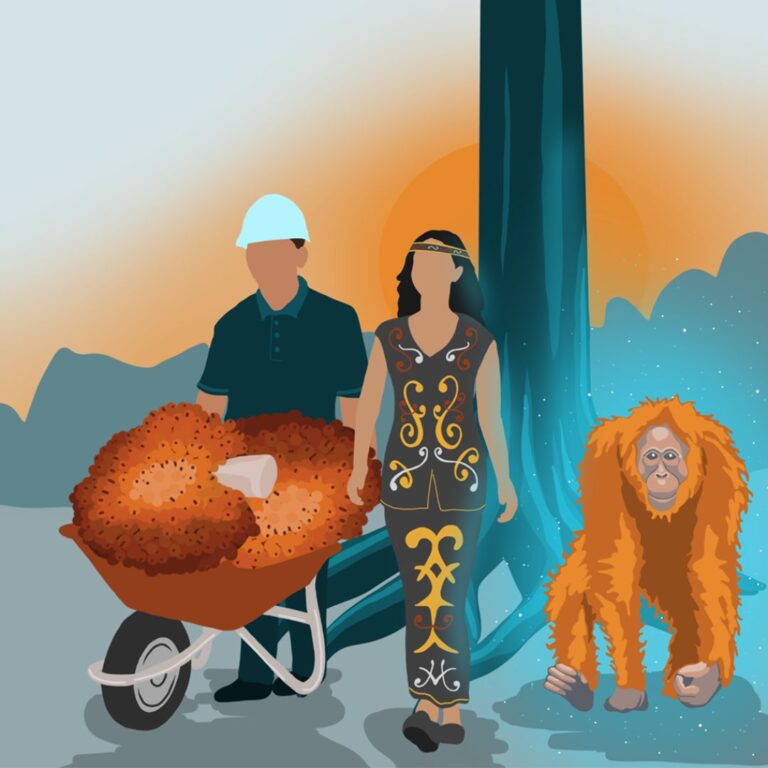
Jane: There are a few places where the words or lines are reminiscent of the The Lorax and I felt that the light hearted rhythm and rhyme leant itself well to both subject and audience, but The Rimba is more poignant and shocking in many ways. The Lorax is perhaps more whimsical – its rhyming cadence is different and more light hearted. I wanted The Rimba to be darker – and Emma’s beautiful pictures represent this – whereas The Lorax shows us an imaginary future, The Rimba is real.
Emma: The Rimba has been digitally illustrated on a smart phone illustration app. It took a long time, and required a lot of small details by zooming in to the screen. However, it was an enjoyable experience to be able to bring the ideas to life. I think both Jane and I had the same idea of what the ethereal spirit of Rimba should look like, which meant the illustrations were easy to imagine.
Emma: My favourite page is also used as the front cover. It is the close up image of the Rimba’s face, and the reflection of bulldozers visible in her watering eyes. The aim of this image is so that we can see what Rimba sees and also feel what she feels.
Jane: Firstly, making people aware of the awful destruction that palm oil plantations have caused both in terms of forest loss as well as wildlife, but also to educate. So many people have no idea that every one of us either consumes or uses palm oil every day. The story only touches on this really, but it is a starting point for further conversations. Above all, it has to be a hopeful book.
Children nowadays are faced with real fears about deforestation and climate change and their futures face uncertainty. This is a story that tells them they can make changes – they can do something about what is happening – however small. Above all, I hope that it is about making them care.
There was never any doubt that the book would focus on making change and saving rainforests and wildlife. It seemed like a natural progression once the book was published to know that for every copy sold the proceeds would go towards orangutan conservation. Both Emma and I were in total agreement about this. I really hope the the book goes on to both raise awareness but also to help a future generation of orangutans to survive in their natural habitat.
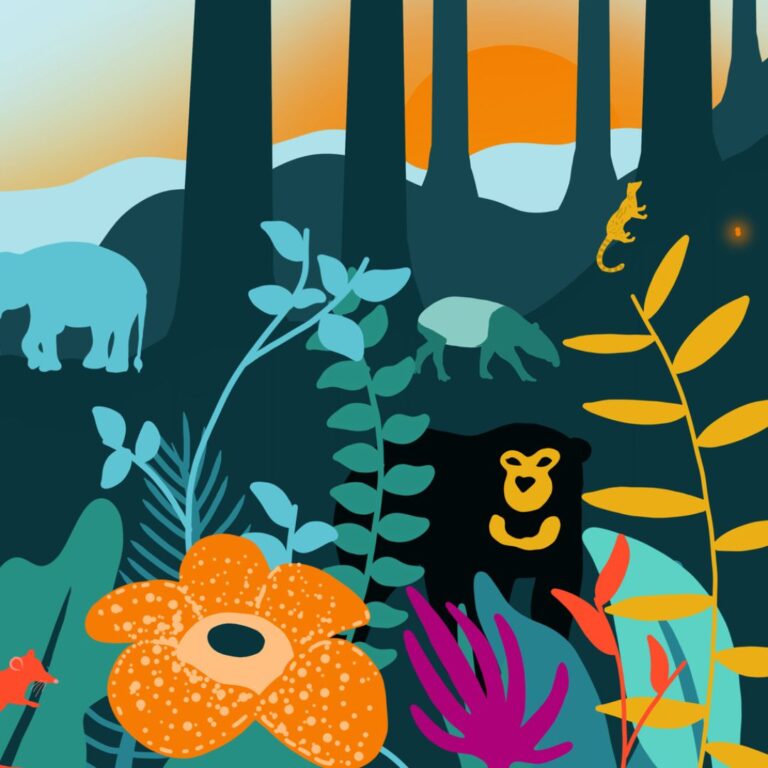
Emma: I hope that the bold and bright colours of the rainforest, with all the animals hidden around the page will enable children to stop for a moment and look around, and see what they can find. The rainforest is abundant with life, and it is exciting to take a minute to take it all in. All of those creatures, big and small, rely on the rainforest, and by protecting the orangutans, we are also protecting everything else in the forest.
 You can help protect Sumatra's Orangutans. Click to get updates