Credit: Suzi Eszterhas
Most primates give birth to single offspring. But not all do. Wet-nosed primates, such as lemurs, lorises, and galagos, as well as marmosets and tamarins, give birth to twins. That poses the evolutionary question: why (and when) did primates switch to birthing singletons?
To find out, researchers mapped the litter size of over 1,000 mammal species. They recorded the pregnancy duration of each species, as well as the average body size at birth and in adulthood. Using statistical modelling, they were able to find relationships between these traits and predict the likelihood of twins in our last common ancestor.
Among primates, twin births are linked to smaller bodies and brains, shorter pregnancies, and rapid growth. In contrast, humans (and other apes) have longer lifespans and pregnancies, and larger brains and bodies. This suggests that shifting to single births was essential for the development of large babies with even larger brains.
Around 60 – 70 million years ago, our primate ancestors gave birth to twins as standard. Interestingly, the switch to birthing singletons happened multiple times in the primate lineage. This suggests that there was strong evolutionary pressure: giving birth to one, bigger baby must have had a survival advantage.
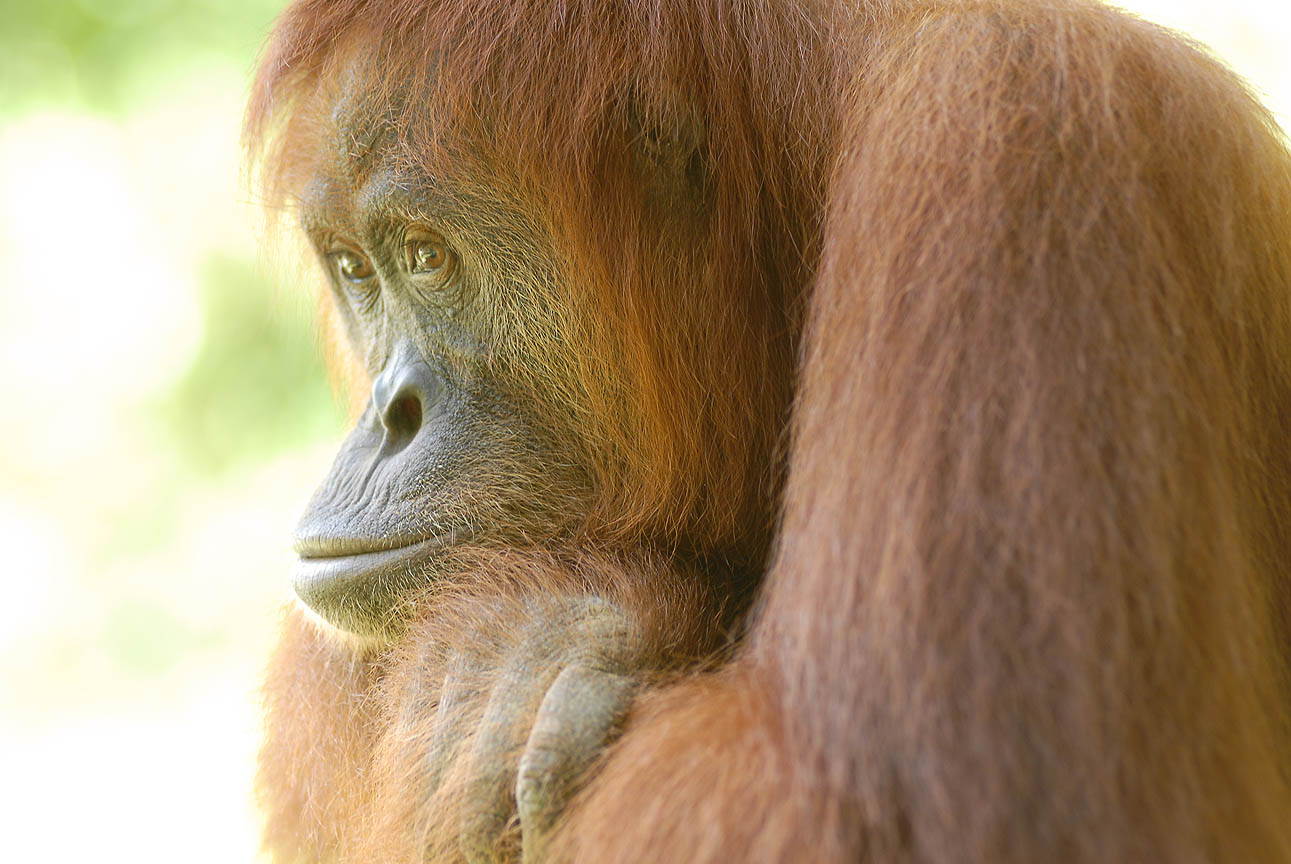
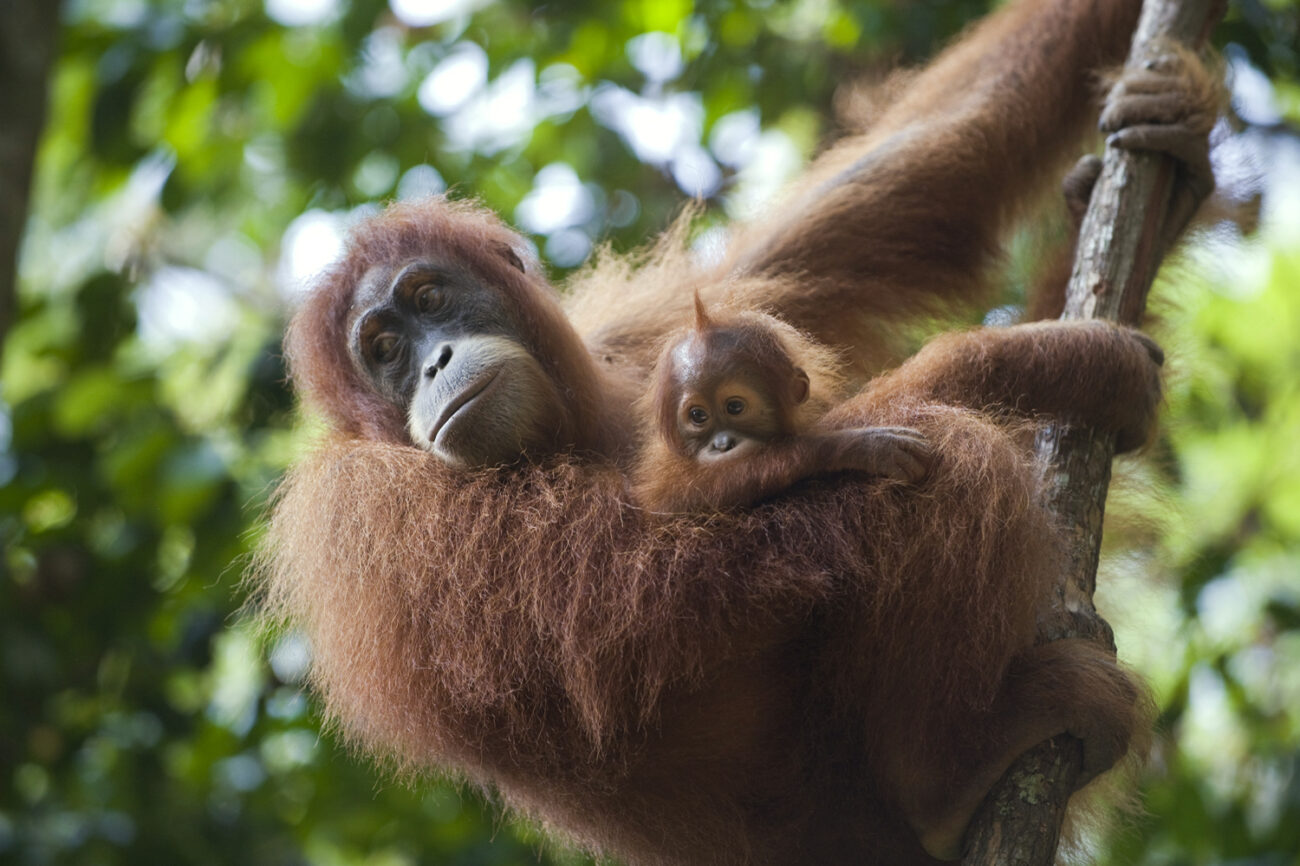
In orangutans, there are practical reasons for birthing single babies, too. Orangutans spend most of their lives in the trees. Carrying two infants while navigating the canopy would be difficult and potentially dangerous. Additionally, the high calorie cost of producing milk for twins is challenging in the wild, where food is often scarce.
 You can help protect Sumatra's Orangutans. Click to get updates