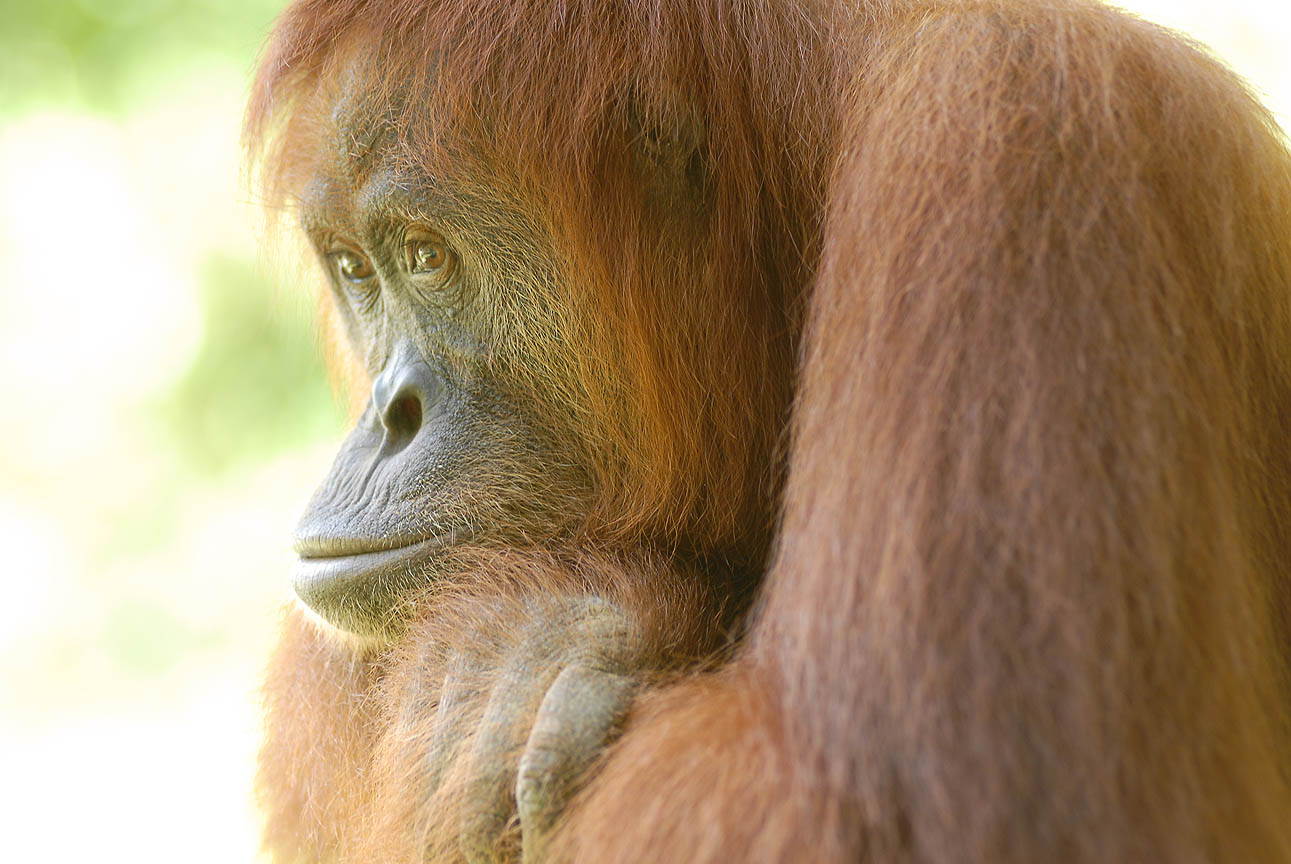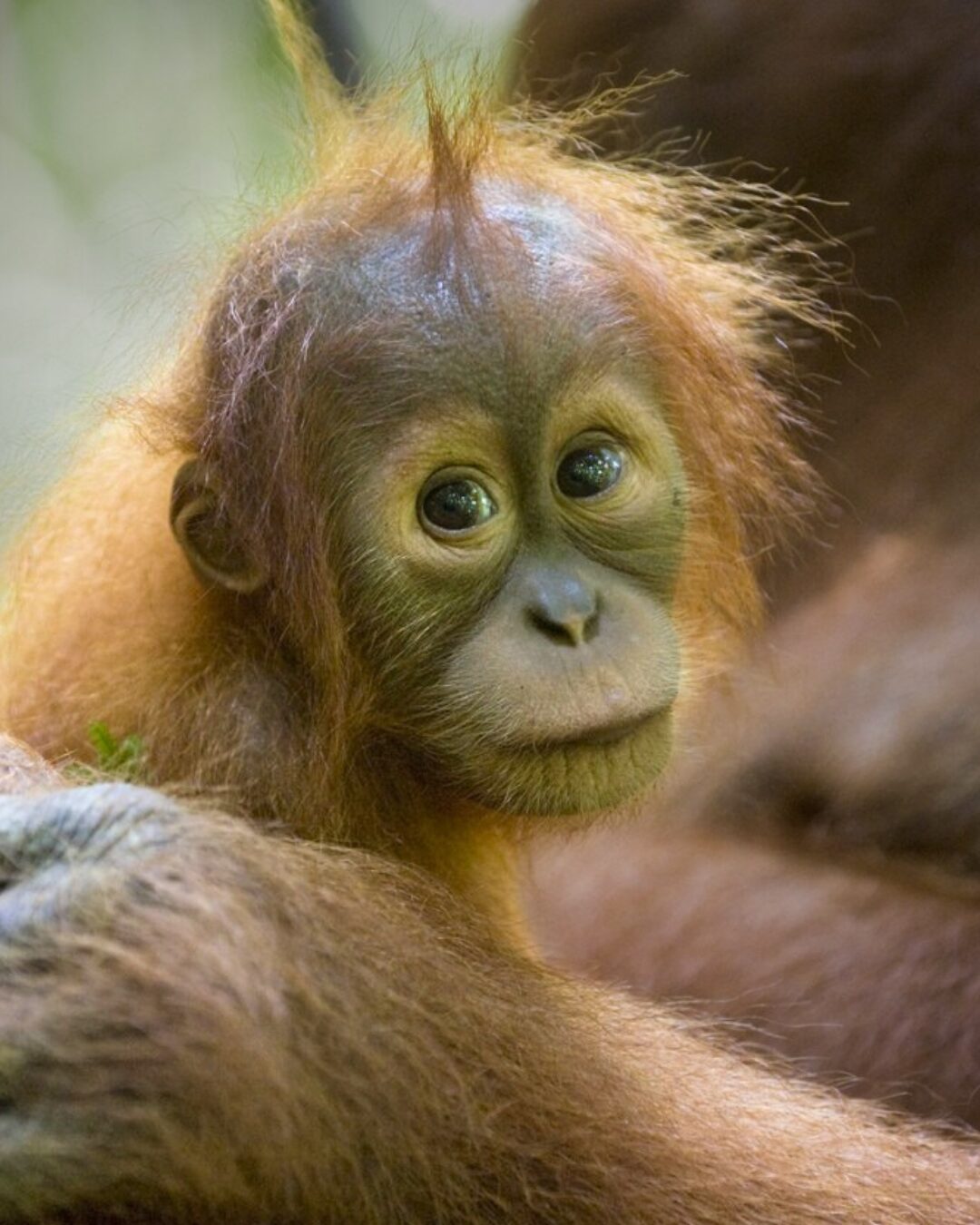
Photo credit: Suzi Eszterhas
Across all great ape species, babies share three traits that distinguish them from adults. They have relatively larger eyes that sit lower on the face. Their faces are rounder and shorter compared to an adult’s face. And the structure of the face is an “inverted triangle” — it is wider at the top and narrower at the bottom.
Yet human babies are unique in two ways. First, baby humans have much rounder faces than baby orangutans. Second, our baby faces are bottom-heavy. In other words, we have chubbier cheeks! We are the only of the great ape species to develop cheek fat in this way, as other ape babies tend to be top-heavy, with large foreheads.
So why does this happen? It’s down to the pace at which we develop. Our eyes finish growing relatively early in life. So, because the rest of our face hasn’t caught up yet, baby eyes look huge. Babies have large, bulging foreheads because they need to fit their brains, which are already quite big at birth. The lower half of the face doesn’t grow until much later.
But it’s also down to our brain chemistry. The “cute” features trigger the reward centre in our brains. It makes us happy! And, it makes us want to protect the infant. Humans and orangutans have some of the most “costly” babies in the animal kingdom. Our infants are born helpless and are dependent for years – just one reason why we must protect them.
 You can help protect Sumatra's Orangutans. Click to get updates