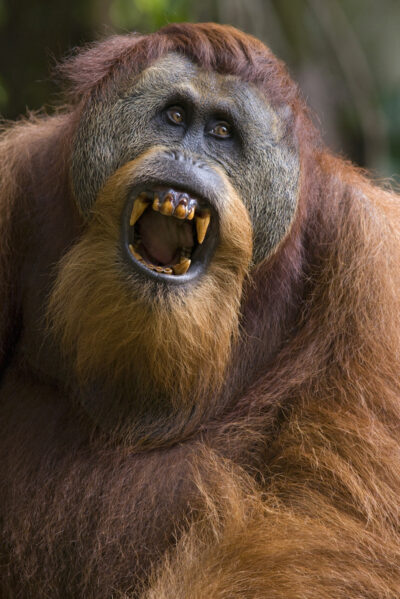
Dominant adult male showing teeth
Credit: Suzi Eszterhas
Wisdom teeth (third molars) develop later in life. Due to a lack of space, they frequently cause dental issues or fail to develop altogether. In fact, around 98% of all impacted teeth are wisdom teeth. Our ape cousins (including orangutans) have wisdom teeth. But theirs rarely become impacted like ours do. So why do humans still have them?
Like modern apes, our ancestors had bigger and broader jaws. Over time, as our cranium grew, our jaws became shorter and narrower. The most obvious reason is diet. Species that eat lots of tough foods need big, strong jaws and teeth (think gorillas). As our ancestors began using stone tools and fire to process food, our jaws had to do less work.
This is evident in modern human populations. Impacted wisdom teeth are ten times more common in industrialised societies (more processed food) than in hunter-gatherers. But diet doesn’t explain everything. Genetic factors are also at play, and studies on the teeth of twins found that the environment we grow up in affects wisdom tooth development.
But that’s not all that makes human teeth unique. Researchers have examined more than 500 wild primates and found no evidence of abfraction lesions on the gumline. This is a common dental issue in humans, suggesting it’s linked to our modern lifestyle. Possibly due to teeth grinding, forceful brushing, processed foods, or acidic drinks.
Reference: Why Do We (Still) Have Wisdom Teeth?
 You can help protect Sumatra's Orangutans. Click to get updates